IMF Says AI Boosts Growth But Disrupts Jobs

The International Monetary Fund reports that artificial intelligence investments are sustaining global economic growth at around 3 percent. However, officials warn the technology could significantly disrupt labor markets worldwide.

Updated
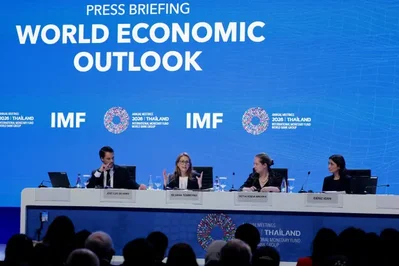
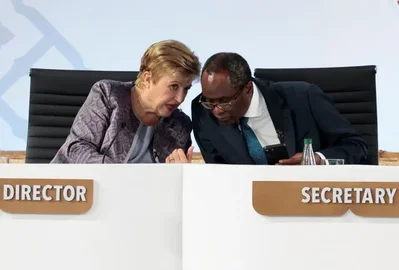
International Monetary Fund (IMF) Managing Director Kristalina Georgieva speaks during the IMF/World Bank 2026 Annual Meetings at the Queen Sirikit National Convention Center (QSNCC) in Bangkok, Thailand, October 12, 2026. REUTERS/Athit Perawongmetha

Global economic growth is holding at 3% due to artificial intelligence infrastructure investment, though it risks widespread labor market disruption, IMF Managing Director Kristalina Georgieva said on Monday. The boom is fueling a demand and investment shock across advanced and emerging markets. Global leaders gathered in Thailand for the annual meetings to weigh technological gains against geopolitical pressures.

AI Growth Shock

The AI infrastructure surge could boost growth in advanced Asian economies by 0.5 to 1 percentage point, and emerging Asian economies by 0.2 to 0.8 percentage point, Georgieva said on Monday afternoon in Thailand's capital.

That shift into higher gear is keeping the world economy growing at around 3%, despite being dragged down by an energy supply shock, she told hundreds of participants on the first day of the meetings. The IMF forecast global growth at 3% for 2026 and will release an updated outlook on Tuesday.

Labor Market Realignment

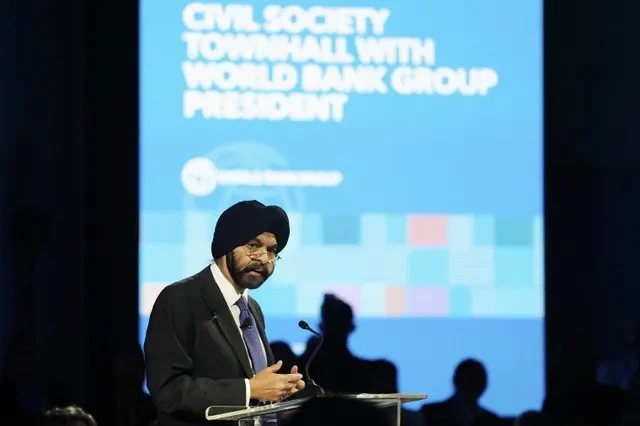
President of the World Bank Group Ajay Banga speaks at the Civil Society Townhall with World Bank Group President Ajay Banga during the IMF/World Bank 2026 Annual Meetings at the Queen Sirikit National Convention Center (QSNCC) in Bangkok, Thailand, October 12, 2026. REUTERS/Athit Perawongmetha

IMF research shows that 40% of jobs will be augmented, downgraded, or eliminated by AI, rising to 60% in advanced economies. Georgieva noted that 10% of jobs in the United States already required AI skills.

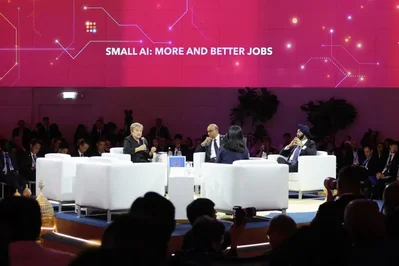
Singapore President Tharman Shanmugaratnam warned that graduation entry-level job demand is dropping. World Bank President Ajay Banga said emerging markets would focus on small AI tools rather than large language models to drive productivity.

High-Level Absences

Several finance ministers skipped the meetings, including US Treasury Secretary Scott Bessent and Spain's Finance Minister Arcadi España. Finance ministers from Canada and India were also absent.

The ministerial roster was further thinned by health and security crises, as the Democratic Republic of the Congo delegation stayed home to manage an Ebola outbreak. Meanwhile, Saudi Arabia's finance minister planned to attend despite airport operational halts following weekend attacks linked to Yemen's Houthis.

The IMF will release its updated economic outlook on Tuesday.

Insightful questions