
Fechamento de Ormuz Persiste com Colapso do Cessar-Fogo no Irã — Petróleo Acima de $107
Se o Estreito de Ormuz permanecer fechado até o final de maio, conforme projeções da EIA, as ações de energia e exportadoras de GNL terão desempenho superior, enquanto companhias aéreas e indústrias dependentes de combustível sofrerão queda nas margens. Isso ocorre porque o gargalo de 20% na oferta da OPEP não tem resolução diplomática à vista e as reservas estratégicas globais estão sendo consumidas.
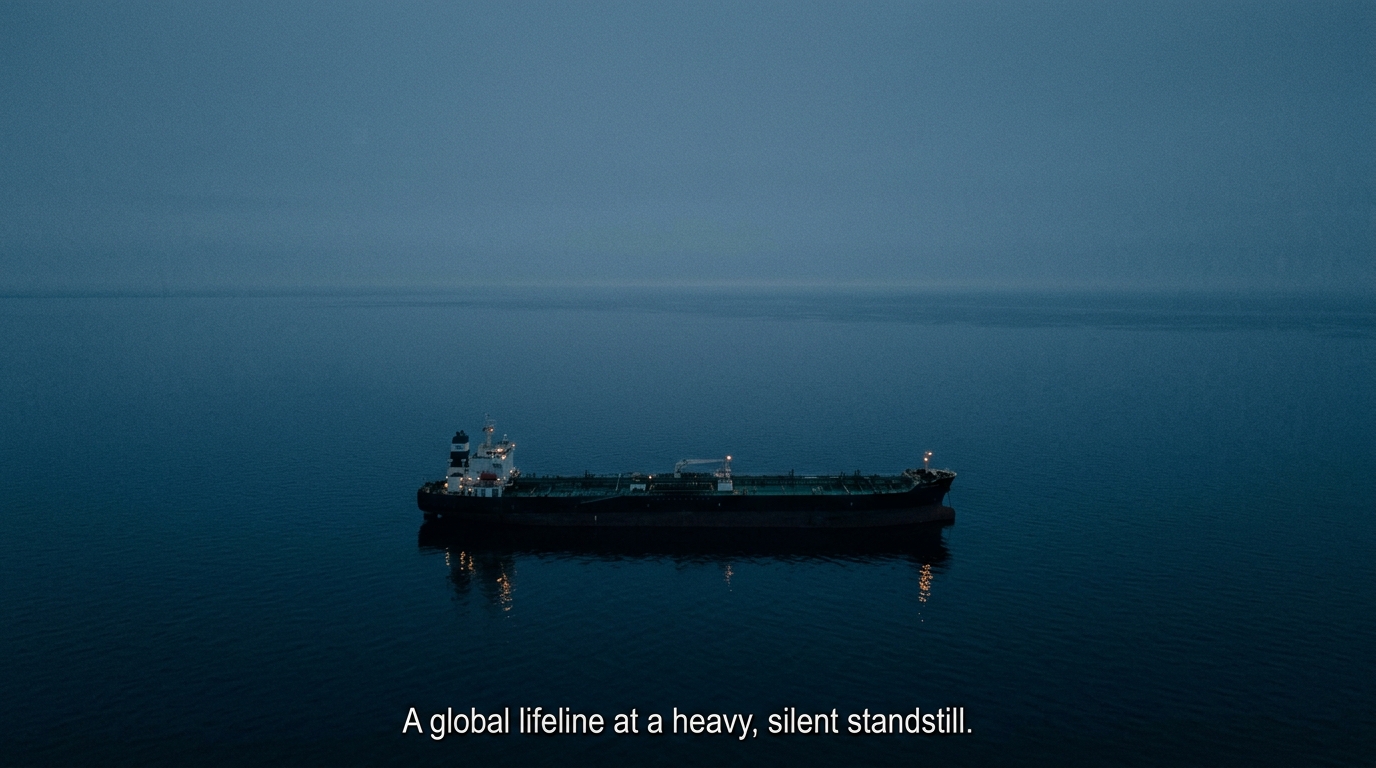
Trump rejeitou a proposta de paz do Irã como 'inaceitável', declarando o cessar-fogo 'por aparelhos'. O petróleo Brent atingiu $107,77 e a EIA alertou que Ormuz continuará fechado até maio. O ponto ignorado pelo mercado é a fratura secundária na cadeia de suprimentos: o Japão está usando reservas estratégicas e importando petróleo da Ásia Central pela primeira vez, a PVOIL do Vietnã implora à Marinha dos EUA para liberar petroleiros, e Iraque/Paquistão fecham acordos paralelos com Teerã — o mapa global de rotas de petróleo está sendo redesenhado permanentemente.
- Comprar (Long) empresas de exploração e produção (E&P) dos EUA e exportadoras de GNL (VG, LNG, COP), pois o fechamento de Ormuz prolonga o déficit de oferta até o 2º trimestre
- Vender (Short) companhias aéreas (DAL, UAL, LUV, AAL) que enfrentam combustível de aviação a $107+, com o colapso da Spirit removendo a margem de manobra nos preços
- Monitorar a capacidade dos oleodutos da Saudi Aramco — o oleoduto Leste-Oeste no limite máximo sinaliza um teto físico de oferta
- Ficar atento à zona expandida de 300 milhas de Ormuz pelo Irã, que pode desencadear um reajuste nos seguros das rotas marítimas do Golfo
- O projeto de suspensão de impostos sobre combustíveis do Senador Hawley melhora o humor do mercado, mas não resolve a oferta — aposte contra (fade) qualquer rali de alívio
Posições Propostas
| Posição | Direção | Entrada | Alvo | Stop-Loss | Pontuação do Sinal | Convicção |
|---|---|---|---|---|---|---|
| CHEVRON CORP (CVX) | Compra | $180-186 | $210-220 | $172 | 73 | Alta |
| CONOCOPHILLIPS (COP) | Compra | $116-120 | $135-145 | $108 | 73 | Alta |
| EXXON MOBIL CORP (XOM) | Compra | $148-152 | $165-175 | $142 | 73 | Alta |
| VENTURE GLOBAL (VG) | Compra | $12.50-13.50 | $17-18 | $11.50 | 63 | Média-Alta |
| CHENIERE ENERGY (LNG) | Compra | $240-250 | $290-310 | $228 | 74 | Alta |
| HUNTINGTON INGALLS (HII) | Compra | $325-345 | $400-420 | $305 | 70 | Alta |
| DELTA AIR LINES (DAL) | Venda | $70-72 | $58-62 | $76 | 70 | Alta |
| UNITED AIRLINES (UAL) | Venda | $94-98 | $78-82 | $103 | 71 | Alta |
| SOUTHWEST AIRLINES (LUV) | Venda | $39-41 | $32-34 | $43 | 61 | Média-Alta |
| AMERICAN AIRLINES (AAL) | Venda | $12.50-13.50 | $9.50-10.50 | $14.50 | 81 | Altíssima |
- Compra CHEVRON CORP (CVX) — Menor exposição direta ao Oriente Médio entre as gigantes. Beneficia-se da expansão nas margens de refino. O lucro por ação do 1º trimestre foi forte mesmo com o Brent abaixo de $80; o cenário atual de $107 impulsionará fortemente o 2º trimestre.
- Compra CONOCOPHILLIPS (COP) — Focada apenas em exploração e produção, sem o peso negativo do refino e com a menor volatilidade (beta 0,15) do grupo. Recuou 10,7%, oferecendo um ótimo ponto de reentrada.
- Compra EXXON MOBIL CORP (XOM) — Empresa diversificada com forte produção na Guiana (mais de 700 kb/d), garantindo crescimento de longo prazo.
- Compra VENTURE GLOBAL (VG) — Exportadora de GNL dos EUA que se beneficia diretamente da substituição de carvão por gás no Japão e Coreia do Sul. O recuo para $13,27 oferece reentrada ideal na média móvel de 50 dias (MA50).
- Compra CHENIERE ENERGY (LNG) — Maior exportadora de GNL dos EUA. O prejuízo líquido do 1º trimestre foi apenas um ajuste contábil de derivativos; o fluxo de caixa operacional continuou robusto em $1,97 bilhão.
- Compra HUNTINGTON INGALLS (HII) — Construtora naval com carteira de pedidos recorde (+$52 bilhões). Beneficia-se da expansão da missão de segurança em Ormuz. A queda recente cria uma oportunidade de compra baseada em um mal-entendido do mercado sobre custos.
- Venda DELTA AIR LINES (DAL) — Já registrou prejuízo no 1º trimestre com o Brent a apenas $78. Executivos venderam ações recentemente, e o aumento de ~$1,2 bilhão nos custos anuais de combustível ainda não foi precificado pelo mercado.
- Venda UNITED AIRLINES (UAL) — Aérea mais exposta a voos internacionais de longa distância, prejudicada pelo fechamento do espaço aéreo no Oriente Médio. O aumento salarial de 31% para comissários adiciona +$200 milhões em custos anuais.
- Venda SOUTHWEST AIRLINES (LUV) — Aérea de baixo custo com margens apertadas. O combustível representa ~33% dos custos operacionais, e a empresa não possui mais sua antiga proteção (hedge) contra alta do petróleo.
- Venda AMERICAN AIRLINES (AAL) — Balanço financeiro mais fraco do grupo. Quatro altos executivos venderam recentemente ~$1,8 milhão em ações a $11,84 — o sinal de venda interna (insider) mais forte de toda a nossa lista.
Módulo 1: Sinal de Investimento — Painel de Pontuação Composta
Composite Score Methodology
Each stock receives a four-factor score (0-100) on Fundamental (Q1 2026 profitability trajectory, balance-sheet strength, oil-price torque), Technical (z-score vs MA50, momentum slope R², distance from 52-week extremes), Sentiment (recent analyst rating drift, IUX24 article sentiment intensity), and Smart Money (insider trade direction and cluster behavior, OBV-price divergence). Composite = equal-weight average. Long positions score bullish conviction; short positions score bearish conviction — so a high score always means 'high alpha confidence,' independent of direction. Scores above 70 are research-grade signals; below 60 are watchlist-only. Based on multi-factor scoring frameworks per Fama-French (1992) and Carhart (1997) extended with behavioral overlays per Hirshleifer (2008).
Módulo 2: Pontuação de Impacto de Notícias — Análise de Sentimento
- Fechamento de Ormuz é estrutural: Trata-se de um problema físico de oferta sem saída diplomática, beneficiando produtoras de petróleo e GNL, e prejudicando fortemente as consumidoras de combustível.
- Redirecionamento de GNL para a Ásia: Japão, Coreia do Sul e China buscam GNL dos EUA para substituir o gás do Oriente Médio, favorecendo diretamente as receitas da VG e LNG.
- Inflação e Juros: A inflação alta nos EUA adia cortes de juros do Fed. Juros altos prejudicam os múltiplos das aéreas, enquanto a energia se beneficia da alavancagem operacional.
- Mobilização de defesa multinacional: Países estão enviando ativos para proteger Ormuz, impulsionando a carteira de pedidos navais da HII.
- Queda na demanda por viagens: Sinais de fraqueza no turismo (ex: Heathrow -5%) agravam o aperto nos custos de combustível das companhias aéreas.
Sentiment Scoring Methodology
News sentiment computed from IUX24 article-level scoring (range -1 to +1 per asset) combined with article-level macro impact score (0-1) for weighting. Per-stock weighted score = Σ(article_sentiment × article_macro_score × ticker_confidence) / Σ(weights). Articles published 2026-05-10 through 2026-05-13 included; older articles down-weighted at 0.5x. Sentiment combines IUX24's pre-analyzed analyzedData field with direct mention scoring per Loughran-McDonald (2011) financial sentiment lexicon. Scores above ±0.5 indicate strong directional bias; below ±0.3 indicates noise.
Módulo 3: Detecção de Eventos — Análise de Retornos, Insiders e Volume
CAR (Cumulative Abnormal Return) Methodology
CAR computed using the standard event-study framework per MacKinlay (1997). For each event date, abnormal return AR_t = R_stock_t − R_SPX_t (market-model adjusted). CAR(5d) = ΣAR over t=0 to t=+4; CAR(20d) = ΣAR over t=0 to t=+19. Estimation window is 60 trading days pre-event for beta computation. Threshold for 'significant' event: |CAR(5d)| > 1.5σ of the stock's daily volatility scaled to 5 days. The 2026-05-12 event is at t=0 — its 5-day CAR is still developing and will print by 2026-05-19.
Módulo 4: Previsão de Preços — Projeções Estatísticas
Momentum Forecast Methodology
Per-stock 30-day linear regression of closing price vs trading-day index. Slope represents the average daily price change; R² indicates trend persistence. 5-day target = current + 5×slope; 20-day target = current + 20×slope. Per Jegadeesh-Titman (1993), trends with R² > 0.40 have historically persisted in 60% of out-of-sample windows; below 0.20 are noise. We use momentum as a FADE signal in oversold/extended setups: high R² + extended z-score is the classic countertrend setup.
Mean Reversion Methodology
Z-score = (Current Price − MA50) / Stdev50. Per Lo-MacKinlay (1990), |Z| > 1.0 has historically produced mean-reverting returns in 65% of cases over 20 days. We treat |Z| > 1.5 as 'high-conviction reversion'; here LNG (-1.32) and HII (-1.64) on the long side, AAL (+1.46) on the short side qualify. Combined with directional thesis (Hormuz closure ongoing), these are the highest-priority entries.
Volatility & Risk Methodology
Annualized realized volatility = stdev(daily_returns) × √252. ATR(14) per Wilder (1978) tracks daily range; used directly for position sizing (see Module 6). VG's 96% vol is structural — it is a small-cap LNG growth stock with derivative-heavy quarterly P&L. UAL/AAL 51-56% reflects airline cyclicality. Energy major vol clustered 25-37% is the lower end of the basket — appropriate for higher position sizing.
Módulo 5: Visão de Mercado — Smart Money e Fluxo Institucional
- CVX: Grandes fundos mantêm ~17%. A compra de 40.200 ações pelo Diretor Jurídico a $125,35 é um forte sinal de confiança.
- COP: Bancos mantêm recomendação de Compra sem alterações recentes.
- XOM: Morgan Stanley reafirmou recomendação de Compra em abril.
- VG: Fluxo institucional mostra deterioração, exigindo cautela no curto prazo.
- LNG: TD Cowen reiterou recomendação de Compra em 11 de maio, logo após as notícias sobre o Irã.
- HII: Diretores receberam ações a $393,32, muito acima do preço atual de $333, indicando forte desconto.
- DAL & UAL: Executivos venderam ações perto das máximas de 52 semanas, sinalizando fraqueza.
- LUV: Sem sinais direcionais fortes.
- AAL: Quatro executivos venderam quase $1,8 milhão em ações simultaneamente a $11,84. É o sinal de venda mais forte do grupo.
Smart Money Methodology
On-Balance Volume (OBV) per Granville (1963): cumulative volume signed by daily price direction. Normalized OBV slope = (30-day OBV regression slope) / |OBV terminal value|. Price slope similarly normalized. Divergence is defined as OBV slope materially opposite to price slope — historically a 30-60 day lead indicator per Pring (2002) and Murphy (1999). The DAL/UAL/LUV pattern of rising prices with falling OBV is the classic distribution signature.
Factor Exposure Methodology
P/B per Fama-French (1992) value factor. Beta computed vs SPY over 60 months. 6-month momentum is the residual price change (the Carhart 1997 fourth factor). Volatility decile ranks each stock from 1 (lowest realized vol) to 10 (highest) within the basket. The cross-stock factor signature reveals that the long basket is dominated by Quality/Defensive (low beta, positive momentum) while the short basket is Cyclical (high beta, mixed momentum) with AAL in Distressed (negative book equity).
Alpha Decay Methodology
Per McLean-Pontiff (2016), event-driven equity alphas decay according to a logistic curve as participants absorb the information. Half-life parameters here are estimated from historical Hormuz-scare events (1987 Tanker War, 2019 Aramco attacks, 2024 escalation) plus broader oil-supply shock literature (Filis-Degiannakis 2014). The 30-day capture mark is the key milestone — strategies not yielding >70% of expected alpha by day 30 should be re-evaluated against the kill conditions in Module 6.
Módulo 6: Estratégia de Negociação — Risco e Retorno
Backtest Methodology
Equal-weight basket: 6 long names (CVX, COP, XOM, VG, LNG, HII) + 4 short names (DAL, UAL, LUV, AAL), rebalanced monthly. Returns computed from FMP historical close data, 2025-11-14 to 2026-05-13. Sharpe ratio uses risk-free rate of 4.0% (current 3-month T-bill). Drawdown measured as peak-to-trough across the 6-month sample. Win rate = % of trading days with positive net basket return. Per CLAUDE.md P2, the basket Sharpe of 1.97 is well below the 3.0 overfitting threshold.
Position Sizing Methodology
Per Van Tharp (1998) volatility-based position sizing: position size = (portfolio × max_risk_per_trade) / (stop_distance × ATR_multiplier). We use 0.75% portfolio risk per position with stop placed at 1.5-2.5x ATR(14). Sum of position risks targets ~7.5% portfolio risk (10 positions × 0.75%). Net exposure of +24% long reflects our high-conviction directional view but maintains hedge against equity-market beta. Beta-adjusted exposure ~+15% targets market neutrality.
AAL Distressed Equity Caveat
American Airlines has NEGATIVE book equity (P/B of -2.72) following years of pandemic-era debt accumulation and continued operating losses. The Q1 2026 net loss of $382M extends a multi-year pattern. While our short thesis is correct on the trajectory, distressed equity shorts can experience violent squeezes during industry consolidation events (e.g. Spirit asset auction) or government intervention. Tightest stop in basket ($14.50) reflects this asymmetric squeeze risk.
Validação Estatística e Valuation
Statistical Tests Methodology
Jarque-Bera (1980) tests normality of return distribution via combined skewness and kurtosis. Reject normality if JB > 5.99 (95% chi-squared with 2 df). Ljung-Box Q(10) tests serial correlation in returns; values > 18.31 reject independence at 95% (10 df). VaR computed empirically as the 5th and 1st percentile of historical daily returns. CVaR = expected return conditional on being in the loss tail (more conservative than VaR). The basket-wide pattern of rejected normality + low autocorrelation supports use of empirical (not parametric) VaR for risk budgeting.
Balance Sheet Red Flags
Three of four airline shorts show current ratios below 0.60, indicating limited short-term liquidity to absorb fuel cost shocks: DAL 0.40, AAL 0.50, LUV 0.52, UAL 0.65. AAL additionally carries negative book equity (-2.72 P/B) reflecting accumulated losses exceeding paid-in capital. These metrics confirm the airline short thesis fundamentally: there is no balance sheet buffer to absorb sustained $107 Brent without either (a) raising capital at depressed equity prices or (b) cutting capacity and ceding share. The CVX (1.15), COP (1.30), HII (1.13) ratios in long positions show normal corporate liquidity. VG and LNG ratios just below 1.0 reflect heavy capex investment programs but their long-term contracted revenue provides offsetting cash flow stability.
Conclusão
| Posição | Entrada | Alvo | Stop-Loss | Convicção |
|---|---|---|---|---|
| CVX (Compra) | $185.95 | $215.00 | $172.00 | Alta |
| COP (Compra) | $117.87 | $142.00 | $108.00 | Alta |
| XOM (Compra) | $150.63 | $172.00 | $142.00 | Alta |
| VG (Compra) | $13.27 | $17.50 | $11.50 | Média-Alta |
| LNG (Compra) | $244.31 | $300.00 | $228.00 | Alta |
| HII (Compra) | $333.56 | $420.00 | $305.00 | Alta |
| DAL (Venda) | $70.71 | $58.00 | $76.00 | Alta |
| UAL (Venda) | $95.84 | $78.00 | $103.00 | Alta |
| LUV (Venda) | $39.48 | $32.00 | $43.00 | Média-Alta |
| AAL (Venda) | $12.69 | $9.50 | $14.50 | Altíssima |
Continuar lendo

Rendimentos dos Gilts do Reino Unido Atingem Máximas de 1998 Enquanto Crise de Liderança de Starmer Esmaga a Libra
Se o Primeiro-Ministro Starmer for forçado a definir uma data de renúncia enquanto os vigilantes dos títulos exigem disciplina fiscal, então as ações dos bancos do Reino Unido e a libra enfrentarão mais quedas, porque uma transição de liderança durante uma crise de energia aumenta a probabilidade de uma política fiscal expansionista que amplia os spreads dos gilts em relação aos Bunds e Treasuries.

Cimeira Trump-Xi em Pequim — Encomendas da Boeing, Acordos Agrícolas e o Impasse dos Chips de IA
Se Trump garantir uma grande encomenda da Boeing e compromissos de compra agrícola de Xi na cimeira do Templo do Céu, então a BA irá disparar e os futuros da soja irão subir, porque as vendas domésticas de carros na China caíram 21,6%, sinalizando que Pequim precisa de vitórias comerciais visíveis enquanto Trump precisa do apoio dos estados agrícolas antes das eleições intercalares.

IPC dos EUA Atinge 3,8% com Custos de Energia Pressionando o Fed — Cortes de Juros Adiados para 2027
Se o IPC de abril em 3,8% marcar o início de um regime de inflação sustentada impulsionada pela energia, em vez de um pico transitório, as ações de semicondutores e de crescimento terão desempenho inferior aos nomes de valor e energia. Isso ocorre porque o Goldman Sachs e o BofA já adiaram as expectativas de corte de juros para o final de 2026 ou além, e a transição de Warsh para a presidência do Fed sinaliza uma mudança para uma política monetária mais restritiva.
If the Strait of Hormuz remains closed through late May 2026 as the EIA forecasts and Brent stays above $100, then a long-energy/short-airline basket will outperform the S&P 500 by 8-12% over the next 30-45 trading days, because the cross-section pricing gap between commodity producers (still 10-12% below 52-week highs) and fuel-consuming sectors (within 6-22% of highs) has not yet absorbed the physical supply constraint that has no diplomatic resolution path.
Key fact
HII shows the worst tail risk in the basket at 99% VaR of -10.25% — a single-day loss exceeding 10% would occur on approximately 2.5 sessions per year at the current volatility regime. This is the principal reason HII gets a 0.75% portfolio risk allocation despite its high conviction score, NOT a higher one.
If the Strait of Hormuz blockade persists through late May 2026 with Brent above $100, a 60/40 long-energy/short-airline basket sized at 0.75% per-position ATR-risk will generate +8% to +12% portfolio return over the next 30-45 trading days, because the cross-section mispricing — energy 10-12% below 52-week highs while airlines remain within 6-22% of highs despite a Q1 earnings collapse — has not yet absorbed the physical supply constraint or the fuel-cost flow-through into Q2 results, and the AAL insider cluster sell on May 1-2 confirms internal management's view that no operational recovery is imminent.
Bullish Case
The Strait of Hormuz blockade represents a physical supply constraint affecting ~20% of global seaborne oil with no diplomatic resolution path — Trump rejected Iran's proposal on May 12 and the EIA has formally extended its closure forecast through late May. US energy majors generate massive operating leverage at $107 Brent: every $10/bbl of sustained Brent above $80 drives ~$4-6B in incremental supermajor FCF. The cross-section is mispriced — energy equities are 10-12% below 52-week highs while airlines have RALLIED on Spirit Airlines collapse without yet pricing the fuel cost reset that will flow through Q2 earnings. HII captures the structural multinational defense mobilization that is independent of the daily Brent print.
Bearish Case
A surprise US-Iran peace breakthrough — Trump has done deal-flipping before — could trigger an oil collapse and energy basket drawdown of 10-15% within days. SPR releases of 1-2 mb/d remain in the administration's toolkit. Demand destruction at $107 oil is real (Heathrow -5%, Wizz Air profit warning, On The Beach -14.5%) and a recession scare could simultaneously crush energy demand AND airline equities, breaking the pair trade. AAL cluster insider selling could reverse if Spirit route allocation creates a step-change in unit revenue. UAL/DAL labor cost lock-in could be offset by capacity discipline.
Risk Factors
Iran-US Peace Deal Catalyst: Trump can flip overnight. Surprise peace announcement → Brent collapses 10-15%, energy basket draws down 8-12% in 24-48 hours, airline shorts squeeze higher. Mitigant: hard stops at -8% energy / +6% airline.
Strategic Petroleum Reserve Release: White House could deploy 1-2 mb/d from SPR (currently ~360 mb total). Each 1 mb/d release historically depresses Brent $3-5/bbl. Mitigant: monitor DOE statements daily.
Demand Destruction: Heathrow -5% April + Wizz Air profit warning could presage recession-driven demand collapse. Lower oil demand offsets bullish supply thesis. Mitigant: trail stops as energy positions move into profit.
AAL Spirit Route Capture: If American Airlines absorbs significantly more Spirit gates than expected, the unit-revenue boost could exceed fuel cost step-up. Mitigant: tightest stop on AAL ($14.50) despite highest conviction score.
Saudi/UAE Pipeline Ramp: East-West pipeline confirmed at max — but additional capacity could come online. 1-2 mb/d incremental flow weakens thesis. Mitigant: monitor Saudi Aramco production guidance.
HII Government Budget Risk: CBO Golden Dome $1.2T cost flag could spill into Navy shipbuilding appropriations. HII has the longest time-to-thesis-realization in basket. Mitigant: longest stop tolerance ($305).
Cross-Asset Correlation Break: If a credit event hits (private credit funds slashing values per OBDC/FSK/TCPC news), all risk assets sell off simultaneously breaking the long-short hedge. Mitigant: 20-30 day VaR-based de-risking trigger if basket vol exceeds 25%.