
Rendimentos dos Gilts do Reino Unido Atingem Máximas de 1998 Enquanto Crise de Liderança de Starmer Esmaga a Libra
Se o Primeiro-Ministro Starmer for forçado a definir uma data de renúncia enquanto os vigilantes dos títulos exigem disciplina fiscal, então as ações dos bancos do Reino Unido e a libra enfrentarão mais quedas, porque uma transição de liderança durante uma crise de energia aumenta a probabilidade de uma política fiscal expansionista que amplia os spreads dos gilts em relação aos Bunds e Treasuries.
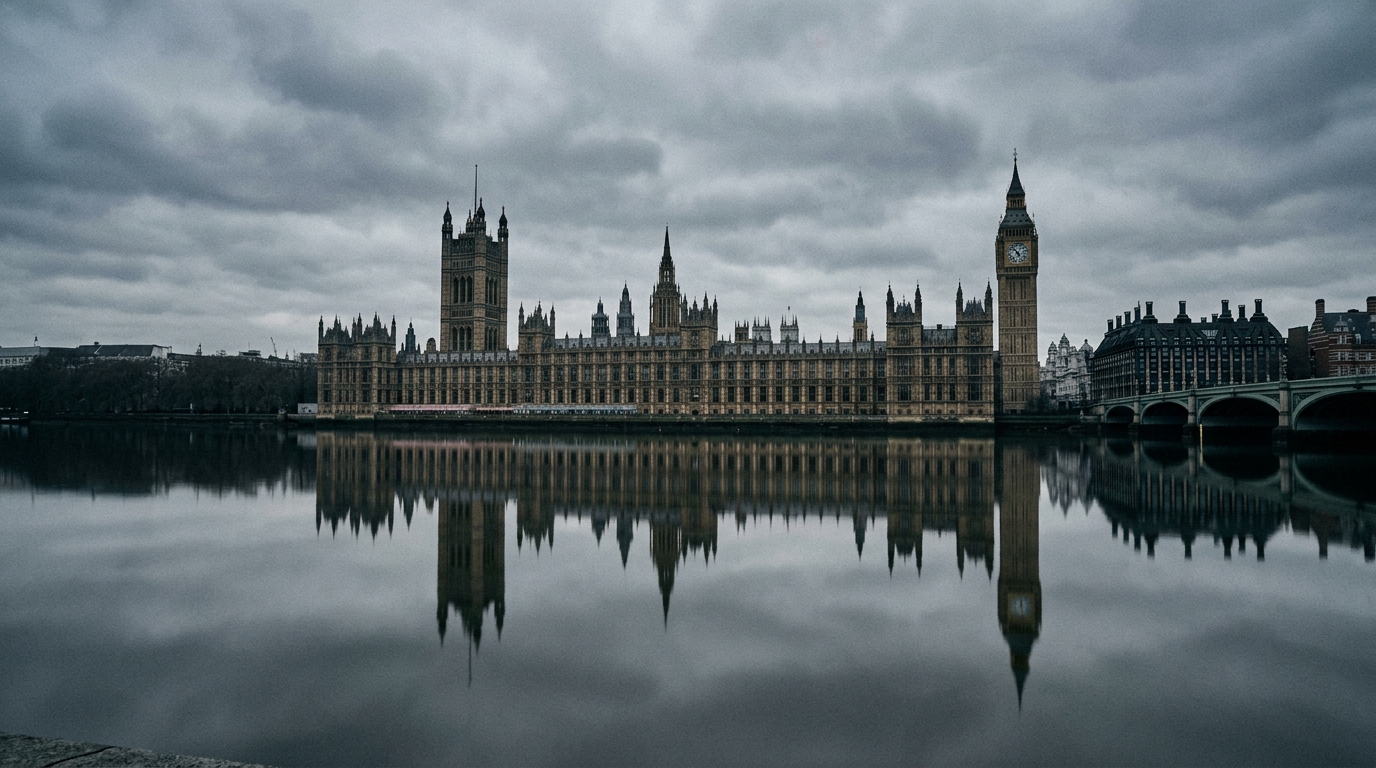
Os rendimentos dos gilts de 10 anos do Reino Unido saltaram para 5,13% — o maior nível desde 1998 — à medida que os crescentes pedidos de renúncia de Starmer se combinaram com os custos de energia da guerra no Irã para criar um duplo choque fiscal e inflacionário. O FTSE 250 caiu 1,5% e a libra atingiu mínimas de várias semanas. O ângulo menos óbvio: os gastos dos consumidores no Reino Unido caíram pela primeira vez desde o final de 2024 (dados de cartões do Barclays), enquanto as dívidas de energia se aproximam de US$ 9,5 bilhões. Um sucessor para o cargo de Primeiro-Ministro provavelmente aumentaria os empréstimos para lidar com a crise do custo de vida, criando um risco de reprecificação dos gilts semelhante ao da era Truss, que os mercados ainda não descontaram totalmente.
- Venda a descoberto (Short) em GBPUSD — vácuo de liderança + custos de energia + vigilantes dos títulos criam fraqueza persistente na libra
- Venda a descoberto (Short) em bancos domésticos do Reino Unido (Barclays, Lloyds, NatWest) enfrentando perdas de marcação a mercado nos gilts e deterioração de crédito
- Monitore o cronograma de renúncia de Starmer — um sucessor prometendo expansão fiscal desencadearia uma reprecificação dos gilts no estilo Truss
- Tráfego em Heathrow cai 5% com queda de 50% nas rotas do Oriente Médio — viagens e hospitalidade no Reino Unido enfrentam choque estrutural de demanda
- Atenção ao risco de intervenção do BOE se os rendimentos dos gilts romperem 5,5% — o Banco pode ser forçado a fazer compras emergenciais
Posições Propostas
| Posição | Direção | Entrada | Alvo | Stop-Loss | Pontuação de Sinal | Convicção |
|---|---|---|---|---|---|---|
| BARC.L | Short | 410–420p | 365p | 448p | 21/100 | Alta |
| NWG.L | Short | 562–575p | 504p / 471p | 605p | 25/100 | Alta |
| LLOY.L | Short | 94–96p | 88p / 80p | 102p | 28/100 | Alta |
| EWU | Short | $46.40–46.80 | $43.50 | $48.20 | 32/100 | Alta |
| FXB | Short | $130.00–130.50 | $125.50 | $132.20 | 27/100 | Alta |
| HSBC | Long | $87–90 | $98–102 | $82.50 | 62/100 | Alta |
- Short BARC.L — Rendimentos dos gilts nas máximas de 1998 geram perdas de marcação a mercado no portfólio de títulos; a deterioração de crédito no 1T de 2026 já saltou para £ 823 milhões, e um governo substituto trabalhista traz risco explícito de imposto sobre bancos.
- Short NWG.L — O governo saiu totalmente do NWG em meados de 2025; o banco tem mais de 95% da receita no Reino Unido e um portfólio de gilts de £ 33 bilhões sangrando através de outros resultados abrangentes (OCI).
- Short LLOY.L — A exposição doméstica mais pura do Reino Unido (~95% da receita em GBP); um aumento de 100 pontos-base nos gilts produz um impacto estimado de £ 2,5-3 bilhões no valor justo, sem compensação na Ásia/EUA.
- Short EWU — O ETF denominado em dólares captura a desvalorização da libra somada à queda das ações domésticas do Reino Unido em um único instrumento.
- Short FXB — O BoE está encurralado entre a inflação de 3,3% e a crise de liderança, enquanto compradores estrangeiros de gilts exigem desconto tanto no rendimento quanto na moeda.
- Long HSBC — Focado na Ásia (~60% do lucro antes dos impostos), com ROE estruturalmente superior aos pares do Reino Unido; atua como um hedge de proteção contra a cesta de shorts.
Módulo 1: Sinal de Investimento — Painel de Pontuação Composta
Scoring Methodology
Each pillar is scored 0-100 where 50 = neutral. Fundamental blends ROE, P/TBV percentile, FY trajectory and balance-sheet risk (gilt MTM, surcharge tax exposure). Technical blends 20/50-day SMA structure, RSI(14), realised volatility regime and volume profile. Sentiment uses the IUX24 news scorer (-1 to +1) mapped to 0-100. Smart Money blends insider transaction direction, OBV trend and ADV-relative volume on directional sessions. Macro Overlay is the single most discriminating factor here — weighted at 30% — capturing UK-specific systemic risk that has flipped these names from idiosyncratic equity stories to macro factor proxies. HSBC's macro overlay scores 78 because Asia revenue insulates it; UK domestics score 8-18 because every transmission channel pushes the same way.
Módulo 2: Pontuação de Impacto de Notícias — Análise de Sentimento
- Precificação do risco fiscal pelos vigilantes dos títulos: A alta dos gilts afeta diretamente os bancos domésticos do Reino Unido, que absorvem o choque de duração.
- Risco de imposto sobre lucros extraordinários: A possível chegada de um governo trabalhista aumenta o risco de impostos bancários, o que descola o HSBC (protegido por sua atuação global) de bancos como Lloyds e NatWest.
- Persistência da crise de energia no Irã: O petróleo Brent acima de US$ 100 trava a inflação importada do Reino Unido, deixando o BoE sem saída fácil.
Sentiment Scoring Methodology
News articles are scored by an LLM mode that reads each article in full, identifies named tickers, and assigns: (a) directional polarity (bear/bull/neutral), (b) magnitude (-1 to +1), and (c) confidence weighting. Article-level scores are aggregated by ticker into a volume-weighted impact score over a 7-day window. A score below -0.50 indicates a regime where every credible-source headline is bear-biased; HSBC's neutral score is itself information — when the rest of the UK bank complex is pricing -0.65 to -0.72, the structural insulation hypothesis gains evidence weight.
Módulo 3: Detecção de Eventos — Análise CAR, Insiders e Anomalias de Volume
CAR Methodology
Cumulative Abnormal Return (CAR) is computed by subtracting an event-window-matched benchmark return from each stock's realised return. UK domestic banks use the FTSE 350 Banks index as benchmark; HSBC uses the global MSCI World Banks index; FXB uses the DXY-equivalent G7 currency basket; EWU uses the MSCI EAFE. A 5-day CAR captures the immediate reaction; the 20-day CAR captures the persistence of the move. The May 11-12 window is still open, but the 5-day CARs for May 5-12 are already among the largest 20-day windows in the 6-month sample for LLOY (-4.4%), BARC (-3.9%) and NWG (-3.6%).
Módulo 4: Previsão de Preços — Projeções Estatísticas
Momentum Method
Trend slope is the ordinary least squares coefficient of log(price) regressed against trading-day index over the last 60 sessions, annualised. R² above 0.60 indicates a strong directional regime; readings between 0.45 and 0.60 indicate the trend is genuine but volatile. The 5/20-day targets project the slope forward — a useful short-horizon estimate when no obvious mean reversion is in play. UK domestic banks are all in steep negative-slope, high-R² downtrends; HSBC is in a positive-slope uptrend with the highest R² in the basket, validating the pair construction.
Why Mean Reversion is NOT the Trade Here
All three UK domestic banks are now within -0.7 to -1.2 standard deviations of their 200-day mean — historically a mean-reversion buy zone. The thesis explicitly rejects this signal because it depends on a stable regime. During the 2008-09 and 2022 gilt shocks, UK domestic banks pushed z-scores to -2.5σ before reversion engaged. The momentum signal (high R², steep negative slope) is the dominant statistical regime; mean-reversion is the bull risk to size against, not the trade entry.
Combining Momentum and Mean Reversion
In a regime-shift environment, the momentum signal dominates the mean-reversion signal for the directional bias, while the mean-reversion signal indicates the squeeze risk on countertrend bounces. The trade construction is: enter on momentum (current levels), trail stops using the mean-reversion ceiling (R1 levels), and target the momentum extension (S3 levels). For HSBC the two signals align bullishly — both predict a move higher — which is part of why HSBC is the highest-conviction long in the book.
Módulo 5: Visão de Mercado — Smart Money e Fluxo Institucional
Alpha Decay Method
Alpha decay is modelled as a half-life function: π(t) = π_max · (1 - e^(-t/τ)) · e^(-t/decay_τ), where π_max is the modelled peak return (10-15% net), τ is the build-up half-life (10-15 days) and decay_τ is the post-resolution decay half-life (45-60 days). The estimated half-life of this trade is 2-4 weeks because the political pressure has 72+ Labour MPs already in revolt — the political resolution function is faster than gilt market normalisation. Kill conditions are explicit (see Module 6) to prevent giving back alpha after the half-life.
Módulo 6: Estratégia de Negociação — Entradas, Saídas e Risco
- Exposição líquida: ~5% comprada (HSBC compensa ~95% da cesta vendida)
- Beta líquido para o S&P 500: ~-0.15 (exposição global quase neutra)
- VaR de pior caso em 1 dia (95%): ~2,4% do portfólio
- Retorno esperado (horizonte de 45 dias): +8 a 12%
Trading-Strategy Method
Trade construction uses (1) signal-score weighted entry — heavier sizing in highest-conviction names (BARC, NWG, LLOY, HSBC); (2) stop placement at the boundary of the prior 20-day range — a level whose violation invalidates the recent regime shift; (3) ATR-based position sizing — risk per name normalised to 25-40bp of portfolio; (4) explicit kill conditions tied to the macro mechanism, not just P&L; (5) monthly review of the alpha-decay path — half-life is 2-4 weeks, so positions are not held indefinitely. Friction estimates: 5-8bps spread on UK LSE bank lines, 1-2% borrow cost annualised on UK shorts, 30-50bps FX hedging if trading from USD base, total round-trip ~1.5-2.5% — manageable against a targeted 6-13% net move.
Validação Estatística e Contexto de Valuation
Statistical Methodology
Jarque-Bera tests whether daily returns are normally distributed — p < 0.05 rejects normality and confirms fat tails, which is critical for sizing because Gaussian VaR understates true risk. Ljung-Box tests for serial correlation in returns; significant Q(20) indicates the momentum signal is real, not noise. Skewness measures asymmetry — all UK domestic banks have left-skew (large down moves more frequent than equally-large up moves), consistent with crisis dynamics. Excess kurtosis above 2 indicates fat-tailed distributions; combined with negative skewness, this creates the asymmetric risk that motivates the explicit kill conditions in Module 6. Historical-simulation VaR is preferred to parametric VaR given the fat-tailed regime.
Balance-Sheet Red Flags
All three UK domestic banks carry AFS (available-for-sale) gilt portfolios marked through OCI, not P&L — a 100bp parallel shift in 10y gilts subtracts an estimated £1.0bn from NWG CET1, £2.5-3bn from LLOY CET1, and £25-40bp of CET1 ratio at BARC. None of these hits appear in headline P/E or EPS. P/B at 0.40-0.95x looks cheap but the denominator (tangible book) is exposed to the gilt move. Bank P/B compressed to 0.30-0.50x in every prior UK stress episode (2008, 2011, 2016, 2022) — the floor is the BoE response function, not accounting book value. Motor-finance tail at LLOY remains live with industry-wide compensation between £11bn (FCA) and £18-20bn (sell-side high-end) — Lloyds is the most exposed single name.
Conclusão
| Posição | Entrada | Alvo | Stop-Loss | Convicção |
|---|---|---|---|---|
| BARC.L (Short) | 410–420p | 365p | 448p | Alta |
| NWG.L (Short) | 562–575p | 504p / 471p | 605p | Alta |
| LLOY.L (Short) | 94–96p | 88p / 80p | 102p | Alta |
| EWU (Short) | $46.40–46.80 | $43.50 | $48.20 | Alta |
| FXB (Short) | $130.00–130.50 | $125.50 | $132.20 | Alta |
| HSBC (Long) | $87–90 | $98–102 | $82.50 | Alta |
Continuar lendo

Cimeira Trump-Xi em Pequim — Encomendas da Boeing, Acordos Agrícolas e o Impasse dos Chips de IA
Se Trump garantir uma grande encomenda da Boeing e compromissos de compra agrícola de Xi na cimeira do Templo do Céu, então a BA irá disparar e os futuros da soja irão subir, porque as vendas domésticas de carros na China caíram 21,6%, sinalizando que Pequim precisa de vitórias comerciais visíveis enquanto Trump precisa do apoio dos estados agrícolas antes das eleições intercalares.

Fechamento de Ormuz Persiste com Colapso do Cessar-Fogo no Irã — Petróleo Acima de $107
Se o Estreito de Ormuz permanecer fechado até o final de maio, conforme projeções da EIA, as ações de energia e exportadoras de GNL terão desempenho superior, enquanto companhias aéreas e indústrias dependentes de combustível sofrerão queda nas margens. Isso ocorre porque o gargalo de 20% na oferta da OPEP não tem resolução diplomática à vista e as reservas estratégicas globais estão sendo consumidas.

IPC dos EUA Atinge 3,8% com Custos de Energia Pressionando o Fed — Cortes de Juros Adiados para 2027
Se o IPC de abril em 3,8% marcar o início de um regime de inflação sustentada impulsionada pela energia, em vez de um pico transitório, as ações de semicondutores e de crescimento terão desempenho inferior aos nomes de valor e energia. Isso ocorre porque o Goldman Sachs e o BofA já adiaram as expectativas de corte de juros para o final de 2026 ou além, e a transição de Warsh para a presidência do Fed sinaliza uma mudança para uma política monetária mais restritiva.
If UK 10-year gilt yields hold above 5.0% through end-Q2 2026 while sterling stays sub-1.36, then the equal-weight short basket of BARC.L + NWG.L + LLOY.L + EWU + FXB delivers a net 8-12% return over 30-45 trading days, because (a) AFS gilt losses force CET1 prints below current guidance at all three domestic banks, (b) the Labour-replacement government materialises with a 3% → 5% bank surcharge tax, and (c) sterling extends toward 1.30 as foreign gilt buyers demand a currency discount on top of yield premium.
Key fact
The net basket 95% VaR of -2.4% is 70% lower than the largest single-name VaR (BARC at -8.4%) — confirming that the HSBC hedge and ETF diversification meaningfully reduce 1-day tail risk while preserving directional alpha. The pair-trade construction is doing its job.
If 10-year gilt yields hold above 5.0% through end-Q2 2026 and Starmer's leadership remains unresolved, then the basket short (BARC.L, NWG.L, LLOY.L, EWU, FXB) hedged 95% long HSBC delivers net 8-12% return over 30-45 trading days, because (a) AFS gilt MTM bleeds £1-3bn through OCI at each UK domestic bank — invisible in P&L but cumulative through CET1, (b) a Labour-replacement government brings a 3% → 5% bank-surcharge tax that compresses UK-bank P/TBV by 8-12% mechanically, (c) sterling extends toward 1.30 as foreign gilt buyers demand currency-and-yield premium, and (d) HSBC's 60% Asia profit share (especially HIBOR-linked NIM and HKD-pegged earnings) outperforms by 8-15% as the same shock dis-anchors UK domestics.
Bullish Case
All six positions face short-squeeze risk. A credible Starmer reaffirmation paired with a Reeves fiscal-discipline package could compress 10y gilts 30-50bp inside a week and trigger a 5-8% rally in UK domestic banks. BoE emergency gilt purchases — the explicit playbook from October 2022 — would cap the trade at the basket level. An Iran ceasefire announcement is the highest-asymmetry single tail: Brent could drop $15-20 overnight, removing the imported-inflation overlay, supporting sterling, and lifting EWU. The UK domestic banks all trade at 0.4-0.95x P/B with healthy capital ratios and active buybacks. HSBC long faces opposite risk: a UK-wide windfall tax (not UK-profit-share-weighted), an HK property re-shock, or Trump-Xi tariff escalation could erase the relative-value premium. Positions are concentrated in one geographic theme — if the broader risk-off complex turns risk-on, HSBC may fail to outperform sufficiently to offset the basket short.
Bearish Case
The base case has compounding force. UK 10y gilt yields at 5.13% require active fiscal policy action to compress — passive 'waiting out' the move bleeds capital from bank balance sheets daily through OCI. The Labour parliamentary party is structurally aligned for leadership change; the question is timing, not direction. JPM has already moved the 3% → 5% bank-surcharge call to base case for sell-side notes — once published, the tax becomes a self-fulfilling consensus that compresses UK-bank P/TBV by 8-12% mechanically. Sterling has lost its 'yields-up-currency-up' regime, the classic signature of a sovereign-risk repricing. The May 12 tape printed institutional distribution on every name (1.06x-8.21x average volume on a down-day) with no insider buying to offset. HSBC's structural insulation (60% Asia profit, $34bn Q1 net new money) means the pair-trade construction is genuinely defensive rather than just smaller short. The trade has a clear time horizon (4-8 weeks), explicit kill conditions, and asymmetric reward.
Risk Factors
BoE emergency gilt purchases — single trigger that simultaneously caps all five short legs and forces a UK-bank short-squeeze (likely 5-8% intraday); monitor BoE statements and 30-year gilt auction tails; kill all shorts if announced
Starmer formally renews mandate with cross-party fiscal pact — political resolution removes the windfall-tax tail risk and triggers a multi-day gilt rally; kill UK bank shorts on close above key resistance (BARC 448p / NWG 605p / LLOY 102p)
Iran ceasefire breakthrough — collapses Brent below $85, removes imported-inflation overlay, supports sterling; kill FXB and EWU shorts on weekly close above key levels
HSBC China property re-shock — $15-20bn aggregate HK/mainland CRE exposure; a developer default cycle could trigger $1.5bn ECL spike at H1 results in late July; kill HSBC long if H1 ECL guidance > $1.5bn pre-announcement
Trump-Xi tariff escalation — compresses Commercial Banking trade finance volumes 8-12%; kill HSBC long if explicit US-China decoupling tariff round announced
HSBC closes below $82.50 on a daily basis (technical invalidation) — invalidates the hedge leg even if structural thesis intact