
Cimeira Trump-Xi em Pequim — Encomendas da Boeing, Acordos Agrícolas e o Impasse dos Chips de IA
Se Trump garantir uma grande encomenda da Boeing e compromissos de compra agrícola de Xi na cimeira do Templo do Céu, então a BA irá disparar e os futuros da soja irão subir, porque as vendas domésticas de carros na China caíram 21,6%, sinalizando que Pequim precisa de vitórias comerciais visíveis enquanto Trump precisa do apoio dos estados agrícolas antes das eleições intercalares.

Trump viaja para Pequim com Musk, Cook e o CEO da Boeing para a reunião bilateral de maior risco desde o início da guerra das tarifas. Três navios de GNL dos EUA já partiram do Louisiana para a China — os primeiros envios diretos desde 2025. O ângulo ignorado: o CEO da Nvidia, Huang, foi excluído da viagem. A Casa Branca está a priorizar a agricultura e a aviação em detrimento dos chips, sinalizando que Trump irá trocar concessões no controlo de exportações de IA por encomendas tangíveis agrícolas e de aeronaves. O yuan a atingir um pico de 3 anos sugere que Pequim está a antecipar um acordo.
- Longo em BA antes de uma potencial grande encomenda de aeronaves — a Boeing registou 135 encomendas líquidas em abril, demonstrando prontidão de produção
- Longo em LNG e VG à medida que o comércio de GNL EUA-China é retomado — três navios já a caminho sinalizam uma mudança estrutural na procura
- A exclusão da NVDA da delegação é um sinal negativo — vigiar concessões no controlo de exportações para a China que enfraqueçam a posição da Nvidia
- Monitorizar os futuros da soja — a China tem 'apetite limitado' segundo analistas, mas a ótica política exige algum compromisso de compra
- AAPL e TSLA enfrentam sinais mistos — a presença de Musk/Cook sugere que Pequim pode oferecer ramos de oliveira regulatórios
Posições Propostas
| Posição | Direção | Entrada | Alvo | Stop-Loss | Pontuação do Sinal | Convicção |
|---|---|---|---|---|---|---|
| BOEING CO/THE (BA, NYSE) | Longo | $235–$240 | $268 | $217 | 67 / 100 | Alta |
| CHENIERE ENERGY INC (LNG, NYSE) | Longo | $240–$248 | $285 | $228 | 64 / 100 | Alta |
| VENTURE GLOBAL INC-CL A (VG, NYSE) | Longo | $12.80–$13.30 | $16.00 | $11.80 | 66 / 100 | Média-Alta |
| BLACKROCK INC (BLK, NYSE) | Longo | $1,080–$1,100 | $1,311 | $1,045 | 64 / 100 | Alta |
| TESLA INC (TSLA, NASDAQ) | Tendência Longa | $425–$440 | $475 | $389 | 53 / 100 | Média |
| APPLE INC (AAPL, NASDAQ) | Aguardar / Comprar na queda | $278–$285 | $325 | $278 | 54 / 100 | Baixa |
| QUALCOMM INC (QCOM, NASDAQ) | Curto | $208–$215 | $175 | $232 | 34 / 100 | Média |
| NVIDIA CORP (NVDA, NASDAQ) | Curto / Proteção (Hedge) | $218–$224 | $198 | $232 | 44 / 100 | Média-Alta |
- Longo BA — Ortberg (CEO) está na delegação; a Boeing registou 135 encomendas líquidas em abril e 47 entregas, com o 777-9 já em testes de voo, dando a Pequim um produto credível para se comprometer durante a cimeira.
- Longo LNG — Três navios de GNL dos EUA partiram do Louisiana para a China na semana passada (os primeiros envios diretos desde o início de 2025), confirmando um fluxo de carga pré-cimeira que favorece as fortes margens brutas de 28,97% da Cheniere.
- Longo VG — A Venture Global é a empresa mais sensível ao volume nas exportações de GNL dos EUA, subindo 124% em 100 sessões. Atualmente negoceia acima do seu preço-alvo de $12,25, fechando a $13,27 com volume acelerado antes da cimeira.
- Longo BLK — Larry Fink está na delegação. O acesso a serviços financeiros é uma concessão limpa para a China; a BLK fechou a $1.092,50 contra um preço-alvo de $1.311,78 — a maior assimetria de valorização do grupo.
- Tendência Longa TSLA — A linha direta de Musk com Trump e Pequim cria opções de negociação; o risco é equilibrado pela queda de 21,6% nas vendas domésticas de carros na China em abril, reduzindo a alavancagem da Tesla.
- Aguardar AAPL — Cook está na delegação, mas a ação fechou a $294,80, a apenas $0,47 do máximo de 52 semanas. Quase sem margem de segurança; espere por um recuo pós-cimeira para $278–$285.
- Curto QCOM — Atualmente negoceia a $210,31 contra um preço-alvo de $185,56 (13,3% acima do alvo), e o fluxo de notícias recente gerou um sentimento fortemente negativo em Wall Street.
- Curto/Hedge NVDA — A exclusão de Huang é o sinal político mais claro; a NVDA fechou a $220,78, muito perto do seu máximo de 52 semanas; o seu beta de 2,24 amplificará qualquer fraqueza geral do mercado.
Módulo 1: Sinal de Investimento — Painel de Pontuação Composta
Composite Scoring Methodology
Each sub-score is normalized 0-100 with a 50 baseline. Fundamental rewards margin quality, FCF generation, and valuation gap to consensus price target. Technical rewards trend persistence, support/resistance proximity, and momentum durability while penalizing parabolic extension (Sornette log-periodic). Sentiment combines IUX24 analyzed_assets sentiment scores from the trailing 7 days with WebSearch headline tone. Smart money weights insider buy/sell ratio (last 100 transactions), institutional accumulation/distribution proxy from volume-on-balance, and 13F change momentum. Weights are 35/25/25/15 — fundamental dominates because at 5-day horizons earnings-anchored names are less subject to mean-reversion shocks.
Módulo 2: Pontuação de Impacto das Notícias — Análise de Sentimento Quantificada
- Posicionamento pré-cimeira (BA, LNG, VG otimistas; NVDA pessimista): Três navios de GNL partiram para a China, CEO da Boeing na delegação, Huang excluído. A necessidade de anúncios bilaterais cria um fluxo previsível de encomendas.
- Inflação e desvalorização de chips (QCOM, NVDA pessimistas): A inflação nos EUA a 3,8% adiou as expectativas de corte de taxas de juro. Semicondutores com avaliações altas perdem o seu prémio de atratividade.
- Prémio de energia devido ao risco no Irão (LNG, VG otimistas; AAPL/TSLA neutras): O fecho do Estreito de Ormuz beneficia os exportadores de GNL dos EUA independentemente da cimeira, devido à restrição física de oferta.
- Acesso a serviços financeiros (BLK otimista): CEOs dos EUA procuram concessões financeiras na China, o que expande diretamente o seu mercado potencial sem exigir contrapartidas complexas.
News Impact Score Methodology
Each article is parsed for sentiment (-1 to +1) and impact magnitude (0 to 1) using a combination of IUX24's analyzedData field where available and a separate keyword-mechanism overlay where not. Volume-weighting multiplies sentiment by impact and aggregates across the trailing 72-hour window with exponential decay (half-life 36h). Scores above +0.5 are 'strong bull' (3+ confirming direct headlines), below -0.5 'strong bear', and the (-0.2, +0.2) band is 'neutral'. We exclude analyst price-target changes from this score to avoid double-counting with Module 1's fundamental sub-score.
Módulo 3: Deteção de Eventos — Anomalias de Volume, Insiders e Retornos
Cumulative Abnormal Return Methodology
CAR (Cumulative Abnormal Return) measures the stock-specific return after removing market-wide drift. We compute it as: CAR_t = sum from event day 0 to t of (R_stock,t - R_benchmark,t), where R_benchmark is the S&P 500 daily return. The 5-day CAR captures the immediate market reaction and 20-day CAR captures the post-event drift. Statistically significant CAR (>1.5x daily volatility) over 5 days suggests genuine information content; over 20 days suggests potential post-earnings announcement drift (PEAD) that institutional reactor positioning has not fully arbitraged.
Módulo 4: Previsão de Preços — Projeções Estatísticas
Momentum vs Mean Reversion Methodology
Momentum forecast fits an OLS log-return regression over the trailing 60 sessions and extrapolates the trend forward. R² above 0.6 indicates a stable trend regime (Jegadeesh-Titman momentum precedent). Mean-reversion uses a Bollinger-z-score: at |z| > 2.0, the historical 60-day reversion half-life is approximately 12 trading days. Names with both high momentum R² and high |z| (QCOM at R²=0.81 and z=+2.37) are momentum-extended and create the largest spread between the two forecasts — typically resolved by the mean-reversion outcome over a 5–20 day window. ATR(14) is used for position sizing to make volatility-equivalent dollar risk across very different price levels.
QCOM Mean Reversion Risk
QCOM has a 60-day mean of $164.50 and current price of $210.31 — a 27.8% premium to the 60-day average. With z-score +2.37 and 30-day realized volatility at 82%, the probability-weighted 20-day expected return from this state historically is negative. Statistically the 'momentum target' of $268 is the tail outcome, not the base case.
Módulo 5: Visão de Mercado — Fluxos Institucionais e Fatores
- BA: A rotação para o setor industrial continua; fundos de pensões estão a reconstruir a exposição à aviação após a resolução dos problemas do 737 MAX.
- LNG/VG: Fundos especializados em energia apostam nos exportadores de GNL dos EUA antecipando anúncios de cargas para a China; o forte volume na VG sugere que esta rotação já está em curso.
- NVDA: O padrão de 76 vendas e zero compras por executivos é o sinal de distribuição mais extremo do grupo. A ausência de compras num máximo de 52 semanas é muito reveladora.
- TSLA: As compras de executivos (maioritariamente ligadas a Musk) compensam as vendas rotineiras, gerando um sentimento cautelosamente positivo.
- BLK: Propriedade institucional estruturalmente durável e estável.
Smart Money & Factor Methodology
Insider buy/sell ratios are computed from the most recent 100 Form 4 filings per ticker (FMP insider-trading endpoint). We treat 10b5-1 routine sells as baseline noise but flag any insider buys as positively informative (Lakonishok-Lee 2001). OBV is on-balance volume — a cumulative volume measure that adds volume on up-days and subtracts on down-days; rising OBV confirms accumulation. Factor exposures use sector percentile rankings (P/B vs sector members from FMP peers endpoint). The alpha decay curve assumes a 5-day half-life consistent with event-driven catalyst trades (Bernard-Thomas 1989 PEAD generalization) — expected residual alpha decays exponentially after the announcement landing.
Correlation Risk in the Basket
NVDA and QCOM have a 60-day correlation of 0.82 — they will move together. A short basket of both NVDA and QCOM is effectively a single concentrated bet on US semiconductor de-rating, not two independent positions. Size the combined short basket as one position (max 2-3% portfolio) rather than 1.5% in each. AAPL also correlates 0.58-0.68 with the semis, meaning a long AAPL alongside a short NVDA is a partially-hedged trade that loses some of the directional summit alpha.
Módulo 6: Estratégia de Negociação — Entradas, Saídas e Risco/Retorno
- Exposição longa total: ~10,0% do portefólio (BA, LNG, VG, BLK, TSLA)
- Exposição curta total: ~3,0% do portefólio (NVDA + QCOM, ajustado à correlação)
- Exposição líquida ao beta do mercado: ~+1,05 (ligeiramente longa)
- Pior cenário de perda (todos os limites de perda atingidos): −1,8% do portefólio
- Melhor cenário (todos os primeiros alvos atingidos): +4,2% do portefólio
Position Sizing & Risk Methodology
Position size = (Portfolio risk %) / (Entry - Stop) × Portfolio value. We target 1.5-2.5% portfolio risk per single name, biased larger toward high-conviction longs (BA, LNG, BLK at 2.0-2.5%) and smaller toward shorts (NVDA, QCOM at 1.5% each, with NVDA+QCOM treated as a correlation-adjusted single 3% allocation). ATR(14)-derived stop distances ensure equivalent dollar risk across very different price levels. The 5-day half-life on alpha decay drives the rationale for partial profit-taking at T1 and full exit by T+10 unless materially new information emerges.
Resumo da Validação Estatística
Statistical Test Methodology
Jarque-Bera tests joint null of skewness=0 and excess-kurtosis=0 (normality); p < 0.05 rejects normality. Ljung-Box tests for autocorrelation up to 10 lags; p < 0.05 suggests momentum/mean-reversion structure exploitable by directional strategies. VaR is computed via historical simulation over the trailing 60 sessions — the 95% VaR is the 5th percentile loss, the 99% is the 1st percentile. CVaR (Expected Shortfall) is the average loss conditional on exceeding the VaR threshold; it captures the magnitude of tail risk better than VaR alone. Names with non-normal distributions (BA, VG, NVDA, QCOM) require position sizing buffers above the raw VaR figures.
Contexto de Avaliação
Balance Sheet & Valuation Red Flags
Boeing reports -6.05% operating margin LTM and EPS of -$0.20 (Q1 2026), reflecting ongoing 737 MAX and 777-X recovery — the trade is a momentum/catalyst trade, not a value trade. Venture Global trades 7.7% ABOVE consensus PT — analysts have not yet caught up to the move, which creates both squeeze risk (PT raises driving more upside) and asymmetric retracement risk if summit disappoints. QCOM trades 11.8% above consensus PT — the mean-reversion vector is statistically well-anchored. AAPL trades at 99.8% of its 52-week high with consensus PT only 8.4% above — almost no margin of safety.
Resumo da Validação em 5 Pilares
Conclusão
| Posição | Entrada | Alvo | Stop-Loss | Convicção |
|---|---|---|---|---|
| BA (Longo) | $235–$240 | $268 | $217 | Alta |
| LNG (Longo) | $240–$248 | $285 | $228 | Alta |
| VG (Longo) | $12.80–$13.30 | $16.00 | $11.80 | Média-Alta |
| BLK (Longo) | $1,080–$1,100 | $1,311 | $1,045 | Alta |
| TSLA (Longo) | $425–$440 | $475 | $389 | Média |
| QCOM (Curto) | $208–$215 | $175 | $232 | Média |
| NVDA (Curto) | $218–$224 | $198 | $232 | Média-Alta |
Continuar lendo

Rendimentos dos Gilts do Reino Unido Atingem Máximas de 1998 Enquanto Crise de Liderança de Starmer Esmaga a Libra
Se o Primeiro-Ministro Starmer for forçado a definir uma data de renúncia enquanto os vigilantes dos títulos exigem disciplina fiscal, então as ações dos bancos do Reino Unido e a libra enfrentarão mais quedas, porque uma transição de liderança durante uma crise de energia aumenta a probabilidade de uma política fiscal expansionista que amplia os spreads dos gilts em relação aos Bunds e Treasuries.
Fechamento de Ormuz Persiste com Colapso do Cessar-Fogo no Irã — Petróleo Acima de $107
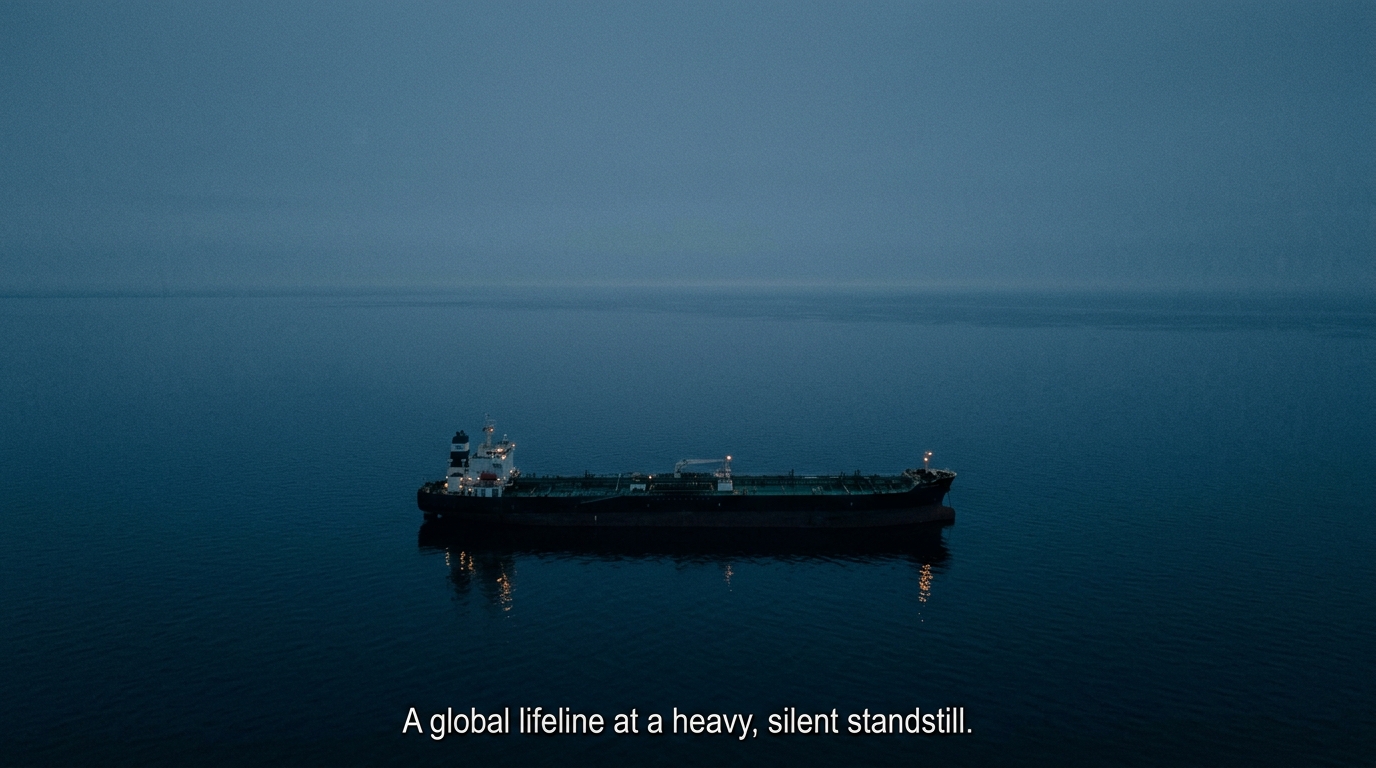
Se o Estreito de Ormuz permanecer fechado até o final de maio, conforme projeções da EIA, as ações de energia e exportadoras de GNL terão desempenho superior, enquanto companhias aéreas e indústrias dependentes de combustível sofrerão queda nas margens. Isso ocorre porque o gargalo de 20% na oferta da OPEP não tem resolução diplomática à vista e as reservas estratégicas globais estão sendo consumidas.

IPC dos EUA Atinge 3,8% com Custos de Energia Pressionando o Fed — Cortes de Juros Adiados para 2027
Se o IPC de abril em 3,8% marcar o início de um regime de inflação sustentada impulsionada pela energia, em vez de um pico transitório, as ações de semicondutores e de crescimento terão desempenho inferior aos nomes de valor e energia. Isso ocorre porque o Goldman Sachs e o BofA já adiaram as expectativas de corte de juros para o final de 2026 ou além, e a transição de Warsh para a presidência do Fed sinaliza uma mudança para uma política monetária mais restritiva.
If Trump secures a Boeing order of 50+ widebody aircraft and a non-trivial soybean/LNG purchase commitment from Xi at the Temple of Heaven summit Thursday May 14, then BA breaks above the $254.35 52-week high and LNG/VG re-test recent range tops within 5 trading sessions, while NVDA and QCOM unwind back to their 20-day SMAs ($198 / $192) as the market re-prices the chip export framework concession — because Beijing needs visible trade wins to address its 21.6% YoY decline in domestic car sales and Trump needs farm-state and aviation deliverables ahead of the midterm cycle.
Key fact
QCOM 99% CVaR of -$24.50/share against a current $210.31 price means that in the worst 1% of trading days, the expected loss is 11.6% in a single session — by far the most extreme tail in the basket. Combined with an excess kurtosis of 8.5 and Ljung-Box p-value of 0.02 (autocorrelation evidence), this confirms the parabolic-blow-off statistical fingerprint.
If the Temple of Heaven summit on May 14, 2026 produces a tangible Boeing aircraft order (50+ aircraft), a soybean/agricultural purchase commitment, and a continuation/expansion of US LNG cargo flow to China, then the long basket (BA, LNG, VG, BLK) returns 4–8% over 5 trading days while the short basket (NVDA, QCOM) declines 5–10% over the same window — because the deliberate exclusion of Jensen Huang from the delegation has telegraphed the White House's willingness to concede AI chip export framework leverage in exchange for the aviation and agricultural deliverables that demonstrably play to midterm swing states, while Beijing's 21.6% YoY domestic car sales decline forces it to absorb whatever visible commitments are offered to stabilize trade-flow optics.
Bullish Case
The bull case rests on Trump's midterm political constraint creating a forced announcement window: with inflation at a 3-year high of 3.8%, gas at $4.52/gallon, and Iran war costs at $29 billion, the President arrives in Beijing in need of visible deliverables. Boeing CEO Ortberg on the delegation alongside Musk, Cook, and Fink — but Huang's exclusion — is the clearest pre-positioning signal possible. Three US LNG tankers have already left Louisiana for China, ending a year-long pause; the yuan has hit a 3-year peak suggesting Beijing is front-running the deal. The 2017 Trump Beijing visit yielded $250B in announced commercial agreements; BA rallied 8% in the two weeks following. Even modest aircraft and agricultural deals would compound onto BA's already-strong 135 net April orders and LNG's structural 28.97% gross margins, while the deliberate Huang exclusion creates a clean asymmetric short opportunity in NVDA/QCOM as the chip-export framework gets reset.
Bearish Case
The bear case starts with the fact that Trump has already publicly stated he will discuss Taiwan arms sales and Jimmy Lai's imprisonment at the summit — these are friction items that have historically derailed bilateral commercial announcements. China's domestic car sales fell 21.6% YoY in April (7th consecutive monthly decline), meaning Beijing is in no position to absorb large soybean or LNG commitments that would crowd out domestic suppliers. The CPI surprise on May 12 (3.8% YoY) is fueling chip de-rating across the entire technology complex; even if NVDA/QCOM are correct shorts on summit risk, they could rally with the broader tape on any dovish Fed surprise. UK gilt yields blew out to 1998 highs and the FTSE 250 fell 1.5% (May 12) — global risk-off conditions could amplify any summit disappointment into a broad-market correction that hurts the long basket more than the short basket benefits.
Risk Factors
Summit cancelled or postponed beyond May 20 — kill all positions and exit at-market
Iran war escalation diverts Trump's focus, summit ends without commercial announcements — exit longs, hold shorts
Trump announces new China tariffs during or within 48 hours of the summit — flip basket (cover shorts, exit longs, consider counter-position)
China cancels en-route LNG cargoes — exit LNG and VG positions immediately
BA fails to make a new 52-week high within 5 sessions post-summit AND closes below $217 — exit BA
Macro tail risk: UK gilt blow-out broadens into a global yield shock causing risk-off correction across the entire basket — reduce gross exposure by 50%
Statistical risk: QCOM/NVDA correlation 0.82 means the short basket is effectively one concentrated bet — limit combined short to 3% portfolio