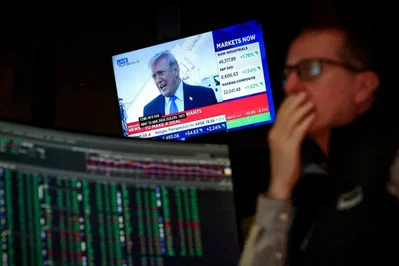
Stocks rise and oil falls on U.S.-Iran diplomacy hopes
U.S. stocks rose and oil prices fell Tuesday as investors hoped for diplomatic talks between Washington and Tehran. Brent crude dropped below $100 a barrel.

Wall Street stock indexes advanced and oil prices saw a significant decline on Tuesday as investors weighed the possibility of a diplomatic resolution to tensions between the United States and Iran. Sentiment was bolstered by reports that negotiating teams could return to Pakistan for further discussions, following high-level talks in Islamabad that recently concluded without a final agreement.

The Dow Jones Industrial Average rose 0.47% to 48,448.92, while the S&P 500 increased by 0.58% to 6,926.50. The Nasdaq Composite saw the strongest performance among major benchmarks, gaining 0.98% to reach 23,411.15. Strength in large-cap technology stocks helped the S&P 500 recover to levels seen before the conflict began. In Europe, the STOXX 600 index rose 0.96%, though it remains below its closing level from late February, prior to military actions involving the American government and Israel.
\"Investors seem to be buying into the notion that it may take a while, but there is an off-ramp in the future to this war.\"
Energy markets reacted sharply to the shifting geopolitical outlook. Brent Crude Oil fell 4.37% to settle at $95.02 per barrel, while West Texas Oil dropped 6.54% to $92.60 per barrel. Both benchmarks had surged above $100 earlier in the week following the implementation of a U.S. blockade on Iranian ports, which had raised fears regarding supply stability through the Strait of Hormuz.
\"The problem is that markets may be pricing the chance of de-escalation faster than the proof of it, so I would still expect a choppy, headline-driven tape rather than a clean risk-on trend.\"
The U.S. dollar saw its safe-haven demand diminish, with the dollar index sliding 0.29% to 98.05. This shift impacted major currency pairs, including EUR/USD and USD/JPY. According to a Bank of America global fund manager survey, while overall sentiment remains at its most bearish since last June, there is a contrarian case for risk assets if oil prices remain below $84 per barrel. Economic data from China also indicated that export growth slowed in March as the conflict impacted global demand, despite ongoing momentum in the artificial-intelligence sector.
In the fixed income market, U.S. Treasury yields moved slightly lower. The benchmark 10-year yield fell to 4.281%, while the two-year yield, which is sensitive to interest rate expectations, stood at 3.776%. Despite the daily dip, two-year yields remain nearly 40 basis points higher than their February lows as investors remain wary of energy-driven inflation. This has led to speculation that major central banks might delay expected rate cuts or even consider further hikes to maintain price stability. Additional reporting for this story was contributed by journalists in Singapore.