South Korean President Lee Vows More Stock Market Reforms
President Lee pledged to ban duplicate listings to address the Korea discount. The KOSPI rose five percent as the government vowed to support market stability.

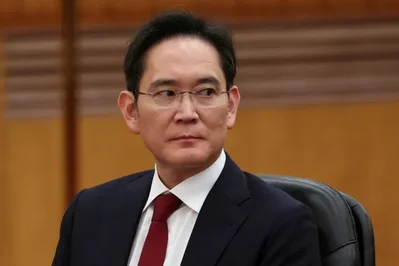
South Korea President Lee Jae Myung has pledged fresh reforms to address the chronic undervaluation of the domestic stock market, commonly referred to as the "Korea discount." The proposed measures include a ban on duplicate listings by holding companies and their subsidiaries, a practice that has long been criticized for diluting shareholder value by lowering earnings per share. During a televised meeting on Wednesday, President Lee stated that the market is currently in a process of normalization and expressed optimism that a "Korea Premium" could eventually be achieved through sustained policy efforts.
Since taking office in June 2025, the administration and the ruling Democratic Party have introduced various reforms to improve corporate governance, particularly within family-owned conglomerates. President Lee noted that three separate amendments to the Commercial Act have already significantly enhanced the transparency of governance structures, including a requirement for listed companies to cancel newly acquired treasury shares.
"The market is in the process of normalisation, but Korea Premium may also be possible."
Financial Services Commission (FSC) Chairman Lee Eog-won confirmed that specific plans are being developed to prohibit duplicate listings. Kim Dong-won, an analyst at KB Securities, highlighted the scale of the issue, noting that duplicate listings account for 20% of the total market capitalization in South Korea. This level is disproportionately higher than in other major markets, being 400 times higher than in the United States, 10 times higher than in China, and five times higher than in Japan.
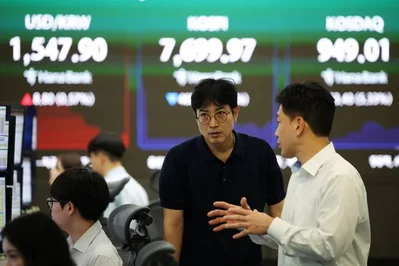
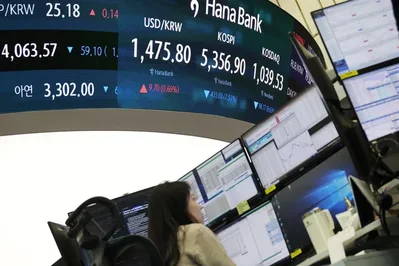
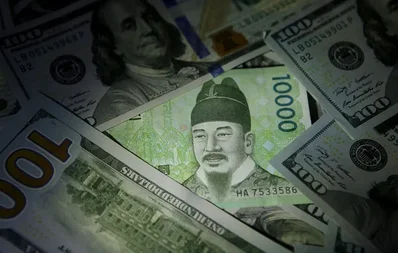
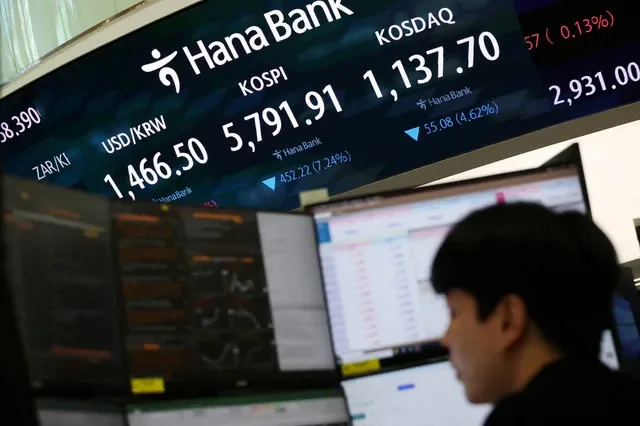
The benchmark KOSPI index rallied 5.04% following the announcement, marking its highest close since late February and triggering a temporary trading curb. To mitigate market volatility, which heightened earlier this month due to the Middle East conflict, the FSC announced that a 100 trillion won stabilization program—approximately $67.33 billion based on the South Korean Won / US Dollar exchange rate—could be expanded if necessary.
Support for the reforms was echoed by the National Pension Service, the world's third-largest public pension fund, which signaled its strong opposition to corporate attempts to circumvent the intent of the Commercial Act. The KOSPI has gained 41% so far this year, building on a record 76% surge in 2025, as investors respond to the government's reform agenda and continued optimism surrounding the artificial intelligence sector.