Investors face heightened security risks across logistics and defense networks as intelligence agencies warn that arrests of low-level proxies will fail to deter Russian handlers.
Rising Sophistication in Attacks
While unskilled recruits still handle the majority of operations, a semi-skilled tier now deploys complex improvised explosive devices featuring timed and remote detonators. Critical infrastructure targeting, spanning military-industrial and transport networks, accounted for over half of all recorded incidents during the 12-month window ending in September 2026.
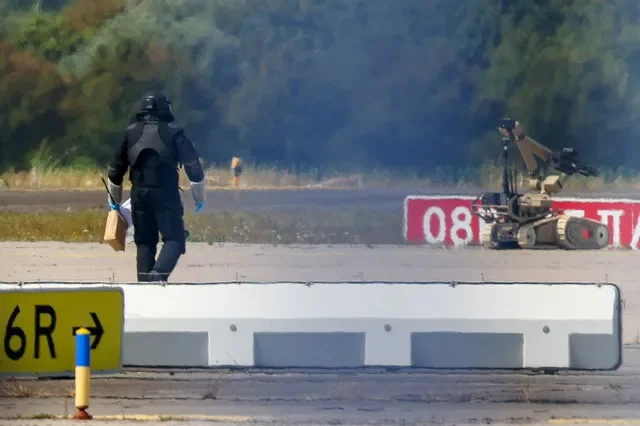
The think tank identified Germany and Poland as the primary targets due to their vital role in supplying Ukrainian forces. An August 4 incident at Leipzig airport involved an explosives-laden drone discovered near an Antonov cargo aircraft utilized for military logistics, followed by a separate drone collision involving a DHL GROUP cargo plane.
Defense Sector Warnings
The United Kingdom issued a formal alert on Tuesday warning defense contractors working with Ukrainian forces of escalating Russian sabotage threats. British authorities previously secured convictions against individuals executing arson attacks on Ukraine-linked businesses at Moscow's behest, alongside separate charges for sharing drone factory details with intelligence operatives.
Western governments maintain that these operations are directed by state intelligence services, though Moscow has repeatedly rejected all accusations.
Defense companies and logistics operators will review security protocols ahead of the next European intelligence briefing scheduled for December 15.