Middle East conflict threatens luxury carmaker profits
Middle East conflict has disrupted high-margin sales for luxury carmakers. Showrooms face temporary closures as regional demand weakens amid global instability.

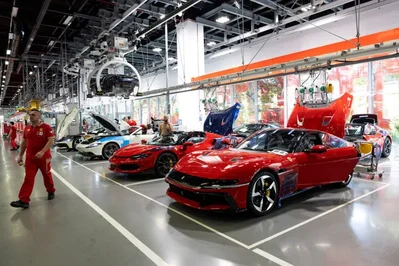
The luxury automotive industry is navigating a precarious period as geopolitical tensions in the Middle East threaten one of its most profitable segments. In February, Rolls-Royce unveiled a bespoke Phantom Arabesque in the United Arab Emirates, a vehicle featuring intricate Arabian-inspired designs commissioned by a Dubai client. However, the subsequent escalation of the war with Iran has cast a shadow over a market that, while representing less than 10% of global sales volume, provides a significant portion of industry profits through high-end customization. A standard Rolls-Royce Phantom, owned by Bayerische Motoren Werke AG, begins at approximately $572,416. Yet, for wealthy buyers in the Gulf, the addition of bespoke features like gold leaf finishes can easily double or triple the final price. This high-margin business is now under pressure as the regional security situation deteriorates. The impact was felt immediately following strikes involving the United States and Israel. Showrooms across the region were forced to close temporarily, and major manufacturers adjusted their operations. Ferrari N.V. and the Maserati unit of Stellantis N.V. both paused deliveries this month, although their facilities have since reopened. > "Given the fluidity of the situation, it would be premature to speculate on longer-term impacts," Rolls-Royce stated in response to the regional crisis. Retailers in the region are already seeing the effects on consumer behavior. F1rst Motors in Dubai reported that while business for ultra-high-end vehicles priced above $1.4 million has stabilized, overall foot traffic has declined by 30%. Despite this, some buyers are reportedly spending up to $34,000 just to airlift their multi-million dollar vehicles out of the conflict zone. The concern is widespread among European manufacturers. In Germany, Volkswagen AG CEO Oliver Blume emphasized the importance of the region's margins. > "Its very high margin," Blume said of Middle East sales, adding that the company expects to see a definitive impact from the conflict. The reliance on the Middle East has grown as other global markets falter. Manufacturers in Italy and the United Kingdom have historically used special editions to drive revenue. For example, Range Rover recently sold limited-edition models in the Gulf for three times their domestic British retail price. However, executives now warn that this bespoke business has nearly stopped as regional clients shift their focus away from luxury acquisitions. The timing is particularly difficult as demand in China has collapsed and European markets remain sluggish. Lamborghini CEO Stephan Winkelmann noted that the industry is running out of new territories to exploit, especially after sales in Russia were terminated following the invasion of Ukraine. > "For a manufacturer of premium and luxury cars in particular, its an utter disaster," said Andy Palmer, former CEO of Aston Martin Lagonda Global Holdings plc. With U.S. sales also facing uncertainty due to potential tariffs, the luxury car sector is left with few remaining growth engines if the Middle East crisis persists. Bentley, another unit of the Volkswagen group, indicated that while production has not yet been cut, the situation will require a reassessment if the instability continues for several more weeks.