
Major Chinese Banks See Flat Profits Amid Property Crisis
Three of China's top banks reported flat 2025 profits as the property crisis persists. Lenders expect margin pressure but hope to benefit from deposit repricing.

Three of the largest financial institutions in China reported nearly flat annual profits as the national economy continues to navigate a significant property sector debt crisis and a sustained slowdown. Industrial and Commercial Bank of China Limited, the largest lender in the world by assets, and CHINA CONSTRUCTION BANK-H both reported net profit growth of less than 1% for the 2025 fiscal year. Meanwhile, Bank of Communications Co., Ltd. performed slightly better, posting a 2.2% increase in net profit over the same period.
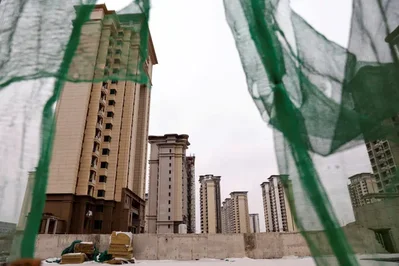
The property crisis in China has yet to reach a definitive bottom, with housing prices declining across the country and several large, unprofitable developers continuing to roll over existing debt. Despite these challenges, net interest margins (NIMs)—a critical measure of bank profitability—remained relatively stable. NIMs for Industrial and Commercial Bank of China Limited and Bank of Communications Co., Ltd. held steady between the end of September and the end of December, while CHINA CONSTRUCTION BANK-H saw a minor contraction.
Asset quality metrics showed some resilience despite the economic headwinds. The non-performing loan (NPL) ratio for Industrial and Commercial Bank of China Limited fell slightly to 1.31% by the end of December, down from 1.33% three months prior. Conversely, the NPL ratio for Bank of Communications Co., Ltd. rose slightly to 1.28% from 1.26% during the same timeframe.
Market analysts have expressed concerns regarding external geopolitical risks, specifically the potential for an extended conflict in the Middle East. Nicholas Zhu, a banking analyst at Moody’s, suggested that a conflict exceeding four weeks could negatively impact bank balance sheets.
"Higher oil prices and the pricing in of political volatility would lead to a more challenging operating environment for Chinese banks, raising asset risks in banks’ lending and investment portfolios," said Nicholas Zhu, a banking analyst at Moody’s.
While margins are projected to shrink further throughout the current year, analysts expect the pace of this decline to moderate as banks implement stricter discipline regarding loan and deposit pricing.
"We expect NIM contraction to further narrow as banks exercise greater discipline in loan and deposit pricing, as well as in the pricing of fees for banking services," Zhu added.
Executives within the industry echoed this sentiment. During a post-earnings press conference, Industrial and Commercial Bank of China Limited Vice President Yao Mingde provided an outlook on the trend.
"Net interest margins will contract at a slower pace," said Industrial and Commercial Bank of China Limited Vice President Yao Mingde during a post-earnings press conference.
A significant opportunity for lenders lies in the repricing of high-cost time deposits. Approximately 50 trillion yuan ($6.9 trillion) in time deposits are scheduled to mature this year, allowing banks to roll over these funds at interest rates nearly half of what was seen in 2022 and 2023. This repricing is expected to lower interest costs by as much as 150 basis points and potentially add 12 basis points to overall net interest margins. Furthermore, the government is reportedly considering regulatory adjustments to bank ownership. Sources indicate that authorities in China may allow certain shareholders to become major investors—holding 5% or more—in up to four different banks, an increase from the current limit of two.