Dollar Holds Steady as Oil Prices Cool and Fed Decision Looms
The dollar steadied on Wednesday as cooling oil prices improved risk appetite ahead of key central bank decisions. Markets remain focused on the yen and the Fed.

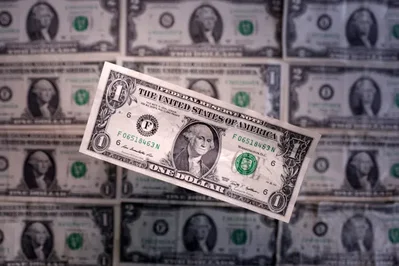
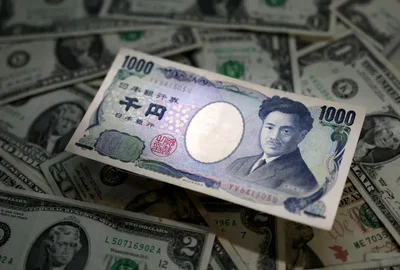
The United States dollar stabilized on Wednesday as a cooling rally in crude oil prices provided a brief boost to risk appetite. This shift comes ahead of a series of pivotal central bank policy announcements. The yen remained under pressure, hovering near levels that have previously sparked concerns about market intervention in Japan. This volatility precedes a scheduled meeting in Washington between Japanese Prime Minister Sanae Takaichi and President Donald Trump.
The euro saw a slight decline after two days of gains, as the European Central Bank prepares for its two-day policy meeting. Meanwhile, the greenback has maintained its status as a primary haven asset during the ongoing Middle East crisis, which has entered its third week. Oil prices retreated slightly following reports of an increase in crude inventories.
"With the rise in crude oil prices appearing to pause for the moment, its not as though conditions have improved dramatically, but for now, markets across the board seem to be recovering somewhat," said Hirofumi Suzuki, chief FX strategist at Sumitomo Mitsui Banking Corporation.
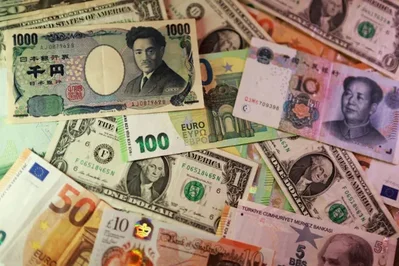
The dollar index, measuring the currency against a basket of peers, edged up 0.06% to 99.61. The euro traded down 0.05% at $1.1532, while the yen weakened 0.01% to 159.00 per dollar. Sterling remained steady at $1.3355. Market analysts are also monitoring industrial entities like Oiles Corporation as Japanese trade dynamics react to the currency's fluctuations.
The geopolitical landscape continues to influence market movements. Trump announced on Tuesday that he would postpone a planned visit to China to meet with President Xi Jinping. Prime Minister Takaichi is expected to depart for her meeting with Trump on Wednesday evening.
"Even if the conflict settles into a prolonged stalemate ... equities could rebound, supporting commodity currencies such as the Australian dollar, while also prompting a rebound in the currencies of oil-importing economies such as the yen and the euro," said Mizuho Securities chief FX strategist Masafumi Yamamoto and market analyst Masayoshi Mihara in a report.
The analysts noted that the Takaichi administration would likely favor a weaker yen, limiting the potential downside for the USD/JPY pair. Investors are now focused on the upcoming policy decisions from the Federal Reserve, the European Central Bank, the Bank of England, and the Bank of Japan. While rates are expected to remain unchanged, traders are seeking clarity on inflation and the economic impact of the conflict involving Israel and Iran.
In the commodity currency space, the Australia dollar strengthened 0.1% to $0.7109, and New Zealand's kiwi rose 0.05% to $0.586. In the cryptocurrency market, Bitcoin fell 0.40% to $74,257.80, while Ethereum rose 0.22% to $2,333.60. Companies operating in this sector, such as Bitcoin Depot Inc., continue to navigate the high-volatility environment.