Dollar Edges Up as Cooling Oil Prices Steady Global Markets
The dollar rose on Wednesday as lower oil prices steadied markets. Investors now await policy decisions from the Federal Reserve and other major central banks.

The United States dollar showed modest strength on Wednesday as a stabilization in energy prices helped settle currency markets. Investors are currently maintaining a cautious stance ahead of a series of high-stakes central bank meetings scheduled for later this week.
Market volatility has eased as the recent rally in crude oil prices showed signs of cooling. This follows a period of heightened geopolitical tension after Israel and the United States launched military actions against Iran nearly three weeks ago. While Brent Crude Oil has remained above $100 per barrel for four consecutive sessions, prices dipped slightly after authorities in Iraq and the Kurdish region reached an agreement to resume oil exports through the Ceyhan port in Turkey.
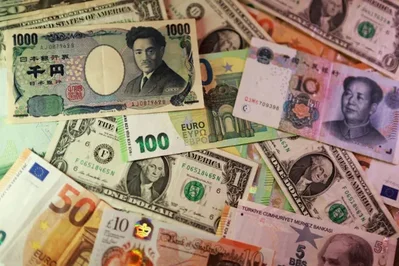
The US Dollar Index, which measures the greenback against a basket of six major currencies, edged up 0.1% to 99.61. The Euro / US Dollar pair slipped 0.1% to $1.153 as traders awaited the commencement of the European Central Bank's two-day policy meeting. In the United Kingdom, the British Pound / US Dollar remained largely unchanged at $1.335, reflecting a similar lack of movement in the Japanese currency.
In Japan, the US Dollar / Japanese Yen pair held steady at 158.95. Market focus in Tokyo is centered on Prime Minister Sanae Takaichi, who is scheduled to depart for Washington on Wednesday to meet with Donald Trump. The two leaders are expected to discuss regional security and a second round of Japanese investment in the United States as part of ongoing tariff negotiations.
"With the rise in crude oil prices appearing to pause for the moment, it's not as though conditions have improved dramatically, but for now, markets across the board seem to be recovering somewhat," said Hirofumi Suzuki, chief foreign exchange strategist at Sumitomo Mitsui Banking Corp.
Central banks in the United States, Europe, Britain, and Japan are all widely expected to keep interest rates on hold this week. However, traders will be scrutinizing policy statements for clues regarding future borrowing costs, particularly in light of potential inflationary shocks stemming from the conflict in the Middle East. Money markets now anticipate the Federal Reserve will cut rates only once this year, down from the two cuts expected prior to the conflict. Meanwhile, the European Central Bank is now projected to raise interest rates in 2026, a shift from earlier expectations of further cuts.
"The focus will very much be on the potential implications on inflation stemming from the conflict in the Middle East," said Derek Halpenny, a senior currency analyst at MUFG.
Despite the upcoming announcements, analysts suggest that significant moves in foreign exchange or interest rate markets are unlikely this evening, as central banks are expected to provide balanced communication without strong forward signals.