
Chinese Automakers Target Premium Brands at Beijing Show
Chinese firms are launching premium models at the Beijing Auto Show to rival German brands. These tech-heavy vehicles are priced lower to attract global buyers.

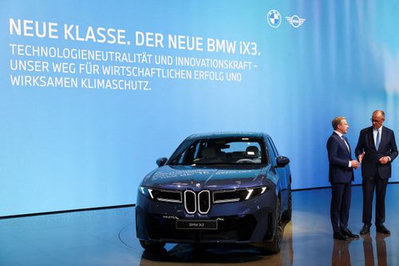
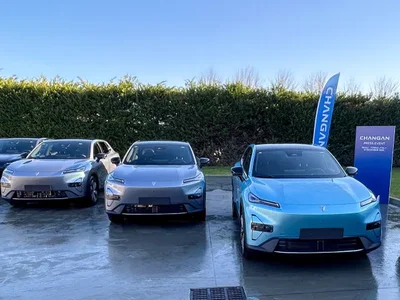
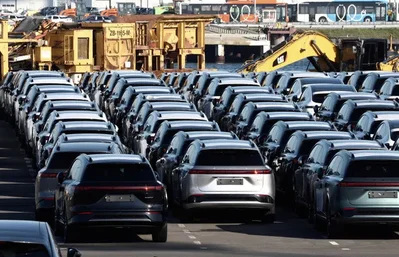
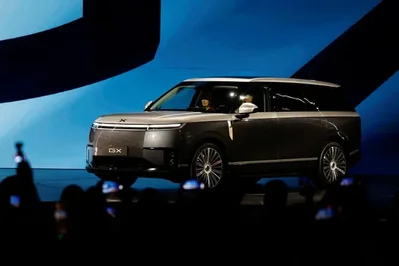
At the latest Beijing Auto Show, automakers from China have issued a direct challenge to the premium automotive establishment of Germany, targeting customers traditionally loyal to brands like Porsche, MERCEDES-BENZ GROUP AG, and BMW. Following years of producing technologically advanced, budget-friendly electric vehicles, manufacturers such as GEELY AUTOMOBILE HOLDINGS LT and NIO INC-CLASS A are now launching high-end models that offer premium features at a fraction of the cost of their European rivals. This shift marks a significant evolution for an industry that has spent several years engaged in a domestic price war. Bo Yu, Greater China country manager at JATO Dynamics, noted that the competitive landscape has fundamentally changed.
The price war has turned into a value-for-money war.
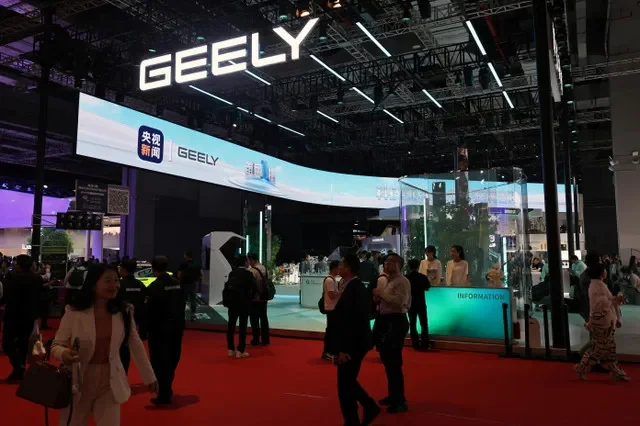
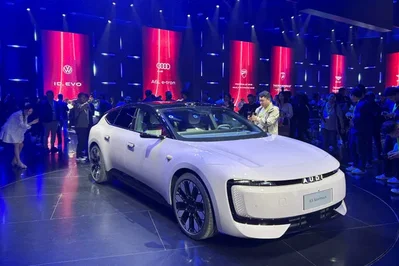
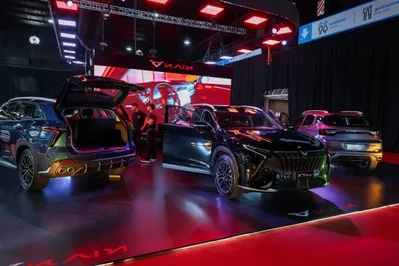
The current Beijing Auto Show features the debut of 181 new models and 71 concept cars, with a heavy presence of premium 9-series SUVs. This upmarket push comes as German automakers face declining sales in the region. Data from S&P Global Mobility indicates that cumulative sales for German brands in the Chinese market fell nearly 25% to 3.85 million vehicles compared to 2019. VOLKSWAGEN AG units, including Audi and Porsche, along with Mercedes-Benz and BMW, all reported sales contractions in the first quarter. This domestic pressure is driving Chinese firms to look toward international markets, where they have shown the capacity to absorb tariffs while remaining price-competitive. Stephen Dyer, head of AlixPartners automotive practice in Asia, emphasized the importance of this strategy.
I expect more Chinese companies to double down on premiumisation.
Geely recently unveiled its Zeekr 8X, a full-size plug-in hybrid SUV designed to compete directly with high-performance European models. The 8X features innovative safety technology, such as the ability to tilt upward before a side impact, and convenience features like gesture-controlled autonomous parking. With a starting price under $53,000, Geely demonstrated the 8X outperforming the Porsche Cayenne and BMW 5M in speed trials—models that cost significantly more. Geely Automobile CEO Gan Jiayue highlighted the vehicle's market position during a recent presentation.
This is the new king of the road.
This trend also presents a challenge for manufacturers in the United States. Industry analysts suggest that by focusing on large, high-margin SUVs, Chinese automakers are targeting the most profitable segments of GENERAL MOTORS CO, FORD MOTOR CO, and Stellantis. While Chinese vehicles are not currently available to American consumers, experts believe this could change. Tu Le, managing director of Sino Auto Insights, warned that the traditional revenue drivers for Detroit are at risk.
Detroits cash cow is no longer safe.
The shift toward local premium brands is supported by changing consumer demographics. The average age of car buyers in the region has increased to over 40, leading to a preference for larger, more sophisticated vehicles. Younger buyers, meanwhile, are increasingly prioritizing cutting-edge technology over the historical heritage that has long been a selling point for German luxury brands. JATO Dynamics representative Bo Yu suggested that European manufacturers may be losing their appeal to a new generation of drivers.
German brands are stuck in the past.