Brazil Rate Cycle Size Remains Open Says Central Bank
Director Paulo Picchetti says the bank is monitoring geopolitical risks and inflation. The final scope of the rate adjustment cycle remains data-dependent.

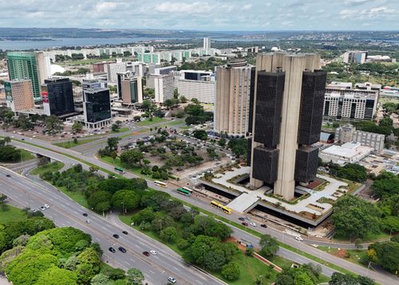
The Central Bank of Brazil is maintaining a cautious stance regarding its monetary policy path as geopolitical tensions escalate. Paulo Picchetti, the bank's director of international affairs, indicated that the final scope of the current interest rate adjustment cycle remains uncertain due to the ongoing conflict involving the United States, Israel, and Iran.
Speaking at an event hosted by ITAU UNIBANCO HOLDING SA in Washington, Picchetti noted that the balance of risks to inflation has become more asymmetric since the policymakers last met in March. During that meeting, the bank initiated rate cuts with a 25-basis-point reduction, bringing the benchmark Selic rate to 14.75%.
Things have definitely not improved since our March meeting.
While the central bank previously viewed inflation risks as symmetric, the recent geopolitical instability has complicated the outlook. Picchetti clarified that while an asymmetric risk profile does not necessarily mean an immediate halt to rate cuts, it does influence the overall budget or total extent of the easing cycle.
I didnt say explicitly that this would make the case, even if it becomes asymmetrical, for stopping the cycle immediately. But this is something that obviously has an impact on the total budget of the cycle.
Market expectations for inflation continue to deviate from the official 3% target, particularly over longer horizons. Recent data showed that inflation reached 4.14% in the 12 months through March, a figure that exceeded initial projections. This has led officials to investigate whether rising costs are a direct result of supply shocks or if secondary effects are beginning to take hold.
The central bank is also monitoring the energy market, specifically the prices of Brent Crude Oil and West Texas Oil. As a net oil exporter, the Brazilian economy could potentially see a boost in growth from higher energy prices, though the overall impact remains difficult to predict given the volatility in the Middle East.
That is a big question which we will be following closely.
The central bank is expected to remain data-dependent as it approaches its next policy meeting scheduled for April 28-29.