
Brent crude oil tops $100 per barrel as supply risks persist
Brent crude rose above $100 on Friday as supply risks persist. Prices climbed after reports clarified that a tanker did not pass the closed Strait of Hormuz.

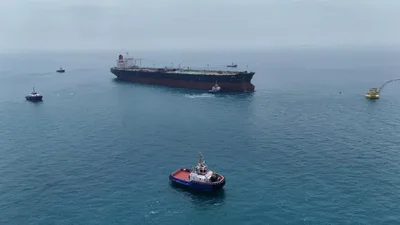
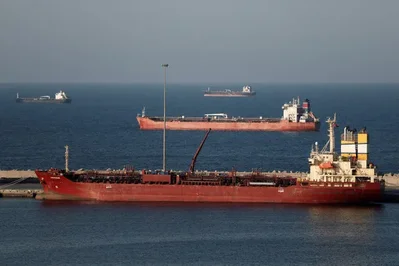
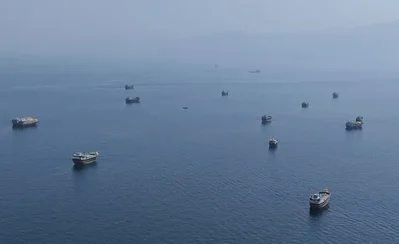
Brent Crude Oil prices climbed past the $100 per barrel mark on Friday as geopolitical tensions in the Middle East intensified. The price surge followed a correction regarding an oil tanker from India which was initially thought to have traversed the Strait of Hormuz. It was later confirmed by government officials that the vessel had actually departed from Oman, located east of the critical waterway that has remained closed since the outbreak of conflict involving the United States, Israel, and Iran. Brent futures for May delivery rose by $1.37, or 1.36%, to reach $101.83 a barrel, while West Texas Intermediate crude for April gained 53 cents to settle at $96.26. The market remains on edge as the Iranian government continues to target vessels attempting to pass through the Strait of Hormuz, a vital maritime corridor between the Persian Gulf and the Gulf of Oman. In an effort to stabilize global energy markets, the U.S. Treasury Department issued a 30-day license allowing for the purchase of petroleum products from Russia that are currently stranded at sea. Treasury Secretary Scott Bessent noted that this measure aims to mitigate the volatility caused by the ongoing regional war. This decision impacts approximately 100 million barrels of Russian crude, a volume nearly equivalent to a full day of global production. > "Russian oil was already going to buyers; this is not bringing additional barrels to the market but it does reduce some friction," said Bjarne Schieldrop, chief commodities analyst at SEB. The supply outlook remains strained despite a coordinated effort by the International Energy Agency to release 400 million barrels from strategic stockpiles, which includes 172 million barrels from the American Strategic Petroleum Reserve. Analysts suggest that these measures may only provide temporary relief. Tony Sycamore of IG noted that any market optimism was quickly dampened by the re-escalation of risks in the Middle East. Iraq has also seen its energy infrastructure targeted, with two fuel tankers in its waters reportedly struck by explosives-laden boats. Iraqi security officials stated that the country's oil ports have completely ceased operations. Meanwhile, Iran's Supreme Leader Ayatollah Mojtaba Khamenei has declared that the Strait of Hormuz will remain closed as leverage against Western powers. Financial institutions are adjusting their forecasts in response to the prolonged instability. The Goldman Sachs Group, Inc. predicted on Friday that Brent prices would average over $100 in March and $85 in April, citing potential lasting damage to energy infrastructure. > "Brent is better supported than WTI because Europe is more susceptible to energy security issues, while the U.S. is able to stave off its exposure due to its domestic output," said Emril Jamil, senior analyst at London Stock Exchange Group plc. Further complicating the situation, reports indicate that Iran has deployed naval mines within the strait, a move expected to hinder any future efforts to reopen the waterway. U.S. President Donald Trump remarked that while the U.S. could benefit financially from higher oil prices, the primary objective remains preventing Iran from acquiring nuclear weapons. Treasury Secretary Bessent added that the U.S. Navy may eventually lead an international coalition to escort vessels through the strait when military conditions allow.