US Futures Slip as Oil Prices Rise and Fed Stays Cautious
US stock futures fell Thursday as oil prices hit 115 dollars a barrel. The Fed flagged inflation risks and signaled a cautious approach to interest rate cuts.

United States stock index futures declined on Thursday as a combination of surging energy costs and a cautious outlook from the Federal Reserve weighed on investor sentiment. Brent Crude Oil prices reached $115 per barrel following an escalation of hostilities in the Middle East, where Iran targeted energy facilities in retaliation for a strike by Israel on its South Pars gas field. While global prices climbed, the U.S. benchmark traded at its widest discount to Brent in 11 years, influenced by strategic reserve releases and rising freight costs.
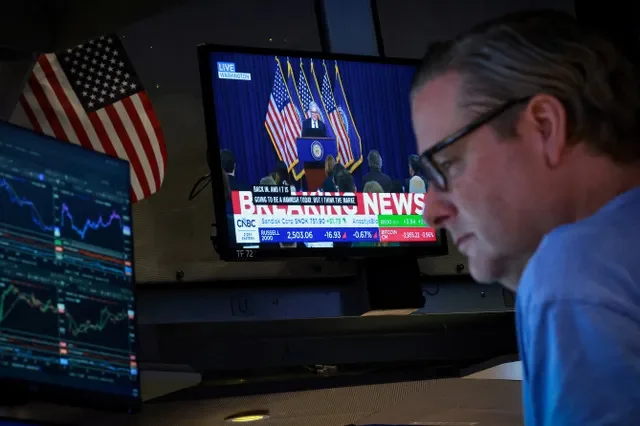
The Federal Reserve kept interest rates unchanged on Wednesday, with Chair Jerome Powell warning of potential inflationary pressure ahead. Although Powell maintained a forecast for a single 25-basis-point cut this year, major financial institutions including Morgan Stanley, Goldman Sachs, and Barclays have delayed their expectations for a rate reduction from June until September. Market sentiment remains cautious, with some data suggesting a dovish shift might not materialize until mid-2027.
The big takeaway from the Fed decision is that the Fed will not be riding to the economy’s rescue, even if gas and diesel prices keep rising.
Bill Adams, chief economist for Comerica Bank, noted that monetary policy has limited tools to combat external energy shocks.
Monetary policy can slow growth and inflation, or it can speed up growth and inflation. But it can’t offset an energy supply shock, which weakens growth at the same time that it raises inflation.
In the technology sector, a strong forecast from Micron Technology, Inc. failed to uplift sentiment, with its shares down 4.5% in premarket trading. The market reacted to the company's increased spending plans in an environment of high borrowing costs. This sell-off extended to other chipmakers, with Sandisk Corporation falling 4.5%, Western Digital Corporation declining 2.3%, and AI leader NVIDIA Corporation dipping 0.4%.
As of 5:27 a.m. ET, Dow E-minis were down 135 points, S&P 500 E-minis declined 22.25 points, and Nasdaq 100 E-minis fell 118.25 points. Both the Dow and Nasdaq slipped below their 200-day moving averages, while the S&P 500 hit a four-month low. Technical indicators suggest the benchmark index is nearing a critical long-term momentum threshold.
Rising energy costs pressured travel stocks, with Delta Air Lines, Inc. and United Airlines Holdings, Inc. trading lower. Cruise lines including Norwegian Cruise Line Holdings Ltd. and Carnival Corporation & plc were muted. Additionally, expectations of sustained high rates and a stronger dollar impacted precious metals, leading to a 9% drop for miners GOLD FIELDS LTD and Endeavour Silver Corp..
Investors are now awaiting further commentary from Fed officials and the latest weekly jobless claims report. Attention is also turning to a summit between the U.S. and Japan, where President Donald Trump may seek cooperation regarding the conflict in Iran and the security of the strategic Strait of Hormuz.