US Pending Home Sales Rise 1.5 Percent in March
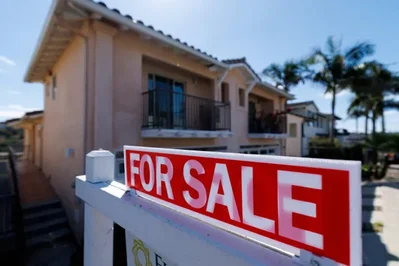
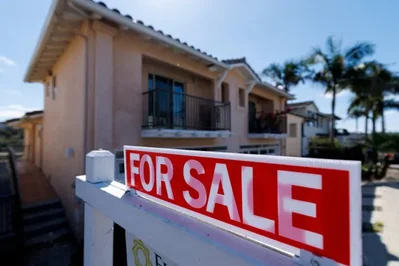
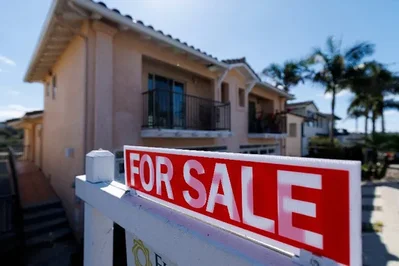
Pending home sales rose 1.5% in March, beating forecasts despite rising mortgage rates. Higher borrowing costs and low inventory continue to limit the market.

The United States housing market showed unexpected resilience in March as contract signings for previously owned homes surpassed economist projections. Despite persistent headwinds from elevated mortgage rates and limited inventory, the pending home sales index climbed 1.5% to a reading of 73.7, according to the National Association of Realtors. This performance exceeded the 0.5% increase anticipated by analysts. Regional performance was mixed across the country, with activity increasing in the Northeast and the South, while the West and Midwest saw declines. On a year-over-year basis, pending home sales were down 1.1%, reflecting the broader cooling of the residential market compared to the previous year.
The housing sector has been under pressure as geopolitical tensions, specifically the conflict involving Israel, contributed to volatility in energy markets. Rising prices for West Texas Oil and Brent Crude Oil have stoked inflation concerns, subsequently pushing up U.S. Treasury yields. Because mortgage rates typically track these yields, borrowing costs for homebuyers remained elevated throughout the month. Data from the mortgage finance agency FREDDIE MAC indicated that the popular 30-year fixed mortgage rate averaged 6.38% by the end of March. This represents a significant jump from the 5.98% average recorded in late February. During this period, both Freddie Mac and FANNIE MAE had expanded their purchases of mortgage-backed securities in an effort to stabilize the market.
Lawrence Yun, the chief economist at the National Association of Realtors, noted that the sensitivity to these fluctuating rates is most pronounced among younger, first-time participants in the market.
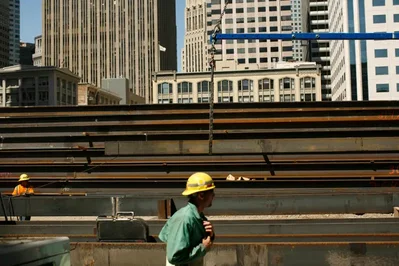
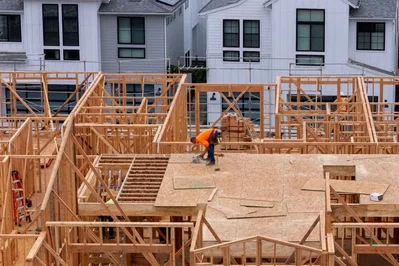
As a result, boosting supply and new-home construction should focus on smaller, more affordable homes.
The broader housing landscape remains challenging, with existing home sales recently hitting a nine-month low. Additionally, homebuilder sentiment dropped to a seven-month low in April, partly due to the fact that energy costs account for roughly 4% of construction material and service inputs. These affordability issues are increasingly becoming a central topic of discussion ahead of the upcoming November midterm elections.