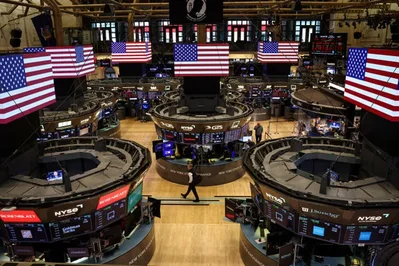
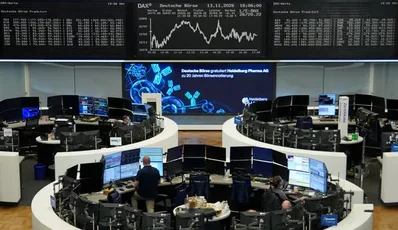
On the policy front, U.S. Trade Representative Jamieson Greer indicated that tariff rates for some nations would climb from 10% to 15% or higher. However, the lack of specific details regarding trading partners or implementation timelines has left analysts cautious. Analysts from Westpac Banking Corporation[Symbol:{ "assets":{ "symbol":"WBC.AX" } }] noted that the recent State of the Union address offered little clarity on new economic initiatives:
President Trump’s 2026 State of the Union address focused on the economy but provided little-to-no information on new policy initiatives.
In currency markets, the Japanese yen strengthened by 0.2% to 156.045 per dollar, recovering from two-week lows. This rebound was supported by comments from Bank of Japan Governor Kazuo Ueda, who suggested that Japan[Country:{ "assets":{ "country":"JP" } }] might consider interest rate hikes following data reviews in March and April. Despite the government's appointment of stimulus advocates to the central bank board, some analysts believe underlying fundamentals will lead to continued stabilization for the yen.
Fixed income markets remained relatively stable, with the 10-year Treasury yield rising slightly to 4.048%. According to the FedWatch tool from CME Group Inc.[Symbol:{ "assets":{ "symbol":"CME" } }], there is a 98% probability that the Federal Reserve will maintain current interest rates during its upcoming March meeting.
The offshore Chinese yuan held steady at 6.854 against the dollar, marking its strongest level in three years as China[Country:{ "assets":{ "country":"CN" } }] continues to see currency strength. Elsewhere, the euro remained flat at $1.1815, and the British pound held at $1.3555. The Australian dollar traded steadily at $0.7127, while the New Zealand dollar briefly slipped below the $0.60 mark before recovering to $0.6001.
In the cryptocurrency sector, Bitcoin saw a decline of 1.0%, trading at $68,218.64, while Ether dropped 1.9% to $2,060.31.