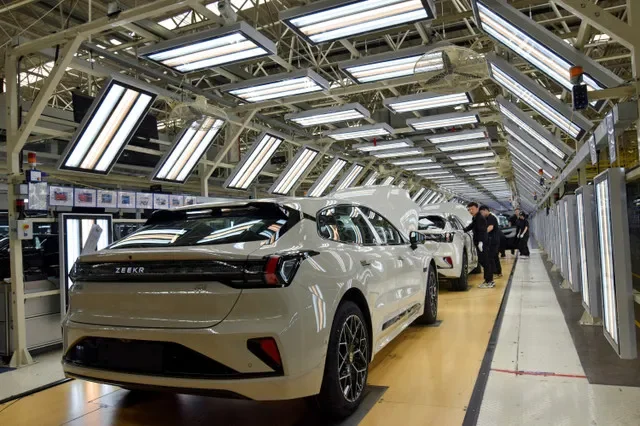
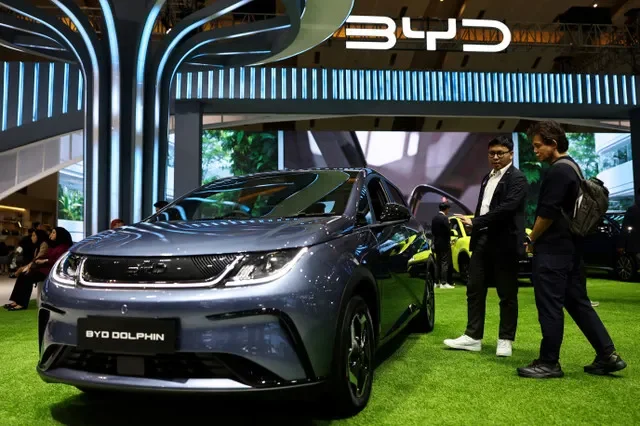
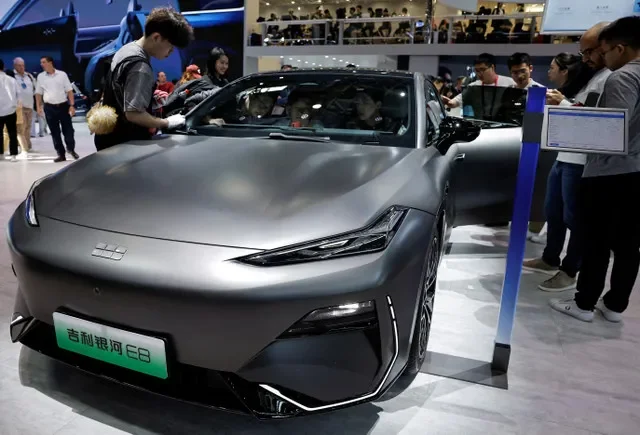
While these vehicles remain largely out of reach for American drivers, they are becoming common sights in other global markets. China recently surpassed Japan as the world’s leading vehicle exporter. Nearby, Canada has agreed to lower tariffs to 6.1% for an initial quota of Chinese EVs, and Mexico has become a major hub for exports and potential manufacturing sites.
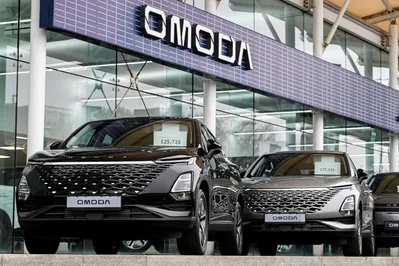
In regions like Europe, Chinese electric models often retail for less than $30,000, frequently including advanced driver assistance and unique lifestyle features such as built-in mini-fridges and karaoke systems. Clint Simone, senior features editor at Edmunds, noted the impressive value proposition after testing several models at a recent trade show.
“The technology they offer for those lower price tags was astounding,” said Simone.
The prospect of Chinese entry into the American market faces stiff opposition from political leaders and domestic industry giants like Ford Motor Company and General Motors Company. Major auto trade groups have urged the government to maintain strict barriers, citing concerns over data security, safety standards, and the protection of American jobs. Republican Senator Bernie Moreno expressed absolute resistance to the idea during a recent event at a Ford plant.
“As long as I have air in my body, there will not be Chinese vehicles sold in the United States of America,” said Moreno.
However, consumer sentiment appears to be shifting. A survey by Cox Automotive found that 49% of prospective buyers view Chinese cars as offering very good or excellent value, and 40% support their entry into the domestic market. This contrasts sharply with the views of auto dealers, only 15% of whom support the introduction of Chinese brands into the country. Rich Benoit, a popular automotive enthusiast and YouTuber, believes the primary driver of interest is purely economic.
“That’s what a lot of people are looking for: efficient, quiet and low cost,” Benoit said.