U.S. Crude Prices Fall Amid Strategic Reserve Releases
U.S. crude prices fell as strategic reserve releases and Venezuelan imports buffered supplies. European and Asian prices hit records due to the war in Iran.

Physical crude oil prices in the United States have begun to retreat from recent peaks, even as markets in Europe and Asia grapple with record-high costs nearly seven weeks into the conflict in Iran. While the effective closure of the Strait of Hormuz has severely disrupted global energy flows and sent international benchmarks soaring, domestic supply cushions have provided a significant buffer for American refiners.

The divergence in pricing is stark. Physical cargoes of Mars crude, a medium sour grade produced in the Gulf of Mexico, were valued at approximately $97 per barrel this Wednesday, a sharp decline from the $128.70 recorded earlier in April. In contrast, European physical oil prices have climbed toward $150 per barrel, while the Dubai benchmark in the Middle East reached an unprecedented $170 per barrel.
"European and Asian buyers need prompt physical barrels. U.S. refiners sit on the supply side of that equation and are price-setters, not price-takers in the current crisis," said David Jorbenaze, global oil market leader at ICIS.
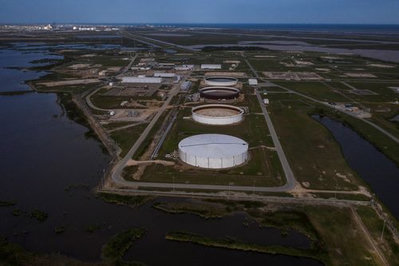
To mitigate the impact of the war, the American government is coordinating with the International Energy Agency to release 172 million barrels from the Strategic Petroleum Reserve (SPR). This influx of medium sour crude directly competes with domestic grades like Mars, exerting downward pressure on prices.
"The SPR release feeds into markets where Mars is going to directly compete, so an increase in its supply will have a downward impact on price, which we have seen historically when there is an SPR release," noted Gus Vasquez, Argus Media Americas crude editor.
Supply has been further bolstered by rising imports from Venezuela. Following the political shifts in January, American refiners have increased their intake of Venezuelan crude to 295,000 barrels per day in the first quarter, a 14% year-on-year increase and the highest volume since late 2018.
"The combination of SPR release, Venezuelan barrels, and high freight risk for Europeans and Asians is keeping a lid on the U.S. physical market," stated Neil Crosby, an analyst at Sparta Commodities.
However, the price relief is not universal across all American grades. West Texas Oil delivered into Europe has reached all-time highs of approximately $142 per barrel, or $22.80 over dated Brent Crude Oil. This surge is driven by European refiners seeking alternatives to lost Middle Eastern supplies.
"Mars is not usually exported as its all consumed domestically, so the export-oriented WTI would be the one which has upside as there's more competition," explained Janiv Shah, vice president of oil markets analysis at Rystad Energy.