Spain Election Focuses on Housing

Spanish Prime Minister Pedro Sanchez and rival Alberto Nunez Feijoo debated housing policies ahead of the upcoming election. The candidates offered contrasting solutions involving deregulation in Madrid and rent controls in Catalonia to address severe market shortages.

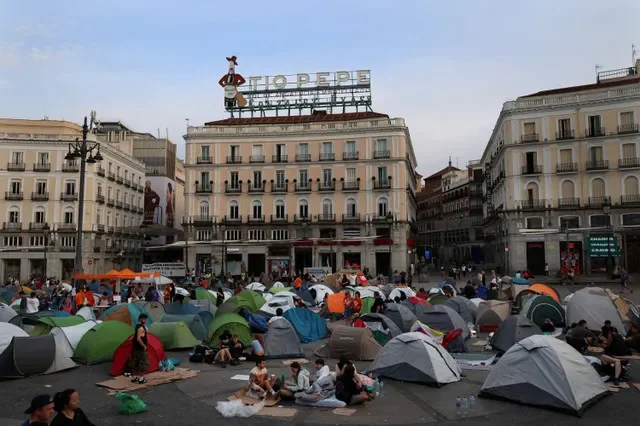
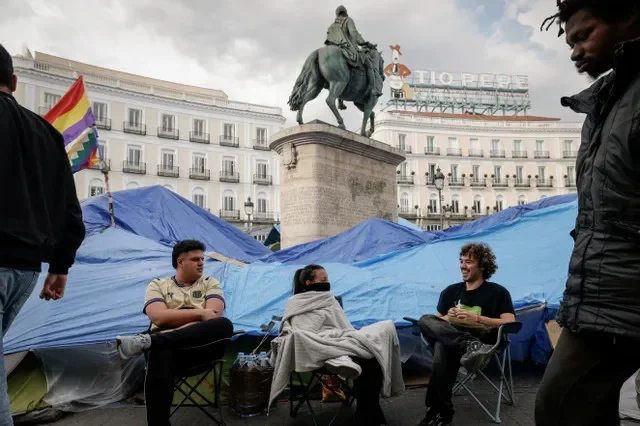
FILE PHOTO: Demonstrators sleep and hang around tents after setting up a camp at Puerta del Sol square in protest against Spain's housing crisis after the forceful eviction of an 87-year-old woman from her apartment in Madrid, Spain, September 27, 2026. REUTERS/Susana Vera/File Photo

Spain faces a general election on November 29 centered on a severe housing crisis, pitting Madrid's deregulation model against Catalonia's rent caps. Prime Minister Pedro Sanchez and rival Alberto Nuñez Feijoo clashed in a televised debate over how to solve the shortage. The snap ballot follows widespread protests triggered by soaring rents and the eviction of an elderly resident.

Divergent Regional Strategies

Feijoo's party promotes deregulation to boost construction, while Sanchez defends the Socialist-led Catalan approach of rent caps and short-term rental bans. Think-tank FEDEA reports that rental properties in Catalonia average 368 inquiries within ten days, compared to 103 interested parties per property in Madrid. Planning regulations established after the 2007 property crash have historically slowed down construction cycles.
Madrid recently passed a land law aiming to reduce the timeline for transforming land into residential property from 15 years down to four years. Fernando Pinto, an economist at King Juan Carlos University, warned that fast-tracking construction risks favoring expensive homes rather than affordable units. Meanwhile, housing supply in Catalonia contracted 22% over the past year while expanding 4% in Madrid, according to FEDEA data.

FILE PHOTO: People sit at a protest camp in Puerta del Sol square following the eviction of the late 87-year-old Maricarmen Abascal, sparking nationwide housing protests, in Madrid, Spain, October 17, 2026. REUTERS/Violeta Santos Moura/File Photo

Political Alliances and Market Risks

Feijoo's party leads current opinion polls and aims to construct 1 million homes over the next four years, potentially relying on backing from the far-right Vox party. Sanchez seeks to replicate his 2003 coalition strategy by promising 100,000 social housing units alongside far-left allies. Analysts note that future coalition partners could heavily influence housing policy execution regardless of the election outcome.

Jorge Galindo, director of ESADE's Centre for Economic Policy, cautioned that repealing rent controls without alternative measures risks causing prices to surge. Regional leaders continue to debate whether aggressive supply expansion must be paired with strict market intervention to protect tenants.

Spain's Prime Minister and Socialist candidate Pedro Sanchez and Spain's opposition People's Party (PP) leader and candidate Alberto Nunez Feijoo attend a televised debate ahead of general elections, in Madrid, Spain, November 19, 2026. REUTERS/Violeta Santos Moura

Voters head to the polls on November 29 to decide which housing policy model will govern the national market.

Insightful questions