Spain Economic Growth Fails to Sway Voters

Despite strong economic growth and higher minimum wages, Spanish voters report feeling squeezed by rising inflation. Prime Minister Pedro Sanchez faces a tough reelection bid as high living costs overshadow macroeconomic gains.

Insights:
Xurve View
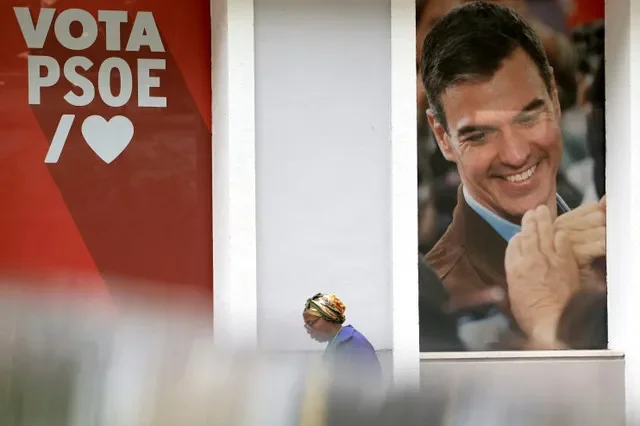
FILE PHOTO: A woman walks past an electoral campaign poster of Spain's Prime Minister and Spanish Socialist Workers' Party (PSOE) leader Pedro Sanchez outside the party’s headquarters in Madrid, Spain, November 18, 2026. REUTERS/Susana Vera/File Photo

Spain faces a general election on Sunday where Prime Minister Pedro Sanchez seeks reelection amidst voter discontent over living costs despite economic growth. Economic gains have clashed with high inflation driven by external shocks originating from the United States and Iran conflict.

Polls indicate that conservative and far-right parties are gaining momentum as voters report feeling squeezed by rising consumer prices. Real wages fell by 0.3% on average between 2019 and 2025, according to a CAIXABANK SA analysis.

Inflation Eclipses Growth

Spain's Prime Minister and Socialist candidate Pedro Sanchez arrives for a televised debate ahead of general elections, in Madrid, Spain, November 19, 2026. REUTERS/Violeta Santos Moura

Spain has topped growth among advanced economies for three years running, yet inflation stood at 4.9% in October. Consumer confidence dropped from 107 in June 2018 to 84.1 in July 2026, per state-run pollster CIS data.

Small businesses make up 95% of Spanish companies and face mounting operating costs alongside recent labor reforms. Salvador Illa, president of Catalonia, said prosperity has not reached all layers of society evenly.

Voters will head to the polls on Sunday to decide the outcome of the general election.

Assets in this story

Insightful questions