Oil prices retreat as central banks signal higher rates
Oil prices eased on Friday as central banks signaled rate hikes to curb inflation risks from the Middle East war. Bonds struggled as traders repriced policy.

Reporting from Singapore, oil prices retreated on Friday while bond markets struggled as global central bankers raised alarms over inflation risks fueled by the ongoing Middle East conflict. Following a series of high-level monetary policy meetings, investors have shifted their expectations toward a more aggressive interest rate path. Market participants no longer anticipate a rate cut from the Federal Reserve in the United States this year, while a rate hike in the United Kingdom is increasingly viewed as a possibility for next month.
"Theres a lot of value in the signal," said Vishnu Varathan, Mizuhos head of macro research for Asia ex-Japan, regarding the hawkish rhetoric from central banks this week.
A significant selloff in global bonds pushed yields to multi-month highs on Thursday, though the pressure eased slightly during Asian trading hours. While cash Treasury markets in Japan were closed for a holiday, futures edged higher. In Europe, the two-year yield in Germany has climbed approximately 56 basis points so far this month.
"Probably every day that goes by without an end to the war or clear positive steps increases the chances of that more adverse scenario for the bond market," said Thomas Mathews, head of markets for Asia-Pacific at Capital Economics.
In the energy sector, Brent Crude Oil futures declined by 3% to $105.43 a barrel, while U.S. crude fell to $94 per barrel. This downturn followed announcements that several European nations and Japanese authorities would join efforts to ensure safe passage for shipping through the Strait of Hormuz. Despite the dip, prices remain volatile as the war between Israel and Iran continues to disrupt regional stability. Natural gas prices also saw sharp increases after strikes targeted critical infrastructure in the region.

"But this means that the Gulf will still be under pressure... so oil prices will not go back to $60, they will maybe stay at $90, at least until the end of the year," said Alicia Garcia-Herrero, chief Asia-Pacific economist at Natixis.
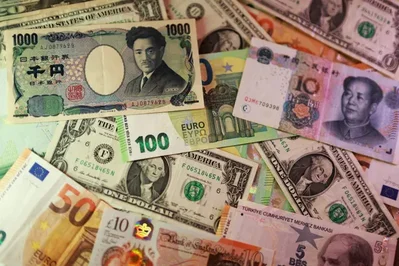
Equity markets remained relatively steady, with the MSCI Asia-Pacific index posting modest gains. In the currency markets, the U.S. dollar faced a weekly decline as traders priced in more aggressive tightening from other central banks. The EUR/USD pair rose to $1.1570, while GBP/USD remained stable at $1.3424. The Japanese yen also saw a recovery, with the USD/JPY pair trading at 157.85 following hawkish comments from Bank of Japan Governor Kazuo Ueda. Meanwhile, safe-haven demand pushed Gold prices up 0.8% to $4,686.97 per ounce.