
Oil prices fall 10 percent as Trump delays Iran strikes
Oil prices fell 10 percent on Monday after President Trump delayed strikes on Iran. The move follows productive talks to resolve hostilities in the Middle East.

Global energy markets saw a dramatic shift on Monday as Brent Crude Oil prices plummeted 10%, reaching their lowest levels in a week. The sharp decline was triggered by an announcement from the United States regarding constructive diplomatic discussions aimed at resolving the ongoing conflict with Iran. President Donald Trump confirmed a five-day postponement of planned military strikes against Iranian infrastructure, providing a temporary reprieve just hours before a critical deadline that had threatened to escalate the four-week war.
Brent futures dropped by $11.17 to settle at $101.02 per barrel, while U.S. West Texas Intermediate (WTI) fell by $9.28, or 9.5%, to $88.95. This volatility follows a period of extreme price swings, with Brent having reached its highest point since July 2022 only days prior. The recent instability has pushed 30-day futures volatility to its highest levels since April 2022.
"The United States and Iran had had VERY GOOD AND PRODUCTIVE conversations over the past two days about a COMPLETE AND TOTAL RESOLUTION OF HOSTILITIES IN THE MIDDLE EAST."
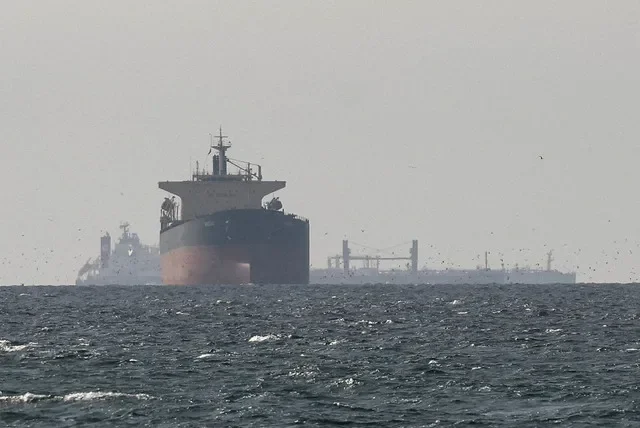
The potential for peace comes after intense threats from Iran's Revolutionary Guards, who had previously warned of attacks on power plants in Israel and facilities supplying American bases across the Gulf. The conflict has already caused significant damage to energy infrastructure and severely restricted maritime traffic through the Strait of Hormuz, a vital artery responsible for 20% of the world's oil and liquefied natural gas flows.
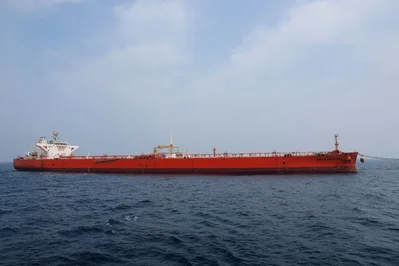
Despite the general blockage, some movement was observed on Monday as two tankers carrying liquefied petroleum gas from the United Arab Emirates and Kuwait successfully navigated the strait toward India. Analysts estimate that the regional crisis has resulted in a production loss of between 7 million and 10 million barrels per day.
"The crisis in the Middle East is worse than the two oil shocks of the 1970s put together."
Fatih Birol, executive director of the International Energy Agency, highlighted the severity of the supply crunch, which has led to temporary waivers of U.S. sanctions on Russian and Iranian oil currently at sea. Consequently, Indian refiners are preparing to resume purchases of Iranian crude, with other Asian refiners considering similar steps. However, U.S. Energy Secretary Chris Wright noted that the administration is unlikely to tap into the Strategic Petroleum Reserve to further stabilize the market.
In Russia, the Baltic port of Ust-Luga resumed operations following a drone alert, though the nearby Primorsk terminal remained closed due to previous air strikes. Meanwhile, Libya faced its own supply disruptions as the El Feel oilfield remained offline following pipeline damage at the Sharara field.
"Production is expected to resume in a week to 10 days."
Central banks are closely monitoring the situation. In the U.S., Federal Reserve Governor Stephen Miran indicated that it is too early to determine the conflict's long-term impact on inflation, though rate cuts remain a possibility to support the labor market. In Japan, the central bank is preparing for potential policy adjustments in April, as the combination of a weak yen and high energy costs fuels inflationary pressure. The Japanese government is also weighing direct intervention in crude oil futures.
The war's impact extends to global logistics, with major aviation hubs in Dubai, Doha, and Abu Dhabi forced to close, leaving thousands of travelers stranded. In China, the government has implemented measures to mitigate the impact of rising energy costs by raising retail fuel price ceilings, though the increase was limited to half of the standard adjustment to protect consumers.