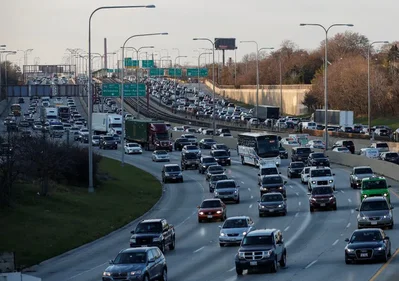

Automakers propose weight based fees to replace gas tax
An auto industry group proposes replacing the federal gas tax with a vehicle weight fee. The plan aims to fund road repairs as EV adoption reduces tax revenue.

A major automotive industry group has proposed a significant shift in how the United States funds its infrastructure, suggesting the elimination of the long-standing federal gasoline tax in favor of a weight-based vehicle fee. The Alliance for Automotive Innovation, which represents leading manufacturers including GENERAL MOTORS CO, TOYOTA MOTOR CORP, Volkswagen, and HYUNDAI MOTOR CO, argues that the current 18.4-cent per gallon tax is no longer sustainable.
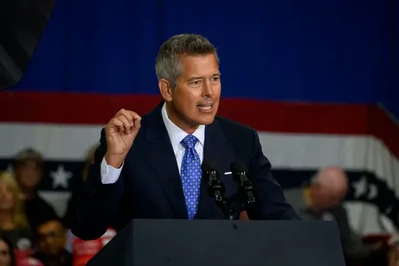
John Bozzella, the head of the alliance, outlined a proposal to address the increasing financial shortfall in the highway trust fund. The plan suggests imposing a single fee on every vehicle based on its weight, which would be collected in a manner similar to annual registration fees.

The federal gas tax has remained stagnant since 1993. Because it was never indexed to inflation, the tax has lost more than 60% of its real-world value over the last three decades. Furthermore, as more consumers transition to electric vehicles (EVs) and highly fuel-efficient cars, the revenue generated from fuel sales has failed to keep pace with the costs of maintaining the national highway network.
"This policy would guarantee every vehicle on the road contributes something to maintaining America’s transportation network," Bozzella said.
Bozzella noted that the current system places an unfair burden on specific groups of drivers who do not necessarily use the roads more than others but pay more due to their vehicle type.
"Those driving older, less fuel-efficient vehicles or who travel long distances bear the financial burden. That’s not fair."
The financial strain on the highway trust fund has forced the government to find alternative funding sources for years. Since 2008, more than $275 billion has been transferred from the general fund to cover road repairs, including $118 billion allocated through the 2021 infrastructure law. With the current five-year surface transportation law set to expire on September 30, the debate over sustainable funding has intensified.
Political discussions have previously touched on imposing specific fees for electric vehicles to bridge the gap. Last year, House Republicans proposed a $250 annual fee for EVs and a $100 fee for hybrids, though these measures were not included in final legislation. More recently, some senators suggested a $1,000 tax on EVs to cover road repair costs.
However, advocacy groups such as the Electrification Coalition have pushed back against high flat fees. They argue that a $250 fee is disproportionate given that the average gasoline-powered vehicle pays approximately $88 per year in federal gas taxes. While some states have already implemented their own EV fees, a federal solution remains a point of contention as the deadline for new transportation legislation approaches.