Indian Shares Log Worst Week in Over a Year on Oil Surge
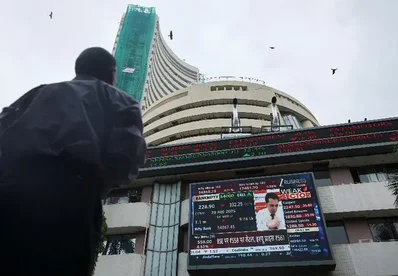
Indian indexes fell nearly 3% this week as Middle East tensions pushed crude to a 20-month high. Rising oil costs pressured the major importer's fiscal outlook.

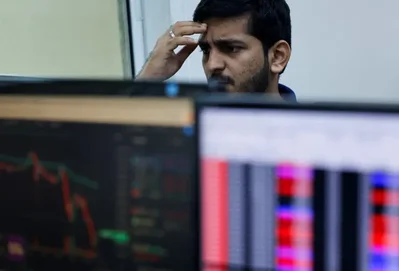
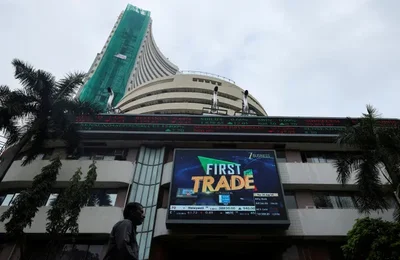
India equity markets recorded their sharpest weekly decline in over a year as geopolitical tensions in the Middle East rattled global sentiment. The benchmark Nifty 50 and BSE Sensex both retreated significantly as investors weighed the risks of a widening conflict involving the United States, Israel[country:\"IL\" }], and Iran.
A primary driver of the sell-off was the surge in energy costs, with Brent Crude Oil climbing to a 20-month high of $87.66 per barrel. This represents a nearly 20% increase within a single week, the most volatile movement seen since the period following the invasion of Ukraine by Russia. As India is the third-largest importer of crude globally, higher prices threaten to widen the current account deficit and stoke domestic inflation.
On Friday, the Nifty 50 index fell 1.27% to close at 24,450.45, while the BSE Sensex dropped 1.37% to 78,918.9. Over the course of the week, both indexes shed approximately 2.9%, marking their most severe weekly losses since late 2024 and early 2025.
The downturn was broad-based, affecting 15 of the 16 major sectoral indices. State-owned lenders were particularly hard hit, falling 6.5% on concerns that rising oil prices would increase government borrowing costs and pressure bond yields. Financial and banking sectors overall saw declines of 4.5%.
The oil and gas sector declined 3.9%, weighed down by marketing firms such as Bharat Petroleum Corporation Limited and Hindustan Petroleum Corporation Limited. Infrastructure giant Larsen & Toubro Limited saw its shares slip 2.2% on Friday, concluding its worst week since May 2020 with a 7.7% drop due to its exposure in the Middle East. Meanwhile, InterGlobe Aviation Limited fell 8.8% for the week as investors anticipated higher fuel expenses and a potential slowdown in international travel.
Analysts noted that while the immediate reaction is negative, the long-term macroeconomic impact remains uncertain.
"The market is taking into account the near-term threat from oil prices."
Pankaj Pandey, head of retail research at ICICI Securities, suggested that expectations remain for crude prices to stabilize eventually. Some investment managers view the current volatility as a potential entry point for long-term investors.
"The U.S. has already said it will not put troops on the ground, which suggests the conflict may not rage on for more than a few weeks, creating a compelling window for investors to accumulate stocks at reasonable valuations."
Samrat Dasgupta, chief executive officer of Esquire Capital Investment Advisors, indicated that the localized nature of the military engagement might limit the duration of the market correction.