Guangdong Province to Reshape Industrial Sector with AI
Guangdong plans to integrate AI across its two trillion dollar economy to upgrade manufacturing. The strategy also focuses on domestic chip production.

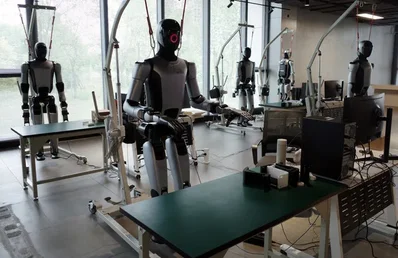
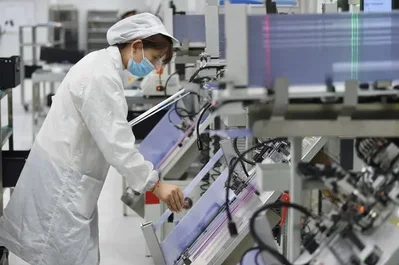
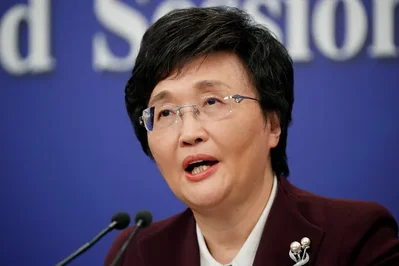
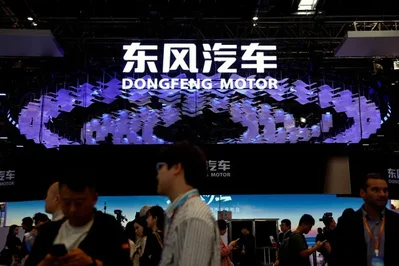
Officials and industry leaders in Guangdong, the primary manufacturing and technology center of China, have committed to a massive expansion of artificial intelligence throughout its $2.1 trillion economy. This strategic pivot follows the national "AI plus" initiative aimed at embedding advanced technology into every industrial sector to drive future growth. As a dominant force in global supply chains for smartphones, home appliances, and electric vehicles, Guangdong's AI integration is expected to have significant international ramifications. The province's ability to modernize its industrial base will likely influence how the European Union and the United States approach de-risking strategies in their own supply networks. Guangdong has maintained its position as the largest provincial economy in the country for over thirty years. In 2025, it recorded a GDP of approximately 14.6 trillion yuan ($2.1 trillion), an economic scale that surpasses several developed nations, including Australia. Governor Meng Fanli stated that the province is focused on deepening AI applications to accelerate commercialization across various industries. To support this, provincial Communist Party secretary Huang Kunming noted that the region is fast-tracking the development of new infrastructure, particularly large-scale computing clusters. In Shenzhen, a major technological hub and the corporate home of TENCENT HOLDINGS LTD, Mayor Qin Weizhong reported that strategic emerging industries now contribute 43% of the city's total GDP. He highlighted that sectors such as robotics, semiconductors, and AI achieved double-digit growth over the past year. > Shenzhen is accelerating domestic substitution in chipmaking equipment, computing clusters and EDA software - areas where China lags the United States and faces restrictive U.S. controls. The mayor also called for increased central government support to establish a self-sufficient ecosystem for AI hardware and software, while advocating for the expansion of domestic standards in smart vehicles. Corporate leaders are also pivoting toward these technological goals. Feng Xingya, chairman of the automaker GAC Group, indicated that the company is integrating sophisticated AI models into its autonomous driving platforms. Meanwhile, state-asset officials confirmed that government capital will be increasingly directed toward advanced manufacturing sectors, including drones and AI-driven production.