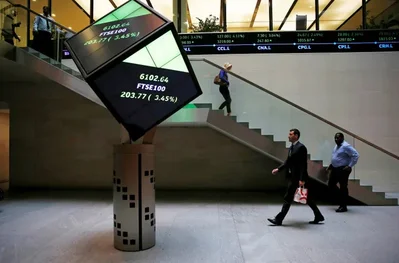
FTSE 100 reaches one-month high on US-Iran ceasefire
The FTSE 100 rose 2.9 percent on Wednesday after the US and Iran agreed to a two-week ceasefire. The deal lowered oil prices and boosted global stock markets.

The United Kingdom equity market surged to a one-month high on Wednesday as global sentiment improved following a diplomatic breakthrough in the Middle East. The rally was sparked by a two-week ceasefire agreement between the United States and Iran, a move that significantly lowered the risk of a prolonged conflict in a region critical to global energy supplies. The agreement was announced by the American administration shortly before a deadline that could have seen further military escalation near the Strait of Hormuz. This strategic waterway is responsible for the transit of roughly 20% of global Brent Crude Oil and liquefied natural gas shipments. The prospect of stabilized shipping routes led to a sharp reversal in energy prices, with crude falling nearly 15%. By late morning, the blue-chip FTSE 100 index rose 2.9%, while the midcap FTSE 250 index climbed 4.5%, reaching levels not seen since early March. However, the drop in energy prices weighed heavily on oil majors. BP PLC and SHELL PLC both saw their shares decline by over 5%. Shell also provided a trading update, indicating a reduction in its first-quarter gas production outlook while noting that high oil trading profits were offset by liquidity challenges. The broader market gains were led by sectors sensitive to interest rates, including homebuilders and banks. Investors significantly reduced their bets on aggressive monetary tightening by the Bank of England, now pricing in 35 basis points of hikes this year compared to 63 basis points previously. This shift comes as Halifax reported an unexpected drop in British house prices, attributing the decline to buyer caution during the period of heightened geopolitical tension. In corporate developments, GAMMA COMMUNICATIONS PLC saw its shares jump 14% amid reports of preliminary talks for a potential sale of the company. On the diplomatic front, British Prime Minister Keir Starmer is traveling to the Gulf to meet with regional leaders, aiming to secure a permanent solution for the transit of goods through the Strait of Hormuz following the temporary ceasefire.