
Economists expect ECB to hold rates steady through 2026
Most economists expect the ECB to hold rates steady through 2026 despite rising inflation. Forecasts were lifted after energy shocks and regional conflict.

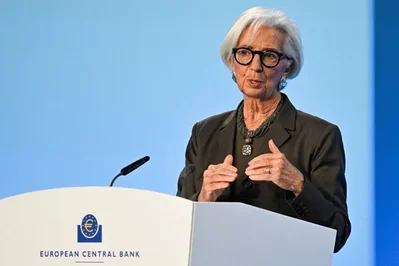
The European Central Bank is expected to maintain its current interest rate levels through 2026, according to a recent Reuters poll of economists. This outlook persists despite a significant energy shock driven by geopolitical tensions that has led more than a third of analysts to forecast at least one rate hike within the current year. This consensus among economists stands in contrast to financial market expectations, where traders are betting on approximately three hikes by the end of the year following a 40% surge in oil prices.
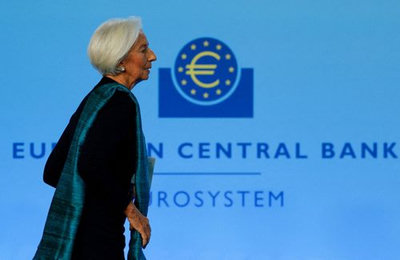
The recent volatility in energy markets stems from the conflict involving the United States, Israel, and Iran, which has disrupted key transport corridors. ECB President Christine Lagarde recently indicated that the central bank is monitoring these developments closely.
"Some measured adjustment of policy could be warranted to tackle a large though not-too-persistent inflation overshoot."
The current economic climate has brought back memories of the inflation spike that followed the invasion of Ukraine by Russia in 2022. While the ECB was criticized for a slow response during that period, nearly two-thirds of surveyed economists believe the deposit rate will remain at 2% throughout this year. Carsten Brzeski, global head of macro research at ING, noted that the baseline scenario assumes the energy shock will be temporary.
"In this scenario, by June we will all call the war and the energy price shock temporary and therefore would allow the ECB to stay on hold."
Industrial entities such as Oiles Corporation and other private sector businesses are already feeling the impact, with surveys showing input costs reaching multi-year highs. Euro zone consumer confidence has also dropped to its lowest level since late 2023, leading to sell-offs in both equity and bond markets. Bas van Geffen, senior macro strategist at Rabobank, suggested the ECB will prioritize managing expectations and preventing second-round effects.
"But they will do the bare minimum that is absolutely necessary to keep inflation expectations near the 2% target."
Inflation forecasts have been revised upward significantly. After a 1.9% reading in February, inflation is now projected to average 3.0% in the coming quarter, with a return to the 2% target not expected until the second quarter of 2027. Julie Ioffe, European economist at TD Securities, highlighted the sensitivity of the Governing Council to past experiences.
"2022 is not that far in the rear view mirror and inflation expectations spiraling out of control is, I am sure, very clear in the Governing Council's memory."
However, some analysts argue that the current situation is fundamentally different from the 2022 crisis. Fabio Balboni, senior economist at HSBC, pointed out that the ECB has already moved rates toward neutral and has been engaging in quantitative tightening for two years.
"Maybe the need to introduce a significant amount of tightening should be less than what was the case in 2022."