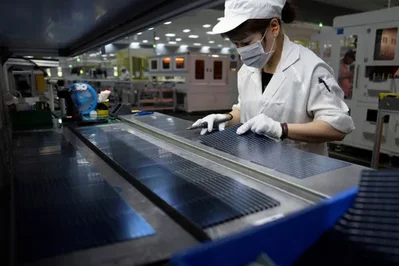
China Solar Makers Say War Demand Won't Fix Overcapacity
Chinese solar firms say increased demand from the Iran war will not resolve deep overcapacity. Producers note that supply still exceeds global requirements.

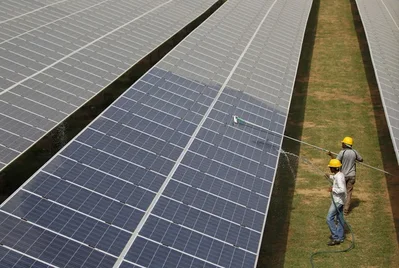
Solar manufacturers in China report that the surge in renewable energy demand linked to the conflict between Iran and Israel is unlikely to resolve the industry's deep-seated overcapacity issues. Despite a brief rally in green energy stocks following the start of hostilities on February 28, producers remain concerned about their long-term viability as supply continues to significantly outpace global needs.
The geopolitical tension has pushed West Texas Oil prices toward the $100 mark, forcing many nations to re-evaluate the role of fossil fuels in their energy strategies. While market speculators anticipate this shift will benefit Chinese solar exporters, manufacturers argue that the fundamental supply-demand imbalance remains unchanged.
Prices might go up slightly, or global demand might increase a little bit, but it wont seriously impact the overall supply-demand dynamics, one solar industry executive said.
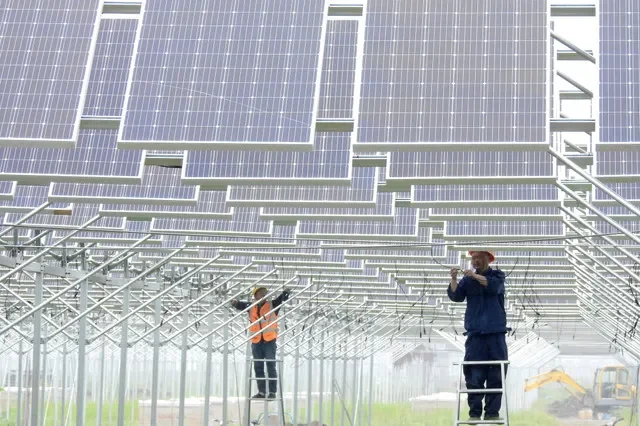
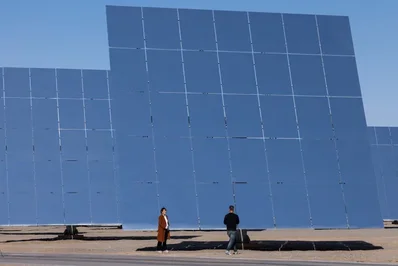
According to estimates from MORNINGSTAR INC, Chinese solar factories currently possess enough capacity to meet projected global demand for 2025 nearly twice over, even when accounting for potential war-related demand spikes. Last year, manufacturing capacity for polysilicon, wafers, and cells grew by 9%, 11%, and 7% respectively, further saturating a market already under extreme pressure.
Overcapacity is very serious and wont be cleared in the short term, said a sales manager at a major solar manufacturer in China.
The industry is also grappling with seasonal cooling and policy shifts. Many buyers accelerated their orders before the United States and other markets were impacted by Beijing's removal of export tax rebates on April 1. Additionally, trade restrictions and potential new export controls on advanced manufacturing equipment continue to complicate the relationship between major economies.
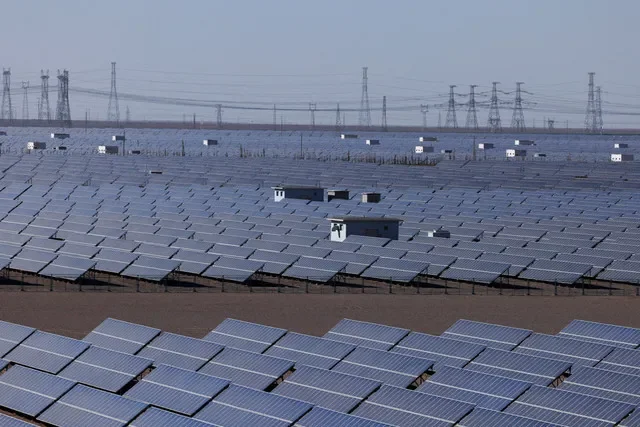
While the 2022 invasion of Ukraine by Russia led to a massive boom in solar installations due to record-high energy costs, analysts believe the current situation is different. During the previous crisis, Natural Gas prices reached 340 euros per million British thermal units, whereas current prices have seen a much more moderate increase to around 43 euros. Consequently, the impact of the current conflict on global solar demand is expected to be only marginally positive.