Canadian Dollar Rises Despite Services Sector Slump
The Canadian dollar rose 0.2% to 1.3915 against the U.S. dollar today. Gains were limited as domestic services activity contracted for a fifth straight month.

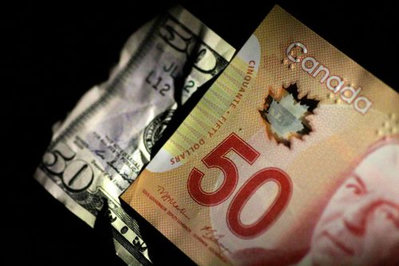
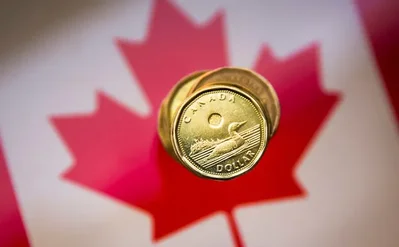
The Canada dollar recorded modest gains against the United States dollar on Monday, though the advance was tempered by a contracting domestic services sector and ongoing geopolitical tensions in the Middle East. The USD/CAD currency pair traded 0.2% lower at 1.3915, equivalent to 71.86 U.S. cents, after fluctuating between 1.3903 and 1.3947 during the session. This recovery follows a period of weakness where the currency recently touched a near four-month low of 1.3966. Investors are closely monitoring diplomatic efforts between Washington and Iran as both nations evaluate a framework to conclude their five-week conflict. While Tehran has expressed a desire for a permanent resolution, it has resisted calls to immediately reopen the Strait of Hormuz under a temporary ceasefire arrangement. Market strategists at Scotiabank suggest that the greenback is currently overvalued compared to fundamental estimates. > The USD continues to trade at a significant premium relative to our fair value estimate - 1.3507 currently - which may result in a sharp fall in the spot rate once market volatility subsides, Shaun Osborne and Eric Theoret, strategists at Scotiabank, said in a note. > Until then, the risk premium on the USD will remain elevated. Bearish sentiment toward the loonie has intensified among speculators. Data from the Commodity Futures Trading Commission revealed that non-commercial net-short positions surged to 32,684 contracts as of late March, up from just 1,602 in the preceding week. This pessimism coincides with a fifth consecutive month of contraction for the Canadian services industry. The S&P Global services PMI rose slightly to 47.2 in March from 46.5 in February but remained firmly below the 50-point threshold that separates growth from contraction. Geopolitical uncertainty and rising fuel costs were cited as primary drivers for the decline in new business and increased operating expenses. Support for the currency was partially provided by a rally in West Texas Oil, which climbed 2.2% to settle at $113.92 per barrel. The price increase reflects market anxiety over potential supply disruptions stemming from shipping issues in the Strait of Hormuz. Meanwhile, Canadian government bond yields showed a mixed performance across a flatter curve, with the two-year yield rising 2.7 basis points to reach 2.837%.