Berkeley halts land buying and lowers profit outlook
Berkeley Group halted land purchases and lowered its profit forecast through 2030. Shares fell nearly 19% as the Middle East conflict impacts housing recovery.

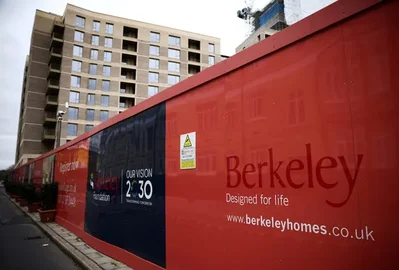
The prominent British homebuilder BERKELEY GROUP HOLDINGS/THE has lowered its long-term profit guidance and suspended land acquisitions as geopolitical instability and high borrowing costs weigh on the United Kingdom housing sector. The company's shares dropped nearly 19% on Wednesday, hitting their lowest point since 2016, as investors reacted to the cautious outlook extending through 2030.
Berkeley now expects to generate a pre-tax profit of more than 1.4 billion pounds ($1.9 billion) over the four-year period starting in fiscal 2027. This forecast represents an annual average of 350 million pounds, a decrease from the 450 million pounds projected for the 2026 fiscal year. The firm is slowing construction activity to align with a period of weaker sales and broader economic headwinds.
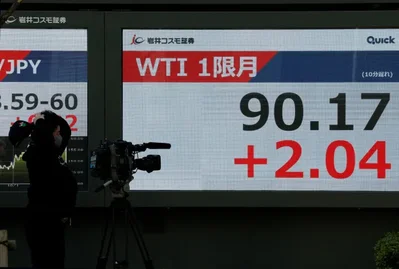
Escalating tensions in the Middle East, involving Iran, the United States, and Israel, have driven up construction expenses and increased the likelihood that interest rates will remain elevated for an extended period. These factors have dampened the early recovery hopes that the industry had seen at the start of the year. Other major developers, including TAYLOR WIMPEY PLC and BELLWAY PLC, have also issued warnings regarding their profit margins in recent months.
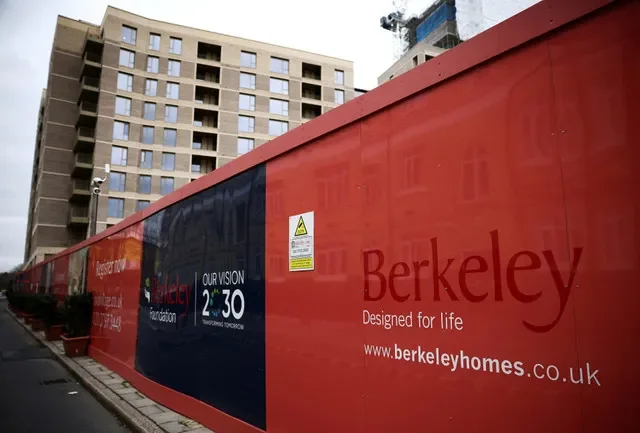
The London-focused developer stated that it is currently unable to achieve its necessary rate of return on new land purchases. This difficulty is attributed to a combination of overheated land prices and a growing burden of taxes and regulations on residential development. As a result, the company will only pursue new land opportunities through joint ventures for the foreseeable future.
Berkeley said it can no longer achieve its required rate of return on new land purchases due to increasing tax and regulatory burdens on residential development.
Despite the immediate challenges, some market observers believe the company's existing portfolio provides a buffer. Aynsley Lammin, an analyst at INVESTEC PLC, suggested that the firm's current holdings allow for strategic flexibility.
Its currently strong land bank allows them to flex the delivery in the near term and allows them to react and deliver growth if the market and operational backdrop improves beyond FY26.
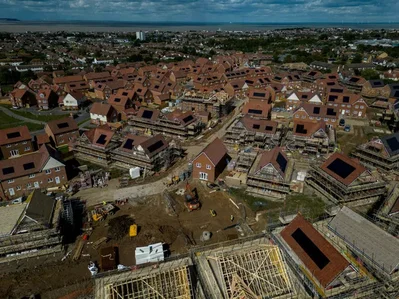
The update highlights the ongoing difficulties for the British construction sector, where safety levies, planning delays, and developer taxes continue to limit overall housing output. Berkeley had previously noted signs of a recovery in early 2026, but the reality of the Middle East conflict has since impacted both market demand and buyer affordability.