Ueda says BOJ could raise interest rates in March or April
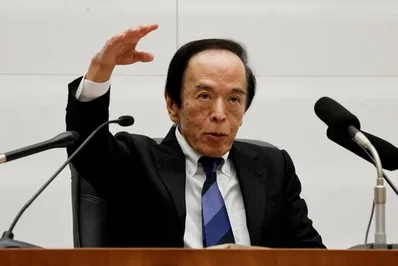
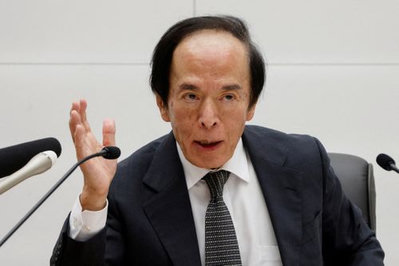
Governor Kazuo Ueda said the Bank of Japan will scrutinize data in March and April to decide on rate hikes. Strong wage growth may accelerate the timeline.

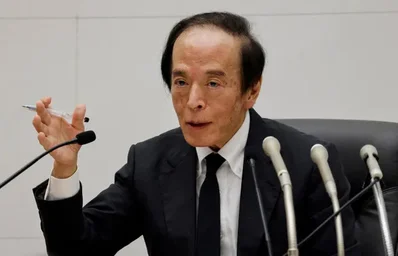
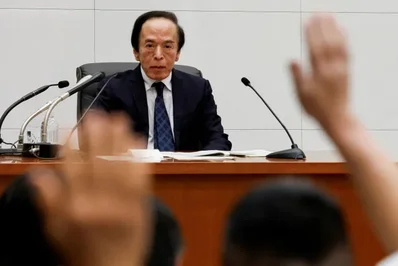
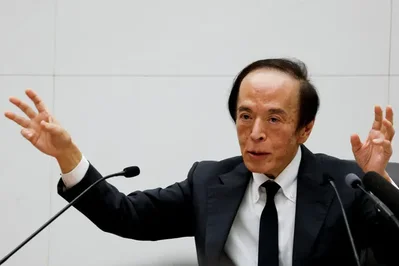
Bank of Japan[Symbol:{\"assets\":{\"symbol\":\"8301.T\"}}] Governor Kazuo Ueda has indicated that the central bank will closely monitor economic data during its upcoming March and April policy meetings to determine the necessity of further interest rate increases. In an interview with the Yomiuri newspaper, Ueda noted that Japan[Country:{\"assets\":{\"country\":\"JP\"}}] could see continued rate hikes if the nation makes steady progress toward its economic and price stability targets.
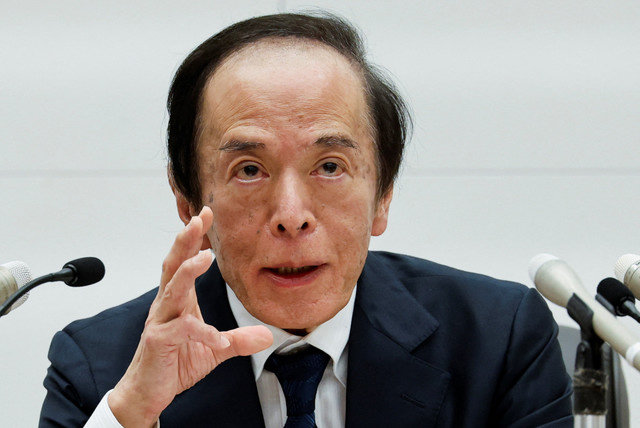
The Governor emphasized that the central bank remains open to near-term adjustments. Current projections suggest that underlying inflation will reach the 2% target between the latter half of fiscal 2026 and fiscal 2027. However, Ueda suggested this timeline could accelerate if the results of the annual spring wage negotiations between corporations and labor unions are stronger than anticipated.
\"We will hold a policy meeting in March and April, so we would like to reach a decision by scrutinising data available by then,\" Ueda stated regarding market speculation of an April rate hike.
Ueda clarified that the Bank of Japan does not necessarily need to wait for the release of the quarterly Tankan business sentiment survey on April 1. He noted that the bank utilizes various other surveys to inform its decisions. This stance underscores a readiness to act to prevent further depreciation of the yen, which has previously driven up import costs and broader inflationary pressures.
The upcoming policy meetings are scheduled for March 18-19 and April 27-28, with the latter including updated quarterly growth and inflation forecasts. According to a poll conducted by Thomson Reuters Corporation[Symbol:{\"assets\":{\"symbol\":\"TRI\"}}], a majority of economists expect the central bank to raise interest rates to 1% by the end of June.
Despite the hawkish signals, political factors remain a consideration. Markets recently adjusted their expectations following reports that Prime Minister Sanae Takaichi expressed reservations about additional rate hikes during a meeting with Ueda. Takaichi is known for favoring expansionary fiscal and monetary policies.
The Bank of Japan concluded its long-standing massive stimulus program earlier in 2024. Following several adjustments, the short-term policy rate was raised to a 30-year high of 0.75% in December. Ueda reiterated that the bank is not \"behind the curve\" in addressing inflation risks, as underlying inflation has yet to consistently maintain the 2% threshold. Future decisions will focus on the impact of borrowing costs on financial institutions, corporate investment, and consumer spending.