Amazon buys Globalstar for 11.57 billion to rival SpaceX
Amazon has agreed to buy Globalstar for 11.57 billion dollars to compete with SpaceX. The deal highlights growing demand for space-based internet services.

AMAZON.COM INC announced on Tuesday that it will acquire satellite operator GLOBALSTAR INC in a transaction valued at $11.57 billion. This major acquisition is part of Amazon's broader strategy to compete with SpaceX’s Starlink in the burgeoning satellite internet market. The sector is seeing increased viability due to more affordable launch options, improved technology, and the rising necessity for connectivity in remote locations, aviation, maritime, defense, and emergency messaging services.

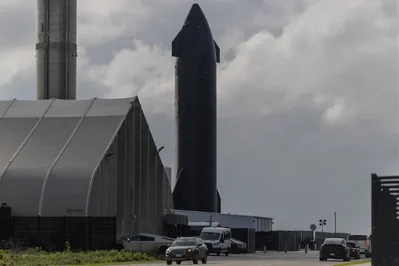
Based in the United States, SpaceX’s Starlink is currently the industry leader. Operating out of Hawthorne, California, the company has deployed more than 9,500 satellites in low-earth orbit. Starlink has received authorization for 15,000 Gen2 satellites and has established a long-term goal of 42,000 satellites to provide global coverage.
Amazon’s own satellite initiative, Project Kuiper, is headquartered in Redmond, Washington. The project is currently in its early deployment stages with over 200 satellites in orbit. The company has set an initial target of 3,236 satellites to establish its global network.
EUTELSAT COMMUNICATIONS, which operates the OneWeb constellation, maintains headquarters in France and the United Kingdom. Its first-generation network consists of more than 600 satellites, and the company plans to expand by an additional 440 satellites in its next-generation extension.
Globalstar, based in Louisiana, currently operates 32 active low-earth orbit satellites. Its services are primarily focused on Internet of Things (IoT) connectivity and emergency messaging. While it has 24 satellites planned for the near term, its next-generation expansion could potentially involve thousands of units.
TELESAT CORP, a Canada-based operator, is developing the Lightspeed constellation. The project is currently in the pre-operational and manufacturing phase, with a planned launch of 150 to 200 satellites scheduled to begin between 2026 and 2027.
AST SPACEMOBILE INC, headquartered in Texas, is also in the early stages of deployment. The company currently has six satellites in orbit and is targeting a constellation of 45 to 60 satellites by 2026.