
英国国债收益率创1998年以来新高,斯塔默领导危机重创英镑
如果在债券市场要求财政纪律的压力下,斯塔默首相被迫设定辞职日期,那么英国银行股和英镑将面临进一步下跌。因为在能源危机期间进行领导层更迭,会增加扩张性财政政策的可能性,从而导致英国国债与德国国债和美国国债的利差扩大。
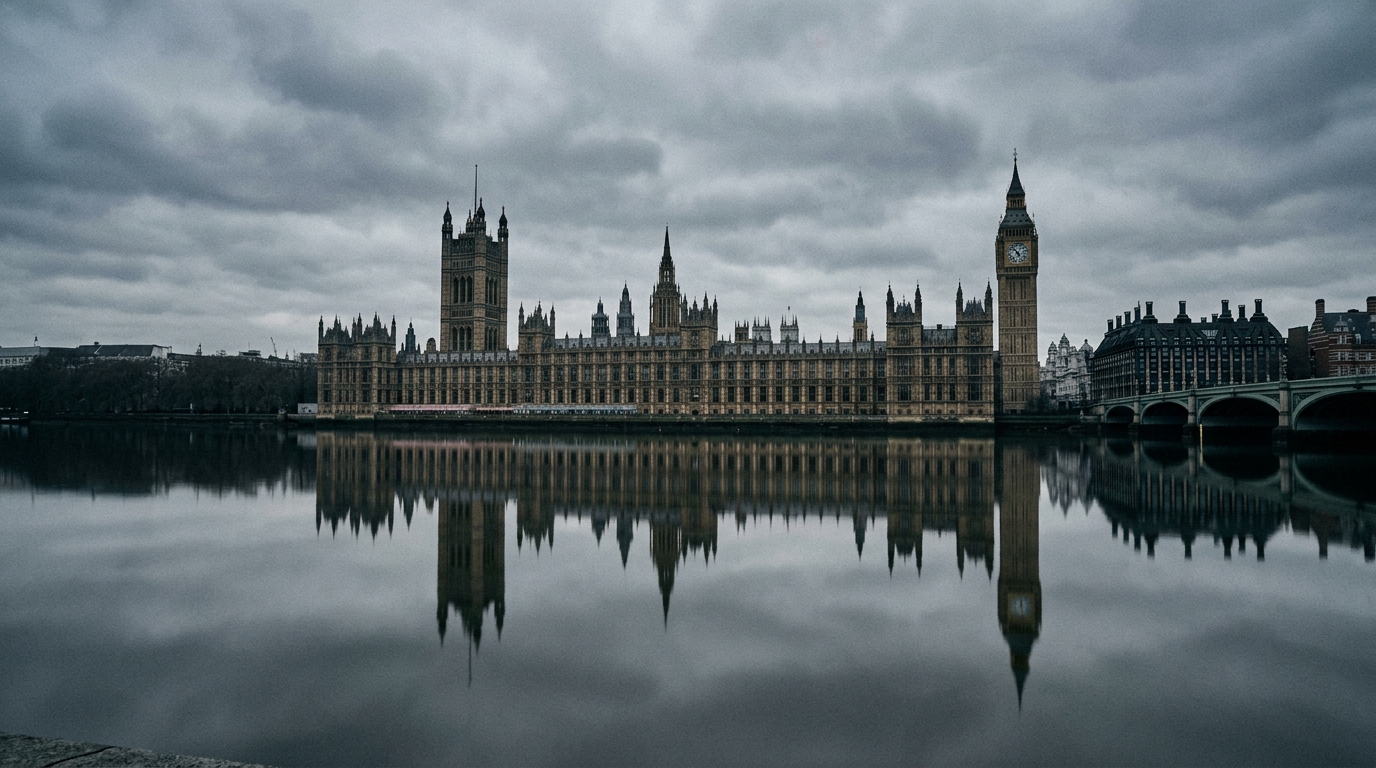
英国10年期国债收益率飙升至5.13%(1998年以来最高水平),原因是要求斯塔默辞职的呼声日益高涨,加上伊朗战争带来的能源成本上升,形成了财政和通胀的双重冲击。富时250指数下跌1.5%,英镑触及数周低点。容易被忽视的角度是:英国消费者支出自2024年底以来首次下降(巴克莱信用卡数据),而能源债务接近95亿美元。继任首相可能会增加借贷以应对生活成本危机,从而引发类似特拉斯时期的国债重新定价风险,而市场尚未完全消化这一风险。
- 做空英镑兑美元(GBPUSD)——领导层真空、能源成本和债券市场的抛售压力导致英镑持续疲软
- 做空英国本土银行(Barclays, Lloyds, NatWest),这些银行面临国债按市值计价的损失和信贷恶化
- 密切关注斯塔默的辞职时间表——承诺财政扩张的继任者将引发类似特拉斯时期的国债重新定价
- 希思罗机场客流量下降5%,中东航线下降50%——英国旅游和酒店业面临结构性需求打击
- 警惕英国央行(BOE)干预风险,如果国债收益率突破5.5%,央行可能被迫进行紧急购买
提议头寸
| 头寸 | 方向 | 入场 | 目标 | 止损 | 信号得分 | 信心 |
|---|---|---|---|---|---|---|
| BARC.L | 做空 | 410–420p | 365p | 448p | 21/100 | 高 |
| NWG.L | 做空 | 562–575p | 504p / 471p | 605p | 25/100 | 高 |
| LLOY.L | 做空 | 94–96p | 88p / 80p | 102p | 28/100 | 高 |
| EWU | 做空 | $46.40–46.80 | $43.50 | $48.20 | 32/100 | 高 |
| FXB | 做空 | $130.00–130.50 | $125.50 | $132.20 | 27/100 | 高 |
| HSBC | 做多 | $87–90 | $98–102 | $82.50 | 62/100 | 高 |
- 做空 BARC.L — 国债收益率飙升导致其债券组合出现账面损失;2026年一季度信贷减值已达8.23亿英镑,且潜在的新政府可能将银行附加税从3%提高至5%。
- 做空 NWG.L — 政府于2025年中期完全退出持股,失去了保护伞;其95%以上收入来自英国本土,持有大量浮亏国债,当前估值已充分反映了盈利增长预期。
- 做空 LLOY.L — 拥有最纯粹的英国本土敞口(约95%英镑收入)。国债收益率上升100个基点将对其资产价值造成约25-30亿英镑的打击,且缺乏海外业务对冲。
- 做空 EWU — 通过该美元计价的ETF,可同时捕捉英镑贬值和英国本土股市下跌的双重利润空间。
- 做空 FXB — 作为英镑兑美元的现货替代品。英国央行陷入高通胀与政治危机的两难境地,海外投资者要求更高的收益率和汇率折价补偿。
- 做多 HSBC — 作为对冲多头。其约60%的利润来自亚洲,盈利能力远超英国同行,且美元计价的财报能抵御英镑贬值的拖累。
模块 1:投资信号 — 综合评分仪表板
Scoring Methodology
Each pillar is scored 0-100 where 50 = neutral. Fundamental blends ROE, P/TBV percentile, FY trajectory and balance-sheet risk (gilt MTM, surcharge tax exposure). Technical blends 20/50-day SMA structure, RSI(14), realised volatility regime and volume profile. Sentiment uses the IUX24 news scorer (-1 to +1) mapped to 0-100. Smart Money blends insider transaction direction, OBV trend and ADV-relative volume on directional sessions. Macro Overlay is the single most discriminating factor here — weighted at 30% — capturing UK-specific systemic risk that has flipped these names from idiosyncratic equity stories to macro factor proxies. HSBC's macro overlay scores 78 because Asia revenue insulates it; UK domestics score 8-18 because every transmission channel pushes the same way.
模块 2:新闻影响得分 — 量化情绪分析
Sentiment Scoring Methodology
News articles are scored by an LLM mode that reads each article in full, identifies named tickers, and assigns: (a) directional polarity (bear/bull/neutral), (b) magnitude (-1 to +1), and (c) confidence weighting. Article-level scores are aggregated by ticker into a volume-weighted impact score over a 7-day window. A score below -0.50 indicates a regime where every credible-source headline is bear-biased; HSBC's neutral score is itself information — when the rest of the UK bank complex is pricing -0.65 to -0.72, the structural insulation hypothesis gains evidence weight.
模块 3:事件检测 — 异常回报、内部交易与成交量异常
CAR Methodology
Cumulative Abnormal Return (CAR) is computed by subtracting an event-window-matched benchmark return from each stock's realised return. UK domestic banks use the FTSE 350 Banks index as benchmark; HSBC uses the global MSCI World Banks index; FXB uses the DXY-equivalent G7 currency basket; EWU uses the MSCI EAFE. A 5-day CAR captures the immediate reaction; the 20-day CAR captures the persistence of the move. The May 11-12 window is still open, but the 5-day CARs for May 5-12 are already among the largest 20-day windows in the 6-month sample for LLOY (-4.4%), BARC (-3.9%) and NWG (-3.6%).
模块 4:价格预测 — 统计预测
Momentum Method
Trend slope is the ordinary least squares coefficient of log(price) regressed against trading-day index over the last 60 sessions, annualised. R² above 0.60 indicates a strong directional regime; readings between 0.45 and 0.60 indicate the trend is genuine but volatile. The 5/20-day targets project the slope forward — a useful short-horizon estimate when no obvious mean reversion is in play. UK domestic banks are all in steep negative-slope, high-R² downtrends; HSBC is in a positive-slope uptrend with the highest R² in the basket, validating the pair construction.
Why Mean Reversion is NOT the Trade Here
All three UK domestic banks are now within -0.7 to -1.2 standard deviations of their 200-day mean — historically a mean-reversion buy zone. The thesis explicitly rejects this signal because it depends on a stable regime. During the 2008-09 and 2022 gilt shocks, UK domestic banks pushed z-scores to -2.5σ before reversion engaged. The momentum signal (high R², steep negative slope) is the dominant statistical regime; mean-reversion is the bull risk to size against, not the trade entry.
Combining Momentum and Mean Reversion
In a regime-shift environment, the momentum signal dominates the mean-reversion signal for the directional bias, while the mean-reversion signal indicates the squeeze risk on countertrend bounces. The trade construction is: enter on momentum (current levels), trail stops using the mean-reversion ceiling (R1 levels), and target the momentum extension (S3 levels). For HSBC the two signals align bullishly — both predict a move higher — which is part of why HSBC is the highest-conviction long in the book.
模块 5:市场洞察 — 聪明资金、机构流向与因子敞口
Alpha Decay Method
Alpha decay is modelled as a half-life function: π(t) = π_max · (1 - e^(-t/τ)) · e^(-t/decay_τ), where π_max is the modelled peak return (10-15% net), τ is the build-up half-life (10-15 days) and decay_τ is the post-resolution decay half-life (45-60 days). The estimated half-life of this trade is 2-4 weeks because the political pressure has 72+ Labour MPs already in revolt — the political resolution function is faster than gilt market normalisation. Kill conditions are explicit (see Module 6) to prevent giving back alpha after the half-life.
模块 6:交易策略 — 入场/出场、头寸规模与风险/回报
- 净美元敞口: 约5%做多(汇丰对冲了约95%的做空敞口)
- 对富时350银行指数的净Beta: 约-0.65
- 对标普500指数的净Beta: 约-0.15
- 对美元的净Beta: 约-0.45(做空英镑即做多美元)
- 对10年期国债收益率的净Beta: 约+0.55
- 最差单日损失(95% VaR): 约占投资组合的2.4%
- 预期回报(45天): +8-12%,预估夏普比率1.5-2.0
Trading-Strategy Method
Trade construction uses (1) signal-score weighted entry — heavier sizing in highest-conviction names (BARC, NWG, LLOY, HSBC); (2) stop placement at the boundary of the prior 20-day range — a level whose violation invalidates the recent regime shift; (3) ATR-based position sizing — risk per name normalised to 25-40bp of portfolio; (4) explicit kill conditions tied to the macro mechanism, not just P&L; (5) monthly review of the alpha-decay path — half-life is 2-4 weeks, so positions are not held indefinitely. Friction estimates: 5-8bps spread on UK LSE bank lines, 1-2% borrow cost annualised on UK shorts, 30-50bps FX hedging if trading from USD base, total round-trip ~1.5-2.5% — manageable against a targeted 6-13% net move.
统计验证摘要
Statistical Methodology
Jarque-Bera tests whether daily returns are normally distributed — p < 0.05 rejects normality and confirms fat tails, which is critical for sizing because Gaussian VaR understates true risk. Ljung-Box tests for serial correlation in returns; significant Q(20) indicates the momentum signal is real, not noise. Skewness measures asymmetry — all UK domestic banks have left-skew (large down moves more frequent than equally-large up moves), consistent with crisis dynamics. Excess kurtosis above 2 indicates fat-tailed distributions; combined with negative skewness, this creates the asymmetric risk that motivates the explicit kill conditions in Module 6. Historical-simulation VaR is preferred to parametric VaR given the fat-tailed regime.
估值背景
Balance-Sheet Red Flags
All three UK domestic banks carry AFS (available-for-sale) gilt portfolios marked through OCI, not P&L — a 100bp parallel shift in 10y gilts subtracts an estimated £1.0bn from NWG CET1, £2.5-3bn from LLOY CET1, and £25-40bp of CET1 ratio at BARC. None of these hits appear in headline P/E or EPS. P/B at 0.40-0.95x looks cheap but the denominator (tangible book) is exposed to the gilt move. Bank P/B compressed to 0.30-0.50x in every prior UK stress episode (2008, 2011, 2016, 2022) — the floor is the BoE response function, not accounting book value. Motor-finance tail at LLOY remains live with industry-wide compensation between £11bn (FCA) and £18-20bn (sell-side high-end) — Lloyds is the most exposed single name.
五大支柱验证摘要
结论
| 头寸 | 入场 | 目标 | 止损 | 信心 |
|---|---|---|---|---|
| BARC.L (做空) | 410-420p | 365p | 448p | 高 |
| NWG.L (做空) | 562-575p | 504p / 471p | 605p | 高 |
| LLOY.L (做空) | 94-96p | 88p / 80p | 102p | 高 |
| EWU (做空) | $46.40-46.80 | $43.50 | $48.20 | 高 |
| FXB (做空) | $130.00-130.50 | $125.50 | $132.20 | 高 |
| HSBC (做多) | $87-90 | $98-102 | $82.50 | 高 |
继续阅读

特朗普与习近平北京峰会——波音订单、农业协议与AI芯片僵局
如果特朗普在天坛峰会上从习近平那里获得了大额波音订单和农产品采购承诺,那么BA(波音)将突破上涨,大豆期货也将反弹。因为中国国内汽车销量下降了21.6%,这表明北京需要明显的贸易胜利,而特朗普在中期选举前也需要农业州的支持。
霍尔木兹海峡持续封锁,伊朗停火协议破裂 —— 油价突破107美元
如果如EIA预测,霍尔木兹海峡在5月底前保持封锁,那么能源股和LNG(液化天然气)出口商将跑赢大盘,而航空公司和高耗能工业将面临利润压缩。这是因为占OPEC供应量20%的瓶颈目前看不到外交解决的希望,且全球战略储备正在被消耗。

美国CPI触及3.8%,能源成本掣肘美联储——降息推迟至2027年
如果4月3.8%的CPI标志着由能源驱动的持续通胀期的开始,而非暂时性飙升,那么半导体和成长股的表现将不及价值股和能源股。因为高盛和美国银行已将降息预期推迟至2026年底或更晚,且沃什(Warsh)接任美联储主席预示着政策将转向鹰派。
If UK 10-year gilt yields hold above 5.0% through end-Q2 2026 while sterling stays sub-1.36, then the equal-weight short basket of BARC.L + NWG.L + LLOY.L + EWU + FXB delivers a net 8-12% return over 30-45 trading days, because (a) AFS gilt losses force CET1 prints below current guidance at all three domestic banks, (b) the Labour-replacement government materialises with a 3% → 5% bank surcharge tax, and (c) sterling extends toward 1.30 as foreign gilt buyers demand a currency discount on top of yield premium.
Key fact
The net basket 95% VaR of -2.4% is 70% lower than the largest single-name VaR (BARC at -8.4%) — confirming that the HSBC hedge and ETF diversification meaningfully reduce 1-day tail risk while preserving directional alpha. The pair-trade construction is doing its job.
If 10-year gilt yields hold above 5.0% through end-Q2 2026 and Starmer's leadership remains unresolved, then the basket short (BARC.L, NWG.L, LLOY.L, EWU, FXB) hedged 95% long HSBC delivers net 8-12% return over 30-45 trading days, because (a) AFS gilt MTM bleeds £1-3bn through OCI at each UK domestic bank — invisible in P&L but cumulative through CET1, (b) a Labour-replacement government brings a 3% → 5% bank-surcharge tax that compresses UK-bank P/TBV by 8-12% mechanically, (c) sterling extends toward 1.30 as foreign gilt buyers demand currency-and-yield premium, and (d) HSBC's 60% Asia profit share (especially HIBOR-linked NIM and HKD-pegged earnings) outperforms by 8-15% as the same shock dis-anchors UK domestics.
Bullish Case
All six positions face short-squeeze risk. A credible Starmer reaffirmation paired with a Reeves fiscal-discipline package could compress 10y gilts 30-50bp inside a week and trigger a 5-8% rally in UK domestic banks. BoE emergency gilt purchases — the explicit playbook from October 2022 — would cap the trade at the basket level. An Iran ceasefire announcement is the highest-asymmetry single tail: Brent could drop $15-20 overnight, removing the imported-inflation overlay, supporting sterling, and lifting EWU. The UK domestic banks all trade at 0.4-0.95x P/B with healthy capital ratios and active buybacks. HSBC long faces opposite risk: a UK-wide windfall tax (not UK-profit-share-weighted), an HK property re-shock, or Trump-Xi tariff escalation could erase the relative-value premium. Positions are concentrated in one geographic theme — if the broader risk-off complex turns risk-on, HSBC may fail to outperform sufficiently to offset the basket short.
Bearish Case
The base case has compounding force. UK 10y gilt yields at 5.13% require active fiscal policy action to compress — passive 'waiting out' the move bleeds capital from bank balance sheets daily through OCI. The Labour parliamentary party is structurally aligned for leadership change; the question is timing, not direction. JPM has already moved the 3% → 5% bank-surcharge call to base case for sell-side notes — once published, the tax becomes a self-fulfilling consensus that compresses UK-bank P/TBV by 8-12% mechanically. Sterling has lost its 'yields-up-currency-up' regime, the classic signature of a sovereign-risk repricing. The May 12 tape printed institutional distribution on every name (1.06x-8.21x average volume on a down-day) with no insider buying to offset. HSBC's structural insulation (60% Asia profit, $34bn Q1 net new money) means the pair-trade construction is genuinely defensive rather than just smaller short. The trade has a clear time horizon (4-8 weeks), explicit kill conditions, and asymmetric reward.
Risk Factors
BoE emergency gilt purchases — single trigger that simultaneously caps all five short legs and forces a UK-bank short-squeeze (likely 5-8% intraday); monitor BoE statements and 30-year gilt auction tails; kill all shorts if announced
Starmer formally renews mandate with cross-party fiscal pact — political resolution removes the windfall-tax tail risk and triggers a multi-day gilt rally; kill UK bank shorts on close above key resistance (BARC 448p / NWG 605p / LLOY 102p)
Iran ceasefire breakthrough — collapses Brent below $85, removes imported-inflation overlay, supports sterling; kill FXB and EWU shorts on weekly close above key levels
HSBC China property re-shock — $15-20bn aggregate HK/mainland CRE exposure; a developer default cycle could trigger $1.5bn ECL spike at H1 results in late July; kill HSBC long if H1 ECL guidance > $1.5bn pre-announcement
Trump-Xi tariff escalation — compresses Commercial Banking trade finance volumes 8-12%; kill HSBC long if explicit US-China decoupling tariff round announced
HSBC closes below $82.50 on a daily basis (technical invalidation) — invalidates the hedge leg even if structural thesis intact