Trump's Tax Bill Enacts Permanent Rate Cuts and New Tax Breaks
Trump's new tax legislation makes permanent the 2017 tax cuts and introduces temporary breaks until 2029. Economists see these as key growth drivers for 2026.
洞察:
The recent enactment of the 'One Big Beautiful Bill' tax legislation by Donald Trump donald trumpmarks a significant restructuring of the U.S. federal tax system  US. This law makes permanent the lower individual and corporate tax rates initially set by the 2017 Tax Cuts and Jobs Act, while introducing a series of new, temporary tax breaks designed to stimulate economic activity across several sectors.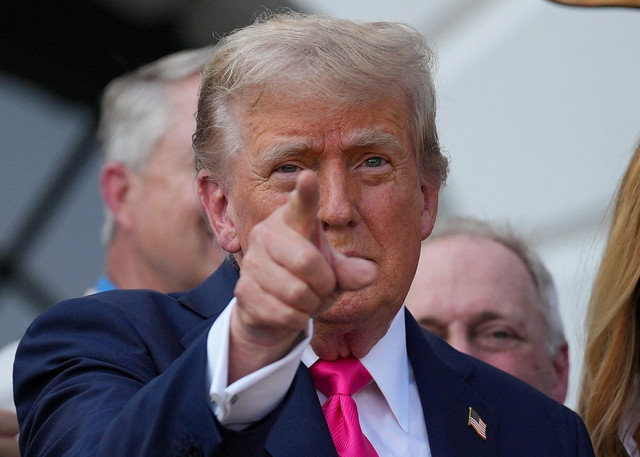
Key provisions of the law include the extension of the standard deduction and the expansion of the alternative minimum tax exemption. Additionally, the estate tax exemption has been raised from $14 million to $15 million. Specific income categories benefit from temporary exemptions, such as up to $25,000 in tipped income and $12,500 in overtime pay, both tax-free until 2029, with phase-outs beginning at incomes over $150,000. A new deduction of up to $6,000 is available for individuals aged 65 and older until 2029.
For the automotive industry, the law provides a tax break for up to $10,000 in interest payments on auto loans until 2029, applicable only to personal vehicles assembled in the United States. Meanwhile, the SALT deduction has been expanded from $10,000 to $40,000 until 2029, which is expected to benefit affluent homeowners in high-tax states such as New York and New Jersey.
On the business front, the law permanently reduces corporate tax rates and allows full expensing for certain equipment purchases, enabling businesses to immediately deduct the full cost from taxable revenue. This also extends to U.S.-based research and development costs. Small businesses can retroactively deduct R&D expenses incurred since 2022, and the limits on interest deductions have been loosened to include amortization costs.
Pass-through business owners, including freelancers, family-owned restaurants, law firms, medical practices, hedge funds, and private-equity firms, can benefit from a deduction of up to 20% of their income. However, the Tax Policy Center has noted that there is little evidence that this pass-through deduction significantly boosts economic growth.
Economists have identified these tax cuts as principal drivers expected to boost U.S. economic growth in 2026, particularly through increased household income and business capital investment incentives. Independent tax experts highlight the effectiveness of R&D and equipment breaks in fostering economic expansion. However, the potential for larger tax refunds and higher take-home incomes in 2026 will depend on the successful implementation and utilization of these provisions.
The financial sector, represented by the Financial Select Sector SPDR ETF , technology companies under the Technology Select Sector SPDR ETF , healthcare providers within the Health Care Select Sector SPDR ETF , and consumer discretionary businesses, including restaurants and hospitality, encompassed by the Consumer Discretionary Select Sector SPDR ETF , are among the industries that could see significant impacts. Additionally, the iShares 20+ Year Treasury Bond ETF may reflect broader economic shifts as these tax policies take effect.