South Korean Retail Trading Hits Record Highs Amid War
South Korean retail investors drove daily trading volume to a record 40 trillion won this month. They continue buying despite volatility and regional conflict.

Kim Min-sung, a 24-year-old student at Seoul's Korea Foreign Language University, balances a demanding academic schedule with multiple side jobs to fund his primary passion: day trading. Kim is a member of a massive demographic of retail investors in South Korea known as "ants," who have become a dominant force in the domestic stock market. Despite significant market volatility fueled by geopolitical conflict involving Iran, these individual traders are doubling down on their positions rather than retreating.
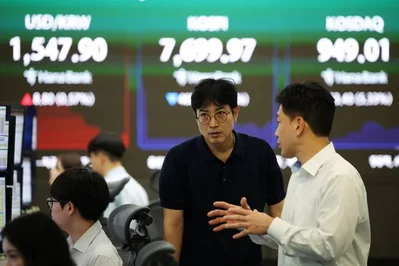
The benchmark KOSPI index saw a remarkable rally, doubling over a six-month period to reach an all-time high on February 27. However, the market soon experienced extreme turbulence, including a record 12% daily loss on March 4. While institutional investors showed caution, the nation's 14 million retail investors pushed average daily trading volumes to an unprecedented 40 trillion won ($26.7 billion) this month. On one Monday alone, these individual buyers purchased 7 trillion won worth of stocks even as the index fell by 6.5%.
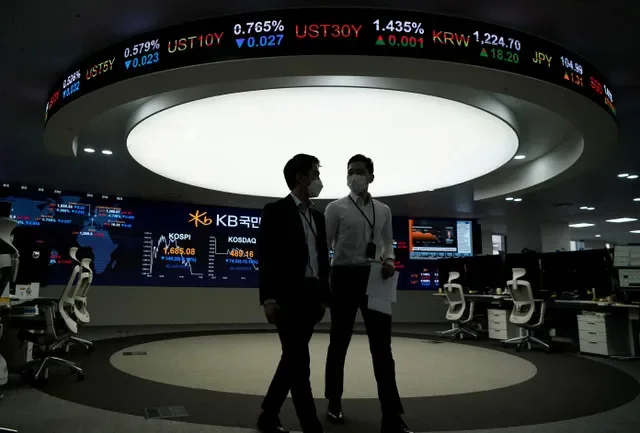
The motivations behind this investment surge are often linked to long-term economic concerns. Analysts suggest that the potential for artificial intelligence to disrupt traditional employment models is driving a race for investment profits. Kim Min-sung, who began trading at age 19, maintains two separate accounts to meet different financial objectives.
"I have two trading accounts, one to make seed money to buy a property one day, and the other is for more aggressive investing to hopefully FIRE (Financial Independence, Retire Early) sooner than later."
According to the Korea Financial Investment Association (KOFIA), active stock trading accounts in the country hit a record 101.8 million by the end of February. The collective financial power of retail investors is significant, with deposit balances reaching 132 trillion won, a 70% increase since the end of last year. Retail traders in the region often account for up to 60% of daily turnover, a figure that is roughly double the retail participation rate in the United States.
Government policy has also fueled the market frenzy. President Lee Jae Myung has introduced financial reforms aimed at redirecting capital from the housing market into stocks. This strategy has found a receptive audience among younger citizens who have been priced out of real estate due to years of steep price increases. In business districts like Pangyo, stock trading has become a central topic of workplace conversation, with employees across various sectors closely monitoring market movements throughout the day.
While the enthusiasm remains high, some market experts warn of the risks associated with ongoing geopolitical instability. Seo Sang-Young, a market strategist at Mirae Asset Securities Co. Ltd., noted that a prolonged conflict could have broader implications for the national economy.
"If the Iran war drags on, Koreas real economy will inevitably be undergoing significant disruption."
Despite these warnings, many "ants" view the current volatility as an opportunity to acquire shares at lower prices. Kwon Soon-kuk, a 34-year-old employee at a retail company, has used the recent market dip to expand his portfolio. He tracks global risks, including maritime traffic in the Strait of Hormuz, to inform his strategy for long-term wealth building.
"The biggest keyword here, I think, is uncertainty. The world is uncertain."
"I dont know when Ill stop getting paychecks, so my plan is to buy more shares for my children."