
Lợi suất Trái phiếu Chính phủ Anh chạm đỉnh 1998 khi khủng hoảng lãnh đạo của Starmer tàn phá đồng Bảng
Nếu Thủ tướng Starmer buộc phải ấn định ngày từ chức do thị trường trái phiếu đòi hỏi kỷ luật tài khóa, cổ phiếu ngân hàng nội địa Anh và đồng Bảng sẽ tiếp tục giảm. Lý do là quá trình chuyển giao quyền lực giữa lúc khủng hoảng năng lượng làm tăng nguy cơ nới lỏng tài khóa, khiến chênh lệch lợi suất trái phiếu Anh nới rộng so với trái phiếu Đức và Mỹ.
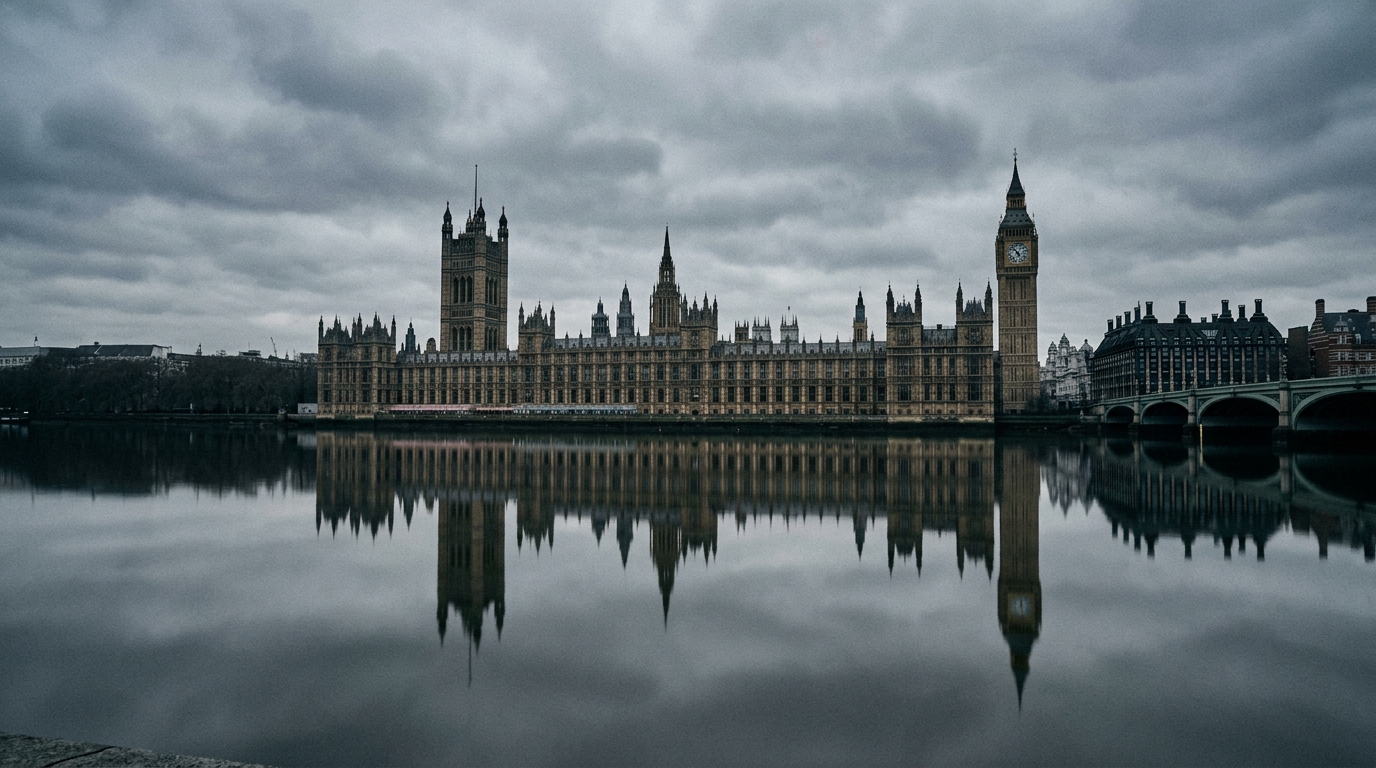
Lợi suất trái phiếu chính phủ Anh kỳ hạn 10 năm đã vọt lên 5.13% — mức cao nhất kể từ 1998 — do áp lực kêu gọi Starmer từ chức kết hợp với chi phí năng lượng từ chiến tranh Iran tạo ra cú sốc kép về tài khóa và lạm phát. Chỉ số FTSE 250 giảm 1.5% và đồng Bảng chạm đáy nhiều tuần. Điểm đáng chú ý: Chi tiêu tiêu dùng tại Anh lần đầu tiên giảm kể từ cuối năm 2024 (theo dữ liệu thẻ Barclays), trong khi nợ năng lượng tiến gần mốc 9.5 tỷ USD. Thủ tướng kế nhiệm nhiều khả năng sẽ tăng cường vay mượn để giải quyết khủng hoảng chi phí sinh hoạt, tạo ra rủi ro định giá lại trái phiếu tương tự thời kỳ Truss mà thị trường chưa phản ánh hết.
- Bán khống GBPUSD — khoảng trống lãnh đạo + chi phí năng lượng + áp lực từ thị trường trái phiếu tạo ra sự suy yếu dai dẳng cho đồng Bảng
- Bán khống các ngân hàng nội địa Anh (Barclays, Lloyds, NatWest) do rủi ro lỗ định giá lại trái phiếu và suy giảm tín dụng
- Theo dõi tiến trình từ chức của Starmer — một người kế nhiệm cam kết nới lỏng tài khóa sẽ kích hoạt đợt định giá lại trái phiếu theo kiểu Truss
- Lưu lượng tại sân bay Heathrow giảm 5% cùng với sự sụt giảm 50% ở các đường bay Trung Đông — ngành du lịch và nhà hàng khách sạn Anh đối mặt với cú sốc cấu trúc về nhu cầu
- Theo dõi rủi ro can thiệp của BOE nếu lợi suất trái phiếu vượt 5.5% — Ngân hàng Trung ương có thể buộc phải mua vào khẩn cấp
Các Vị Thế Đề Xuất
| Vị thế | Hướng giao dịch | Điểm vào | Mục tiêu | Cắt lỗ | Điểm tín hiệu | Mức độ tin cậy |
|---|---|---|---|---|---|---|
| BARC.L | Bán khống | 410–420p | 365p | 448p | 21/100 | Cao |
| NWG.L | Bán khống | 562–575p | 504p / 471p | 605p | 25/100 | Cao |
| LLOY.L | Bán khống | 94–96p | 88p / 80p | 102p | 28/100 | Cao |
| EWU | Bán khống | $46.40–46.80 | $43.50 | $48.20 | 32/100 | Cao |
| FXB | Bán khống | $130.00–130.50 | $125.50 | $132.20 | 27/100 | Cao |
| HSBC | Mua | $87–90 | $98–102 | $82.50 | 62/100 | Cao |
- Bán khống BARC.L — Lợi suất trái phiếu cao nhất từ 1998 gây lỗ định giá danh mục đầu tư; dự phòng rủi ro tín dụng quý 1/2026 đã tăng vọt lên 823 triệu Bảng. Một chính phủ thay thế có thể tăng thuế phụ thu ngân hàng từ 3% lên 5%.
- Bán khống NWG.L — Chính phủ đã thoái vốn hoàn toàn vào giữa năm 2025; hơn 95% doanh thu từ Anh, danh mục trái phiếu 33 tỷ Bảng đang chịu lỗ nặng. Mức tăng trưởng EPS 28% đã phản ánh hết vào giá.
- Bán khống LLOY.L — Ngân hàng thuần nội địa nhất (~95% doanh thu GBP); lợi suất trái phiếu tăng 100bp sẽ gây thiệt hại định giá khoảng 2.5-3 tỷ Bảng mà không có nguồn thu từ châu Á/Mỹ bù đắp.
- Bán khống EWU — Quỹ ETF định giá bằng USD giúp tận dụng cả đà giảm của đồng Bảng và chứng khoán nội địa Anh trong một công cụ duy nhất.
- Bán khống FXB — Quỹ đại diện cho tỷ giá GBP/USD; Ngân hàng Trung ương Anh (BoE) đang mắc kẹt giữa lạm phát 3.3% và khủng hoảng chính trị, khiến khối ngoại đòi hỏi mức chiết khấu tiền tệ lớn.
- Mua HSBC — Tập trung vào châu Á (~60% lợi nhuận trước thuế), tỷ suất sinh lời (ROE/RoTE) quý 1/2026 đạt 17.3% vượt trội so với các ngân hàng Anh. Đây là vị thế phòng vệ hoàn hảo cho rổ bán khống.
Module 1: Tín Hiệu Đầu Tư — Bảng Điểm Tổng Hợp
Scoring Methodology
Each pillar is scored 0-100 where 50 = neutral. Fundamental blends ROE, P/TBV percentile, FY trajectory and balance-sheet risk (gilt MTM, surcharge tax exposure). Technical blends 20/50-day SMA structure, RSI(14), realised volatility regime and volume profile. Sentiment uses the IUX24 news scorer (-1 to +1) mapped to 0-100. Smart Money blends insider transaction direction, OBV trend and ADV-relative volume on directional sessions. Macro Overlay is the single most discriminating factor here — weighted at 30% — capturing UK-specific systemic risk that has flipped these names from idiosyncratic equity stories to macro factor proxies. HSBC's macro overlay scores 78 because Asia revenue insulates it; UK domestics score 8-18 because every transmission channel pushes the same way.
Module 2: Điểm Tác Động Tin Tức — Phân Tích Tâm Lý Định Lượng
Sentiment Scoring Methodology
News articles are scored by an LLM mode that reads each article in full, identifies named tickers, and assigns: (a) directional polarity (bear/bull/neutral), (b) magnitude (-1 to +1), and (c) confidence weighting. Article-level scores are aggregated by ticker into a volume-weighted impact score over a 7-day window. A score below -0.50 indicates a regime where every credible-source headline is bear-biased; HSBC's neutral score is itself information — when the rest of the UK bank complex is pricing -0.65 to -0.72, the structural insulation hypothesis gains evidence weight.
Module 3: Phát Hiện Sự Kiện — Phân Tích CAR, Giao Dịch Nội Bộ, Đột Biến Khối Lượng
CAR Methodology
Cumulative Abnormal Return (CAR) is computed by subtracting an event-window-matched benchmark return from each stock's realised return. UK domestic banks use the FTSE 350 Banks index as benchmark; HSBC uses the global MSCI World Banks index; FXB uses the DXY-equivalent G7 currency basket; EWU uses the MSCI EAFE. A 5-day CAR captures the immediate reaction; the 20-day CAR captures the persistence of the move. The May 11-12 window is still open, but the 5-day CARs for May 5-12 are already among the largest 20-day windows in the 6-month sample for LLOY (-4.4%), BARC (-3.9%) and NWG (-3.6%).
Module 4: Dự Báo Giá — Mô Hình Thống Kê
Momentum Method
Trend slope is the ordinary least squares coefficient of log(price) regressed against trading-day index over the last 60 sessions, annualised. R² above 0.60 indicates a strong directional regime; readings between 0.45 and 0.60 indicate the trend is genuine but volatile. The 5/20-day targets project the slope forward — a useful short-horizon estimate when no obvious mean reversion is in play. UK domestic banks are all in steep negative-slope, high-R² downtrends; HSBC is in a positive-slope uptrend with the highest R² in the basket, validating the pair construction.
Why Mean Reversion is NOT the Trade Here
All three UK domestic banks are now within -0.7 to -1.2 standard deviations of their 200-day mean — historically a mean-reversion buy zone. The thesis explicitly rejects this signal because it depends on a stable regime. During the 2008-09 and 2022 gilt shocks, UK domestic banks pushed z-scores to -2.5σ before reversion engaged. The momentum signal (high R², steep negative slope) is the dominant statistical regime; mean-reversion is the bull risk to size against, not the trade entry.
Combining Momentum and Mean Reversion
In a regime-shift environment, the momentum signal dominates the mean-reversion signal for the directional bias, while the mean-reversion signal indicates the squeeze risk on countertrend bounces. The trade construction is: enter on momentum (current levels), trail stops using the mean-reversion ceiling (R1 levels), and target the momentum extension (S3 levels). For HSBC the two signals align bullishly — both predict a move higher — which is part of why HSBC is the highest-conviction long in the book.
Module 5: Phân Tích Thị Trường — Dòng Tiền Lớn, Yếu Tố Rủi Ro
Alpha Decay Method
Alpha decay is modelled as a half-life function: π(t) = π_max · (1 - e^(-t/τ)) · e^(-t/decay_τ), where π_max is the modelled peak return (10-15% net), τ is the build-up half-life (10-15 days) and decay_τ is the post-resolution decay half-life (45-60 days). The estimated half-life of this trade is 2-4 weeks because the political pressure has 72+ Labour MPs already in revolt — the political resolution function is faster than gilt market normalisation. Kill conditions are explicit (see Module 6) to prevent giving back alpha after the half-life.
Module 6: Chiến Lược Giao Dịch
- Trạng thái ròng bằng USD: ~5% mua (HSBC bù đắp ~95% rổ bán khống)
- Hệ số Beta ròng với FTSE 350 Banks: ~-0.65 (vẫn duy trì vị thế bán khống beta ngân hàng Anh)
- Hệ số Beta ròng với S&P 500: ~-0.15 (gần như trung lập với cổ phiếu toàn cầu)
- Hệ số Beta ròng với USD: ~-0.45 (bán khống đồng Bảng = mua USD)
- Hệ số Beta ròng với lợi suất trái phiếu 10 năm: ~+0.55 (có lợi nhuận khi lợi suất giữ nguyên hoặc tăng)
- Mức lỗ tối đa 1 ngày (95% VaR): ~2.4% danh mục
- Lợi nhuận kỳ vọng (chân trời 45 ngày): +8-12%, ước tính Sharpe 1.5-2.0
Trading-Strategy Method
Trade construction uses (1) signal-score weighted entry — heavier sizing in highest-conviction names (BARC, NWG, LLOY, HSBC); (2) stop placement at the boundary of the prior 20-day range — a level whose violation invalidates the recent regime shift; (3) ATR-based position sizing — risk per name normalised to 25-40bp of portfolio; (4) explicit kill conditions tied to the macro mechanism, not just P&L; (5) monthly review of the alpha-decay path — half-life is 2-4 weeks, so positions are not held indefinitely. Friction estimates: 5-8bps spread on UK LSE bank lines, 1-2% borrow cost annualised on UK shorts, 30-50bps FX hedging if trading from USD base, total round-trip ~1.5-2.5% — manageable against a targeted 6-13% net move.
Tóm Tắt Kiểm Định Thống Kê
Statistical Methodology
Jarque-Bera tests whether daily returns are normally distributed — p < 0.05 rejects normality and confirms fat tails, which is critical for sizing because Gaussian VaR understates true risk. Ljung-Box tests for serial correlation in returns; significant Q(20) indicates the momentum signal is real, not noise. Skewness measures asymmetry — all UK domestic banks have left-skew (large down moves more frequent than equally-large up moves), consistent with crisis dynamics. Excess kurtosis above 2 indicates fat-tailed distributions; combined with negative skewness, this creates the asymmetric risk that motivates the explicit kill conditions in Module 6. Historical-simulation VaR is preferred to parametric VaR given the fat-tailed regime.
Bối Cảnh Định Giá
Balance-Sheet Red Flags
All three UK domestic banks carry AFS (available-for-sale) gilt portfolios marked through OCI, not P&L — a 100bp parallel shift in 10y gilts subtracts an estimated £1.0bn from NWG CET1, £2.5-3bn from LLOY CET1, and £25-40bp of CET1 ratio at BARC. None of these hits appear in headline P/E or EPS. P/B at 0.40-0.95x looks cheap but the denominator (tangible book) is exposed to the gilt move. Bank P/B compressed to 0.30-0.50x in every prior UK stress episode (2008, 2011, 2016, 2022) — the floor is the BoE response function, not accounting book value. Motor-finance tail at LLOY remains live with industry-wide compensation between £11bn (FCA) and £18-20bn (sell-side high-end) — Lloyds is the most exposed single name.
Tóm Tắt Kiểm Định 5 Tiêu Chí
Kết luận
| Vị thế (Position) | Điểm vào (Entry) | Mục tiêu (Target) | Cắt lỗ (Stop-Loss) | Mức độ tin cậy (Conviction) |
|---|---|---|---|---|
| BARC.L (Bán khống) | 410–420p | 365p | 448p | Cao |
| NWG.L (Bán khống) | 562–575p | 504p / 471p | 605p | Cao |
| LLOY.L (Bán khống) | 94–96p | 88p / 80p | 102p | Cao |
| EWU (Bán khống) | $46.40–46.80 | $43.50 | $48.20 | Cao |
| FXB (Bán khống) | $130.00–130.50 | $125.50 | $132.20 | Cao |
| HSBC (Mua) | $87–90 | $98–102 | $82.50 | Cao |
Đọc tiếp

Hội nghị Thượng đỉnh Trump-Tập tại Bắc Kinh — Đơn hàng Boeing, Thỏa thuận Nông sản và Bế tắc Chip AI
Nếu Trump đạt được một đơn hàng Boeing lớn và các cam kết mua nông sản từ Tập Cận Bình tại hội nghị thượng đỉnh Thiên Đàn, thì cổ phiếu BA sẽ bứt phá và hợp đồng tương lai đậu nành sẽ tăng giá, bởi vì doanh số bán xe nội địa của Trung Quốc giảm 21.6% là tín hiệu cho thấy Bắc Kinh cần những chiến thắng thương mại rõ ràng trong khi Trump cần sự ủng hộ từ các bang nông nghiệp trước thềm bầu cử giữa nhiệm kỳ.
Việc Đóng Cửa Hormuz Kéo Dài Khi Lệnh Ngừng Bắn Của Iran Sụp Đổ — Giá Dầu Vượt 107 USD
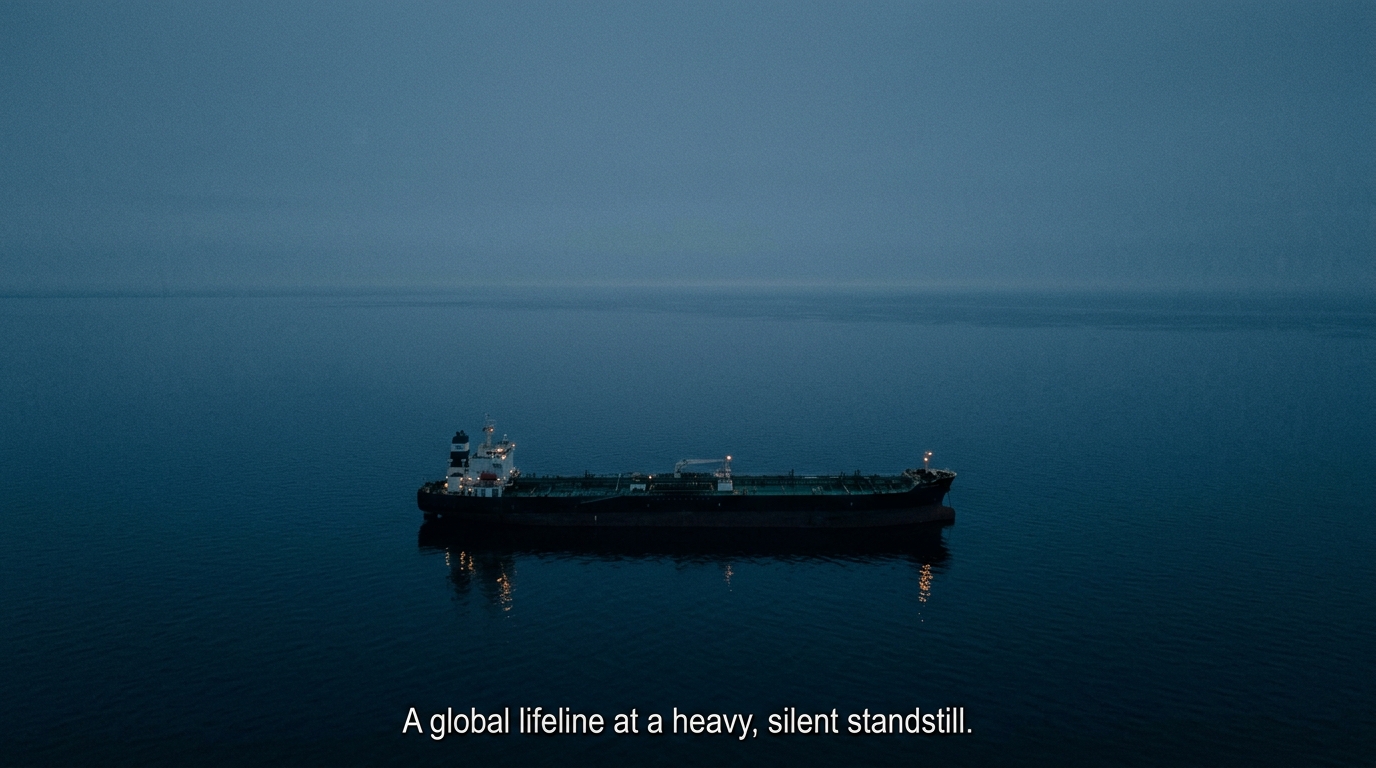
Nếu eo biển Hormuz tiếp tục bị đóng cửa đến cuối tháng 5 như dự báo của EIA, thì cổ phiếu năng lượng và các nhà xuất khẩu LNG sẽ vượt trội trong khi các hãng hàng không và công nghiệp tiêu thụ nhiều nhiên liệu sẽ bị thu hẹp biên lợi nhuận, bởi vì nút thắt 20% nguồn cung của OPEC chưa có giải pháp ngoại giao nào và các kho dự trữ chiến lược trên toàn cầu đang bị rút cạn.

CPI Mỹ chạm mức 3,8% khi chi phí năng lượng trói buộc Fed — Việc cắt giảm lãi suất bị hoãn đến năm 2027
Nếu CPI tháng 4 ở mức 3,8% đánh dấu sự khởi đầu của một chu kỳ lạm phát kéo dài do năng lượng chứ không phải là một đợt tăng nhất thời, thì các cổ phiếu bán dẫn và tăng trưởng sẽ kém hiệu quả hơn so với các cổ phiếu giá trị và năng lượng. Lý do là Goldman Sachs và BofA đã đẩy lùi kỳ vọng cắt giảm lãi suất sang cuối năm 2026 hoặc xa hơn, và việc ông Warsh chuyển giao vị trí chủ tịch Fed báo hiệu một sự xoay trục chính sách theo hướng thắt chặt.
If UK 10-year gilt yields hold above 5.0% through end-Q2 2026 while sterling stays sub-1.36, then the equal-weight short basket of BARC.L + NWG.L + LLOY.L + EWU + FXB delivers a net 8-12% return over 30-45 trading days, because (a) AFS gilt losses force CET1 prints below current guidance at all three domestic banks, (b) the Labour-replacement government materialises with a 3% → 5% bank surcharge tax, and (c) sterling extends toward 1.30 as foreign gilt buyers demand a currency discount on top of yield premium.
Key fact
The net basket 95% VaR of -2.4% is 70% lower than the largest single-name VaR (BARC at -8.4%) — confirming that the HSBC hedge and ETF diversification meaningfully reduce 1-day tail risk while preserving directional alpha. The pair-trade construction is doing its job.
If 10-year gilt yields hold above 5.0% through end-Q2 2026 and Starmer's leadership remains unresolved, then the basket short (BARC.L, NWG.L, LLOY.L, EWU, FXB) hedged 95% long HSBC delivers net 8-12% return over 30-45 trading days, because (a) AFS gilt MTM bleeds £1-3bn through OCI at each UK domestic bank — invisible in P&L but cumulative through CET1, (b) a Labour-replacement government brings a 3% → 5% bank-surcharge tax that compresses UK-bank P/TBV by 8-12% mechanically, (c) sterling extends toward 1.30 as foreign gilt buyers demand currency-and-yield premium, and (d) HSBC's 60% Asia profit share (especially HIBOR-linked NIM and HKD-pegged earnings) outperforms by 8-15% as the same shock dis-anchors UK domestics.
Bullish Case
All six positions face short-squeeze risk. A credible Starmer reaffirmation paired with a Reeves fiscal-discipline package could compress 10y gilts 30-50bp inside a week and trigger a 5-8% rally in UK domestic banks. BoE emergency gilt purchases — the explicit playbook from October 2022 — would cap the trade at the basket level. An Iran ceasefire announcement is the highest-asymmetry single tail: Brent could drop $15-20 overnight, removing the imported-inflation overlay, supporting sterling, and lifting EWU. The UK domestic banks all trade at 0.4-0.95x P/B with healthy capital ratios and active buybacks. HSBC long faces opposite risk: a UK-wide windfall tax (not UK-profit-share-weighted), an HK property re-shock, or Trump-Xi tariff escalation could erase the relative-value premium. Positions are concentrated in one geographic theme — if the broader risk-off complex turns risk-on, HSBC may fail to outperform sufficiently to offset the basket short.
Bearish Case
The base case has compounding force. UK 10y gilt yields at 5.13% require active fiscal policy action to compress — passive 'waiting out' the move bleeds capital from bank balance sheets daily through OCI. The Labour parliamentary party is structurally aligned for leadership change; the question is timing, not direction. JPM has already moved the 3% → 5% bank-surcharge call to base case for sell-side notes — once published, the tax becomes a self-fulfilling consensus that compresses UK-bank P/TBV by 8-12% mechanically. Sterling has lost its 'yields-up-currency-up' regime, the classic signature of a sovereign-risk repricing. The May 12 tape printed institutional distribution on every name (1.06x-8.21x average volume on a down-day) with no insider buying to offset. HSBC's structural insulation (60% Asia profit, $34bn Q1 net new money) means the pair-trade construction is genuinely defensive rather than just smaller short. The trade has a clear time horizon (4-8 weeks), explicit kill conditions, and asymmetric reward.
Risk Factors
BoE emergency gilt purchases — single trigger that simultaneously caps all five short legs and forces a UK-bank short-squeeze (likely 5-8% intraday); monitor BoE statements and 30-year gilt auction tails; kill all shorts if announced
Starmer formally renews mandate with cross-party fiscal pact — political resolution removes the windfall-tax tail risk and triggers a multi-day gilt rally; kill UK bank shorts on close above key resistance (BARC 448p / NWG 605p / LLOY 102p)
Iran ceasefire breakthrough — collapses Brent below $85, removes imported-inflation overlay, supports sterling; kill FXB and EWU shorts on weekly close above key levels
HSBC China property re-shock — $15-20bn aggregate HK/mainland CRE exposure; a developer default cycle could trigger $1.5bn ECL spike at H1 results in late July; kill HSBC long if H1 ECL guidance > $1.5bn pre-announcement
Trump-Xi tariff escalation — compresses Commercial Banking trade finance volumes 8-12%; kill HSBC long if explicit US-China decoupling tariff round announced
HSBC closes below $82.50 on a daily basis (technical invalidation) — invalidates the hedge leg even if structural thesis intact