
อัตราผลตอบแทนพันธบัตรรัฐบาลอังกฤษพุ่งสูงสุดตั้งแต่ปี 1998 ขณะที่วิกฤตผู้นำของ Starmer กดดันค่าเงินปอนด์อย่างหนัก
หากนายกฯ Starmer ถูกกดดันให้กำหนดวันลาออกเนื่องจากตลาดพันธบัตรเรียกร้องวินัยทางการคลัง หุ้นธนาคารอังกฤษและเงินปอนด์จะเผชิญกับแรงเทขายเพิ่มเติม เพราะการเปลี่ยนตัวผู้นำในช่วงวิกฤตพลังงานจะเพิ่มโอกาสในการใช้นโยบายการคลังแบบขยายตัว ซึ่งจะทำให้ส่วนต่างอัตราผลตอบแทนพันธบัตรอังกฤษกว้างขึ้นเมื่อเทียบกับของเยอรมนีและสหรัฐฯ
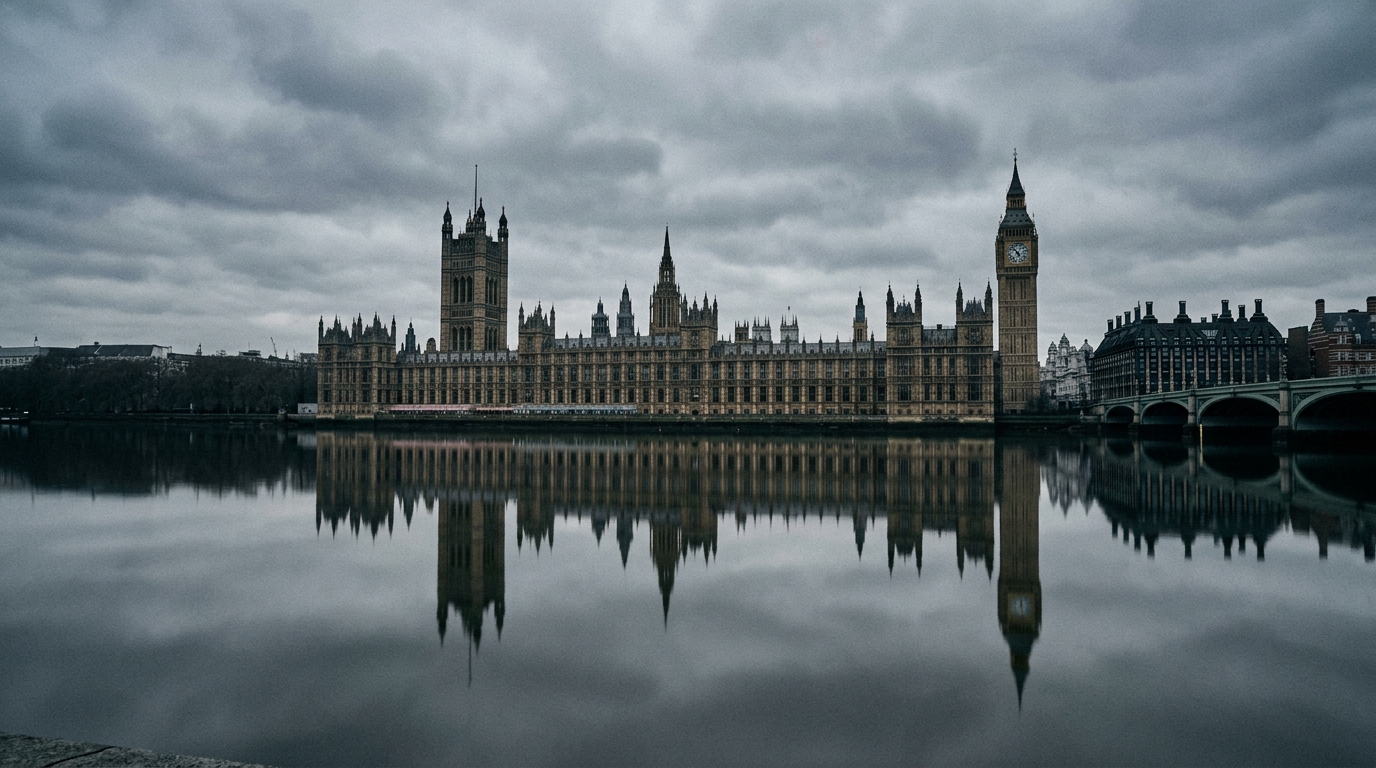
อัตราผลตอบแทนพันธบัตรรัฐบาลอังกฤษอายุ 10 ปีพุ่งแตะ 5.13% ซึ่งสูงสุดตั้งแต่ปี 1998 เนื่องจากกระแสเรียกร้องให้ Starmer ลาออกผนวกกับต้นทุนพลังงานจากสงครามอิหร่าน ทำให้เกิดวิกฤตซ้อนทับทั้งด้านการคลังและเงินเฟ้อ ดัชนี FTSE 250 ร่วงลง 1.5% และเงินปอนด์ทำสถิติต่ำสุดในรอบหลายสัปดาห์ จุดที่คนอาจมองข้ามคือ การใช้จ่ายผ่านบัตรเครดิตของผู้บริโภคอังกฤษหดตัวลงเป็นครั้งแรกตั้งแต่ปลายปี 2024 (ข้อมูลจาก Barclays) ขณะที่หนี้ค้างชำระค่าพลังงานพุ่งเข้าใกล้ 9.5 พันล้านดอลลาร์ นายกฯ คนใหม่อาจต้องกู้ยืมเงินเพิ่มเพื่อแก้ปัญหาวิกฤตค่าครองชีพ ซึ่งจะสร้างความเสี่ยงให้ตลาดพันธบัตรถูกเทขายซ้ำรอยยุค Truss ซึ่งตลาดยังไม่ได้ประเมินความเสี่ยงนี้อย่างเต็มที่
- เปิดสถานะ Short คู่เงิน GBPUSD — สุญญากาศทางผู้นำ + ต้นทุนพลังงาน + แรงเทขายในตลาดพันธบัตร จะกดดันให้เงินปอนด์อ่อนค่าอย่างต่อเนื่อง
- เปิดสถานะ Short หุ้นธนาคารในอังกฤษ (Barclays, Lloyds, NatWest) ที่เผชิญผลขาดทุนจากการประเมินมูลค่าพันธบัตรและคุณภาพสินเชื่อที่แย่ลง
- ติดตามกรอบเวลาการลาออกของ Starmer — หากผู้นำคนใหม่มีนโยบายขยายการคลัง จะกระตุ้นให้เกิดการเทขายพันธบัตรซ้ำรอยยุค Truss
- ปริมาณผู้โดยสารสนามบิน Heathrow ลดลง 5% โดยเส้นทางตะวันออกกลางร่วงลงถึง 50% — ภาคการท่องเที่ยวและบริการของอังกฤษเผชิญปัญหาอุปสงค์หดตัวเชิงโครงสร้าง
- จับตาความเสี่ยงที่ธนาคารกลางอังกฤษ (BOE) จะเข้ามาแทรกแซงหากอัตราผลตอบแทนพันธบัตรทะลุ 5.5% — BOE อาจถูกบังคับให้เข้าซื้อพันธบัตรฉุกเฉิน
สินทรัพย์ที่แนะนำ (Proposed Positions)
| สินทรัพย์ | ทิศทาง | จุดเข้า | เป้าหมาย | จุดตัดขาดทุน | คะแนนสัญญาณ | ความมั่นใจ |
|---|---|---|---|---|---|---|
| BARC.L | Short | 410–420p | 365p | 448p | 21/100 | High |
| NWG.L | Short | 562–575p | 504p / 471p | 605p | 25/100 | High |
| LLOY.L | Short | 94–96p | 88p / 80p | 102p | 28/100 | High |
| EWU | Short | $46.40–46.80 | $43.50 | $48.20 | 32/100 | High |
| FXB | Short | $130.00–130.50 | $125.50 | $132.20 | 27/100 | High |
| HSBC | Long | $87–90 | $98–102 | $82.50 | 62/100 | High |
- Short BARC.L — อัตราผลตอบแทนพันธบัตรที่พุ่งสูงสุดตั้งแต่ปี 1998 ทำให้พอร์ตพันธบัตร (AFS) ขาดทุนจากการประเมินมูลค่า (Mark-to-market) หนี้เสีย Q1 2026 พุ่งแตะ £823m และมีความเสี่ยงที่รัฐบาลใหม่จะขึ้นภาษีธนาคาร (จาก 3% เป็น 5%)
- Short NWG.L — รัฐบาลเพิ่งขายหุ้นทิ้งหมด รายได้กว่า 95% มาจากในประเทศ มีพอร์ตพันธบัตร AFS ที่ขาดทุนอย่างหนัก และราคาหุ้นสะท้อนข่าวดีเรื่องการเติบโตของ EPS ไปหมดแล้ว
- Short LLOY.L — พึ่งพารายได้ในประเทศถึง 95% และมีสัดส่วนสินเชื่อบ้านสูง หากผลตอบแทนพันธบัตรขยับขึ้น 100bp จะทำให้มูลค่าพอร์ตขาดทุนราว £2.5-3bn โดยไม่มีรายได้จากเอเชียหรือสหรัฐฯ มาช่วยชดเชย
- Short EWU — กองทุน ETF นี้จะสะท้อนทั้งการอ่อนค่าของเงินปอนด์และการร่วงลงของหุ้นในประเทศพร้อมกัน
- Short FXB — กองทุนอ้างอิงเงินปอนด์ (GBPUSD) ธนาคารกลาง (BoE) ติดหล่มระหว่างเงินเฟ้อ 3.3% กับวิกฤตการเมือง นักลงทุนต่างชาติเรียกร้องทั้งผลตอบแทนที่สูงขึ้นและส่วนลดค่าเงิน
- Long HSBC — มีสัดส่วนกำไรจากเอเชียถึง 60% มี RoTE สูงกว่าธนาคารในประเทศ และได้ประโยชน์จากค่าเงินดอลลาร์ ใช้เป็นสถานะป้องกันความเสี่ยง (Hedge) คู่กับการ Short หุ้นตัวอื่น
ส่วนที่ 1: สัญญาณการลงทุน — สรุปคะแนนภาพรวม
Scoring Methodology
Each pillar is scored 0-100 where 50 = neutral. Fundamental blends ROE, P/TBV percentile, FY trajectory and balance-sheet risk (gilt MTM, surcharge tax exposure). Technical blends 20/50-day SMA structure, RSI(14), realised volatility regime and volume profile. Sentiment uses the IUX24 news scorer (-1 to +1) mapped to 0-100. Smart Money blends insider transaction direction, OBV trend and ADV-relative volume on directional sessions. Macro Overlay is the single most discriminating factor here — weighted at 30% — capturing UK-specific systemic risk that has flipped these names from idiosyncratic equity stories to macro factor proxies. HSBC's macro overlay scores 78 because Asia revenue insulates it; UK domestics score 8-18 because every transmission channel pushes the same way.
ส่วนที่ 2: ผลกระทบจากข่าว — การวิเคราะห์ความเชื่อมั่นเชิงปริมาณ
Sentiment Scoring Methodology
News articles are scored by an LLM mode that reads each article in full, identifies named tickers, and assigns: (a) directional polarity (bear/bull/neutral), (b) magnitude (-1 to +1), and (c) confidence weighting. Article-level scores are aggregated by ticker into a volume-weighted impact score over a 7-day window. A score below -0.50 indicates a regime where every credible-source headline is bear-biased; HSBC's neutral score is itself information — when the rest of the UK bank complex is pricing -0.65 to -0.72, the structural insulation hypothesis gains evidence weight.
ส่วนที่ 3: การตรวจจับเหตุการณ์ — การวิเคราะห์ผลตอบแทนผิดปกติ, การซื้อขายของผู้บริหาร และปริมาณการซื้อขายที่ผิดปกติ
ลำดับเหตุการณ์และผลตอบแทนที่ผิดปกติ (CAR)
สรุปการประกาศผลประกอบการ
ความเคลื่อนไหวของผู้บริหาร (Insider Activity)
ปริมาณการซื้อขายที่ผิดปกติ (12 พฤษภาคม 2026)
CAR Methodology
Cumulative Abnormal Return (CAR) is computed by subtracting an event-window-matched benchmark return from each stock's realised return. UK domestic banks use the FTSE 350 Banks index as benchmark; HSBC uses the global MSCI World Banks index; FXB uses the DXY-equivalent G7 currency basket; EWU uses the MSCI EAFE. A 5-day CAR captures the immediate reaction; the 20-day CAR captures the persistence of the move. The May 11-12 window is still open, but the 5-day CARs for May 5-12 are already among the largest 20-day windows in the 6-month sample for LLOY (-4.4%), BARC (-3.9%) and NWG (-3.6%).
ส่วนที่ 4: การคาดการณ์ราคา — การพยากรณ์เชิงสถิติ
การคาดการณ์โมเมนตัม
Momentum Method
Trend slope is the ordinary least squares coefficient of log(price) regressed against trading-day index over the last 60 sessions, annualised. R² above 0.60 indicates a strong directional regime; readings between 0.45 and 0.60 indicate the trend is genuine but volatile. The 5/20-day targets project the slope forward — a useful short-horizon estimate when no obvious mean reversion is in play. UK domestic banks are all in steep negative-slope, high-R² downtrends; HSBC is in a positive-slope uptrend with the highest R² in the basket, validating the pair construction.
การวิเคราะห์การกลับตัวสู่ค่าเฉลี่ย (Mean Reversion)
Why Mean Reversion is NOT the Trade Here
All three UK domestic banks are now within -0.7 to -1.2 standard deviations of their 200-day mean — historically a mean-reversion buy zone. The thesis explicitly rejects this signal because it depends on a stable regime. During the 2008-09 and 2022 gilt shocks, UK domestic banks pushed z-scores to -2.5σ before reversion engaged. The momentum signal (high R², steep negative slope) is the dominant statistical regime; mean-reversion is the bull risk to size against, not the trade entry.
การคาดการณ์ความผันผวน
ระดับแนวรับ / แนวต้าน
Combining Momentum and Mean Reversion
In a regime-shift environment, the momentum signal dominates the mean-reversion signal for the directional bias, while the mean-reversion signal indicates the squeeze risk on countertrend bounces. The trade construction is: enter on momentum (current levels), trail stops using the mean-reversion ceiling (R1 levels), and target the momentum extension (S3 levels). For HSBC the two signals align bullishly — both predict a move higher — which is part of why HSBC is the highest-conviction long in the book.
ส่วนที่ 5: ข้อมูลเชิงลึกของตลาด — กระแสเงินทุนสถาบัน และปัจจัยเสี่ยง
สัญญาณความขัดแย้งจาก Smart Money
ทิศทางกระแสเงินทุนสถาบัน
- BARC.L: กองทุน Hedge Fund เปิดสถานะ Short สูงสุดตั้งแต่ปี 2018 การซื้อหุ้นคืนของบริษัทไม่เพียงพอที่จะพยุงราคา
- NWG.L: รัฐบาลขายหุ้นทิ้งหมดแล้ว ทำให้ไม่มีแรงซื้อคอยพยุงราคาเหมือนในอดีต
- LLOY.L: การซื้อหุ้นคืนมีสัดส่วนน้อยมากเมื่อเทียบกับแรงเทขายของสถาบัน สัดส่วนการ Short อยู่ในระดับสูงสุดในรอบหลายปี
- FXB: กองทุนยังคงถือสถานะ Long เงินปอนด์อยู่มาก ซึ่งจะเป็นเชื้อเพลิงให้ราคาตกหนักขึ้นเมื่อพวกเขาถูกบังคับให้ตัดขาดทุน
- EWU: นักลงทุนต่างชาติเร่งถอนเงินออกจากกองทุน ETF หุ้นอังกฤษอย่างต่อเนื่อง
- HSBC: มีเม็ดเงินใหม่ไหลเข้าจากฝั่งเอเชียถึง $34bn ช่วยต้านทานแรงเทขายจากฝั่งอังกฤษได้
ปัจจัยเสี่ยง (Factor Exposure)
เส้นโค้งการเสื่อมค่าของ Alpha (Alpha Decay Curve)
Alpha Decay Method
Alpha decay is modelled as a half-life function: π(t) = π_max · (1 - e^(-t/τ)) · e^(-t/decay_τ), where π_max is the modelled peak return (10-15% net), τ is the build-up half-life (10-15 days) and decay_τ is the post-resolution decay half-life (45-60 days). The estimated half-life of this trade is 2-4 weeks because the political pressure has 72+ Labour MPs already in revolt — the political resolution function is faster than gilt market normalisation. Kill conditions are explicit (see Module 6) to prevent giving back alpha after the half-life.
ส่วนที่ 6: กลยุทธ์การเทรด — จุดเข้า/ออก, ขนาดไม้ และความเสี่ยง/ผลตอบแทน
การทดสอบข้อมูลย้อนหลัง (Backtest)
พารามิเตอร์การเทรดและการกำหนดขนาดการลงทุน
สรุปตัวชี้วัดความเสี่ยง
- สถานะสุทธิ: Long สุทธิ ~5% (HSBC ช่วยชดเชยฝั่ง Short ได้เกือบหมด)
- ความผันผวนเทียบกับดัชนีธนาคารอังกฤษ: ~-0.65 (ได้ประโยชน์หากกลุ่มธนาคารร่วง)
- ความผันผวนเทียบกับ S&P 500: ~-0.15 (แทบไม่ได้รับผลกระทบจากตลาดหุ้นโลก)
- ความผันผวนเทียบกับ USD: ~-0.45 (ได้ประโยชน์หากดอลลาร์แข็ง/ปอนด์อ่อน)
- ผลขาดทุนสูงสุดใน 1 วัน (95% VaR): ~2.4% ของพอร์ต
- ผลตอบแทนที่คาดหวัง (ระยะเวลา 45 วัน): +8-12%
ลำดับเวลาของปัจจัยกระตุ้น (Catalyst Timeline)
Trading-Strategy Method
Trade construction uses (1) signal-score weighted entry — heavier sizing in highest-conviction names (BARC, NWG, LLOY, HSBC); (2) stop placement at the boundary of the prior 20-day range — a level whose violation invalidates the recent regime shift; (3) ATR-based position sizing — risk per name normalised to 25-40bp of portfolio; (4) explicit kill conditions tied to the macro mechanism, not just P&L; (5) monthly review of the alpha-decay path — half-life is 2-4 weeks, so positions are not held indefinitely. Friction estimates: 5-8bps spread on UK LSE bank lines, 1-2% borrow cost annualised on UK shorts, 30-50bps FX hedging if trading from USD base, total round-trip ~1.5-2.5% — manageable against a targeted 6-13% net move.
สรุปการตรวจสอบความถูกต้องทางสถิติ
Statistical Methodology
Jarque-Bera tests whether daily returns are normally distributed — p < 0.05 rejects normality and confirms fat tails, which is critical for sizing because Gaussian VaR understates true risk. Ljung-Box tests for serial correlation in returns; significant Q(20) indicates the momentum signal is real, not noise. Skewness measures asymmetry — all UK domestic banks have left-skew (large down moves more frequent than equally-large up moves), consistent with crisis dynamics. Excess kurtosis above 2 indicates fat-tailed distributions; combined with negative skewness, this creates the asymmetric risk that motivates the explicit kill conditions in Module 6. Historical-simulation VaR is preferred to parametric VaR given the fat-tailed regime.
บริบทด้านมูลค่าพื้นฐาน
Balance-Sheet Red Flags
All three UK domestic banks carry AFS (available-for-sale) gilt portfolios marked through OCI, not P&L — a 100bp parallel shift in 10y gilts subtracts an estimated £1.0bn from NWG CET1, £2.5-3bn from LLOY CET1, and £25-40bp of CET1 ratio at BARC. None of these hits appear in headline P/E or EPS. P/B at 0.40-0.95x looks cheap but the denominator (tangible book) is exposed to the gilt move. Bank P/B compressed to 0.30-0.50x in every prior UK stress episode (2008, 2011, 2016, 2022) — the floor is the BoE response function, not accounting book value. Motor-finance tail at LLOY remains live with industry-wide compensation between £11bn (FCA) and £18-20bn (sell-side high-end) — Lloyds is the most exposed single name.
สรุปการตรวจสอบ 5 เสาหลัก
บทสรุป
| สินทรัพย์ (Position) | จุดเข้า (Entry) | เป้าหมาย (Target) | จุดตัดขาดทุน (Stop-Loss) | ความมั่นใจ (Conviction) |
|---|---|---|---|---|
| BARC.L | 410–420p | 365p | 448p | High |
| NWG.L | 562–575p | 504p / 471p | 605p | High |
| LLOY.L | 94–96p | 88p / 80p | 102p | High |
| EWU | $46.40–46.80 | $43.50 | $48.20 | High |
| FXB | $130.00–130.50 | $125.50 | $132.20 | High |
| HSBC | $87–90 | $98–102 | $82.50 | High |
อ่านต่อ

การประชุมสุดยอด ทรัมป์-สี ที่ปักกิ่ง — คำสั่งซื้อ Boeing, ข้อตกลงสินค้าเกษตร และข้อพิพาทชิป AI
หากทรัมป์สามารถคว้าคำสั่งซื้อ Boeing ล็อตใหญ่และข้อตกลงซื้อสินค้าเกษตรจากสีจิ้นผิงในการประชุมสุดยอดที่หอสักการะฟ้าได้ หุ้น BA จะทะลุแนวต้านและสัญญาซื้อขายล่วงหน้าถั่วเหลืองจะปรับตัวขึ้น เนื่องจากยอดขายรถยนต์ในจีนที่ร่วงลง 21.6% เป็นสัญญาณว่าปักกิ่งต้องการชัยชนะทางการค้าที่จับต้องได้ ในขณะที่ทรัมป์ก็ต้องการเสียงสนับสนุนจากรัฐเกษตรกรรมก่อนการเลือกตั้งกลางเทอม

วิกฤตช่องแคบฮอร์มุซยืดเยื้อหลังเจรจาหยุดยิงอิหร่านล้มเหลว — ราคาน้ำมันพุ่งทะลุ 107 ดอลลาร์
หากช่องแคบฮอร์มุซยังคงถูกปิดจนถึงปลายเดือนพฤษภาคมตามที่ EIA คาดการณ์ หุ้นกลุ่มพลังงานและผู้ส่งออก LNG จะทำผลงานได้ดีกว่าตลาด ในขณะที่สายการบินและกลุ่มอุตสาหกรรมที่ใช้เชื้อเพลิงสูงจะเผชิญกับภาวะกำไรหดตัว เนื่องจากปัญหาคอขวดของอุปทาน OPEC ที่หายไป 20% ยังไม่มีทีท่าว่าจะจบลงด้วยวิธีทางการทูต และคลังน้ำมันสำรองเชิงยุทธศาสตร์ทั่วโลกกำลังถูกดึงมาใช้

ตัวเลข CPI สหรัฐฯ แตะ 3.8% ต้นทุนพลังงานมัดมือ Fed — เลื่อนลดดอกเบี้ยไปปี 2027
หาก CPI เดือนเมษายนที่ 3.8% เป็นจุดเริ่มต้นของภาวะเงินเฟ้อจากพลังงานที่ยืดเยื้อ ไม่ใช่แค่พุ่งขึ้นชั่วคราว หุ้นเซมิคอนดักเตอร์และหุ้นเติบโตจะให้ผลตอบแทนแย่กว่าหุ้นคุณค่าและพลังงาน เนื่องจาก Goldman และ BofA ได้เลื่อนคาดการณ์การลดดอกเบี้ยไปเป็นปลายปี 2026 หรือหลังจากนั้น และการเปลี่ยนผ่านให้ Warsh เป็นประธาน Fed ส่งสัญญาณถึงนโยบายสายเหยี่ยว
If UK 10-year gilt yields hold above 5.0% through end-Q2 2026 while sterling stays sub-1.36, then the equal-weight short basket of BARC.L + NWG.L + LLOY.L + EWU + FXB delivers a net 8-12% return over 30-45 trading days, because (a) AFS gilt losses force CET1 prints below current guidance at all three domestic banks, (b) the Labour-replacement government materialises with a 3% → 5% bank surcharge tax, and (c) sterling extends toward 1.30 as foreign gilt buyers demand a currency discount on top of yield premium.
Bullish Case
All six positions face short-squeeze risk. A credible Starmer reaffirmation paired with a Reeves fiscal-discipline package could compress 10y gilts 30-50bp inside a week and trigger a 5-8% rally in UK domestic banks. BoE emergency gilt purchases — the explicit playbook from October 2022 — would cap the trade at the basket level. An Iran ceasefire announcement is the highest-asymmetry single tail: Brent could drop $15-20 overnight, removing the imported-inflation overlay, supporting sterling, and lifting EWU. The UK domestic banks all trade at 0.4-0.95x P/B with healthy capital ratios and active buybacks. HSBC long faces opposite risk: a UK-wide windfall tax (not UK-profit-share-weighted), an HK property re-shock, or Trump-Xi tariff escalation could erase the relative-value premium. Positions are concentrated in one geographic theme — if the broader risk-off complex turns risk-on, HSBC may fail to outperform sufficiently to offset the basket short.
Bearish Case
The base case has compounding force. UK 10y gilt yields at 5.13% require active fiscal policy action to compress — passive 'waiting out' the move bleeds capital from bank balance sheets daily through OCI. The Labour parliamentary party is structurally aligned for leadership change; the question is timing, not direction. JPM has already moved the 3% → 5% bank-surcharge call to base case for sell-side notes — once published, the tax becomes a self-fulfilling consensus that compresses UK-bank P/TBV by 8-12% mechanically. Sterling has lost its 'yields-up-currency-up' regime, the classic signature of a sovereign-risk repricing. The May 12 tape printed institutional distribution on every name (1.06x-8.21x average volume on a down-day) with no insider buying to offset. HSBC's structural insulation (60% Asia profit, $34bn Q1 net new money) means the pair-trade construction is genuinely defensive rather than just smaller short. The trade has a clear time horizon (4-8 weeks), explicit kill conditions, and asymmetric reward.
Risk Factors
BoE emergency gilt purchases — single trigger that simultaneously caps all five short legs and forces a UK-bank short-squeeze (likely 5-8% intraday); monitor BoE statements and 30-year gilt auction tails; kill all shorts if announced
Starmer formally renews mandate with cross-party fiscal pact — political resolution removes the windfall-tax tail risk and triggers a multi-day gilt rally; kill UK bank shorts on close above key resistance (BARC 448p / NWG 605p / LLOY 102p)
Iran ceasefire breakthrough — collapses Brent below $85, removes imported-inflation overlay, supports sterling; kill FXB and EWU shorts on weekly close above key levels
HSBC China property re-shock — $15-20bn aggregate HK/mainland CRE exposure; a developer default cycle could trigger $1.5bn ECL spike at H1 results in late July; kill HSBC long if H1 ECL guidance > $1.5bn pre-announcement
Trump-Xi tariff escalation — compresses Commercial Banking trade finance volumes 8-12%; kill HSBC long if explicit US-China decoupling tariff round announced
HSBC closes below $82.50 on a daily basis (technical invalidation) — invalidates the hedge leg even if structural thesis intact
Key fact
The net basket 95% VaR of -2.4% is 70% lower than the largest single-name VaR (BARC at -8.4%) — confirming that the HSBC hedge and ETF diversification meaningfully reduce 1-day tail risk while preserving directional alpha. The pair-trade construction is doing its job.
If 10-year gilt yields hold above 5.0% through end-Q2 2026 and Starmer's leadership remains unresolved, then the basket short (BARC.L, NWG.L, LLOY.L, EWU, FXB) hedged 95% long HSBC delivers net 8-12% return over 30-45 trading days, because (a) AFS gilt MTM bleeds £1-3bn through OCI at each UK domestic bank — invisible in P&L but cumulative through CET1, (b) a Labour-replacement government brings a 3% → 5% bank-surcharge tax that compresses UK-bank P/TBV by 8-12% mechanically, (c) sterling extends toward 1.30 as foreign gilt buyers demand currency-and-yield premium, and (d) HSBC's 60% Asia profit share (especially HIBOR-linked NIM and HKD-pegged earnings) outperforms by 8-15% as the same shock dis-anchors UK domestics.
Bullish Case
All six positions face short-squeeze risk. A credible Starmer reaffirmation paired with a Reeves fiscal-discipline package could compress 10y gilts 30-50bp inside a week and trigger a 5-8% rally in UK domestic banks. BoE emergency gilt purchases — the explicit playbook from October 2022 — would cap the trade at the basket level. An Iran ceasefire announcement is the highest-asymmetry single tail: Brent could drop $15-20 overnight, removing the imported-inflation overlay, supporting sterling, and lifting EWU. The UK domestic banks all trade at 0.4-0.95x P/B with healthy capital ratios and active buybacks. HSBC long faces opposite risk: a UK-wide windfall tax (not UK-profit-share-weighted), an HK property re-shock, or Trump-Xi tariff escalation could erase the relative-value premium. Positions are concentrated in one geographic theme — if the broader risk-off complex turns risk-on, HSBC may fail to outperform sufficiently to offset the basket short.
Bearish Case
The base case has compounding force. UK 10y gilt yields at 5.13% require active fiscal policy action to compress — passive 'waiting out' the move bleeds capital from bank balance sheets daily through OCI. The Labour parliamentary party is structurally aligned for leadership change; the question is timing, not direction. JPM has already moved the 3% → 5% bank-surcharge call to base case for sell-side notes — once published, the tax becomes a self-fulfilling consensus that compresses UK-bank P/TBV by 8-12% mechanically. Sterling has lost its 'yields-up-currency-up' regime, the classic signature of a sovereign-risk repricing. The May 12 tape printed institutional distribution on every name (1.06x-8.21x average volume on a down-day) with no insider buying to offset. HSBC's structural insulation (60% Asia profit, $34bn Q1 net new money) means the pair-trade construction is genuinely defensive rather than just smaller short. The trade has a clear time horizon (4-8 weeks), explicit kill conditions, and asymmetric reward.
Risk Factors
BoE emergency gilt purchases — single trigger that simultaneously caps all five short legs and forces a UK-bank short-squeeze (likely 5-8% intraday); monitor BoE statements and 30-year gilt auction tails; kill all shorts if announced
Starmer formally renews mandate with cross-party fiscal pact — political resolution removes the windfall-tax tail risk and triggers a multi-day gilt rally; kill UK bank shorts on close above key resistance (BARC 448p / NWG 605p / LLOY 102p)
Iran ceasefire breakthrough — collapses Brent below $85, removes imported-inflation overlay, supports sterling; kill FXB and EWU shorts on weekly close above key levels
HSBC China property re-shock — $15-20bn aggregate HK/mainland CRE exposure; a developer default cycle could trigger $1.5bn ECL spike at H1 results in late July; kill HSBC long if H1 ECL guidance > $1.5bn pre-announcement
Trump-Xi tariff escalation — compresses Commercial Banking trade finance volumes 8-12%; kill HSBC long if explicit US-China decoupling tariff round announced
HSBC closes below $82.50 on a daily basis (technical invalidation) — invalidates the hedge leg even if structural thesis intact