Sterling holds steady as dollar pauses

The British pound held steady near November 2025 lows as the dollar paused for the US Thanksgiving holiday. Sterling recently faced a selloff due to broader equity market weakness. Meanwhile, traders increased bets on upcoming Bank of England rate hikes.

Insights:
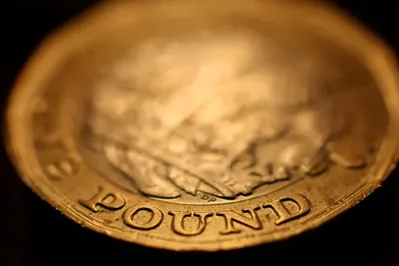
UK pound coins plunge into water in this illustration picture, October 26, 2017. Picture taken October 26, 2017. REUTERS/Dado Ruvic

The pound held steady at $1.3107 on Thursday morning after losing 2% against the United States dollar over the month. The currency stabilized as North American markets closed for the Thanksgiving holiday following a 13-session losing streak. The pullback reflects broader equity market pressures and shifting interest rate expectations in the United Kingdom.

Market Pressures and Valuation

The recent currency weakness stemmed from a broader equity selloff rather than domestic fundamentals alone, according to Tomás García-Purriños, a senior strategist at Santander AM.

When the market is risk-on, sterling tends to perform well, but the market has not been in that mode, so its only natural that the pound has corrected, particularly as it had been performing relatively well for some time.

Valuation and fundamental indicators remain favorable for the currency, prompting analysts to favor dollar-short positions against other major currencies instead. The pound traded slightly lower at 83.76 pence per euro during the Thursday session.

Rate Expectations and Inflation Outlook

Bank of England Governor Andrew Bailey stated on Wednesday that British inflation may fall short of earlier projections if international energy prices stabilize at current levels. Money market pricing indicates traders expect two consecutive rate hikes by February, with a total of three increases priced in by September 2027.

The BoE's Monetary Policy Committee meets to review benchmark borrowing costs on December 17.

Assets in this story

Insightful questions