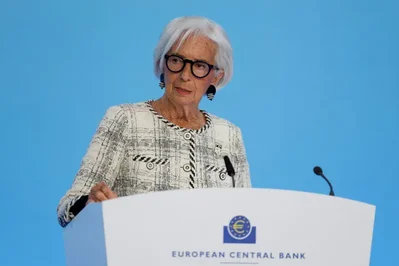
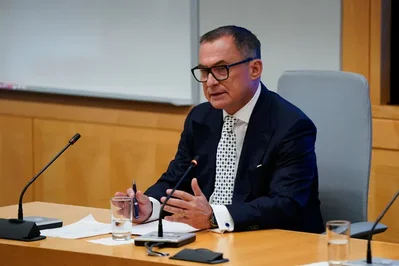
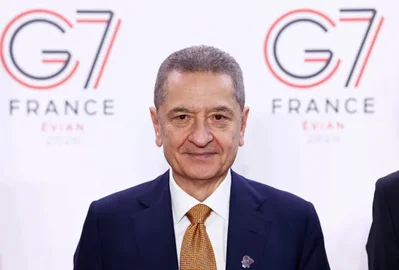
Public remarks from various governors reflected a desire for stability despite market volatility. Olli Rehn, the central bank governor for Finland, emphasized the need for a strategic perspective.
We must keep a cool head and keep our eyes on the entire playing field.
In France, Governor Francois Villeroy de Galhau suggested that while inflation could reach 2.6% this year due to energy costs, the bank should avoid knee-jerk reactions. He noted that the ECB remains vigilant and prepared to intervene if necessary.
We have the eyes on the ball and the hands ready to act.
The Governor of the Bank of Spain, Jose Luis Escriva, echoed this sentiment, noting the difficulty in predicting how energy prices will influence long-term inflation. He advocated for the ECB to continue its practice of making decisions meeting by meeting rather than committing to a fixed path.
Despite the measured public tone, some officials acknowledge that a rate hike in April could be considered if geopolitical tensions do not subside. Joachim Nagel, President of the Bundesbank in Germany, warned that persistent energy shocks might necessitate intervention to prevent a deterioration of the medium-term outlook.
As things currently stand, it is conceivable that the medium-term inflation outlook could deteriorate and inflation expectations could rise on a sustained basis, meaning that a more restrictive monetary policy stance would probably be necessary.
Financial markets and major institutions are already preparing for a shift. JPMorgan Chase & Co., Morgan Stanley, and Barclays PLC have all revised their forecasts, now anticipating rate hikes in 2026. Barclays and JPMorgan expect an initial move as early as April, while Morgan Stanley projects 25-basis-point increases in June and September.
However, some analysts remain skeptical of the aggressive timeline. Joerg Kraemer, chief economist at Commerzbank AG, pointed to a prevailing dovish bias within the Governing Council as a reason for caution regarding market expectations.
I remain unconvinced by the futures markets’ expectation that the ECB will raise its key interest rates a good two times by the end of the year.