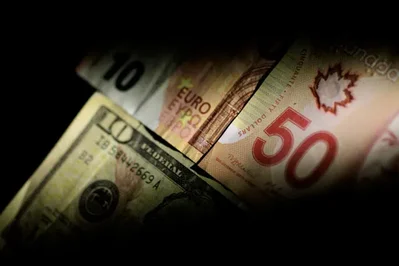
Geopolitical tensions in the Middle East have significantly impacted currency markets, driving investors toward safe-haven assets. While the U.S. dollar index saw a slight decline following reports of potential de-escalation in the conflict involving Israel and Iran, it still managed to post its best quarterly performance in more than a year. Tony Valente, a senior FX dealer at AscendantFX, noted that the U.S. dollar remains the preferred destination during times of global instability.
"The geopolitical shock out of the Middle East has lifted energy prices, but more importantly it has triggered a classic flight to quality, where the USD remains the market’s bunker of choice," said Valente.
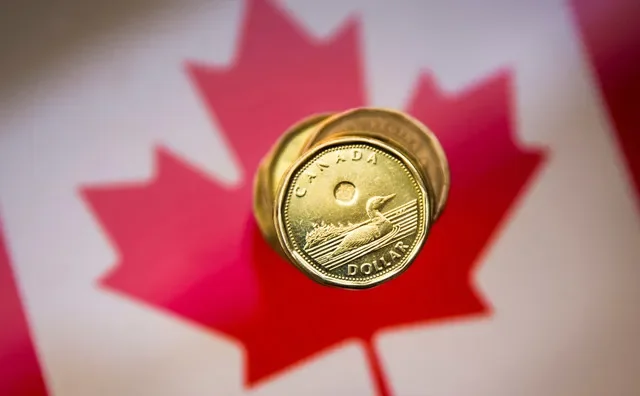
Domestic economic data offered a counter-narrative to the loonie's recent weakness. Canadian GDP rose by 0.1% in January, beating estimates for a flat reading, while an advance estimate for February showed the economy expanding by an additional 0.2%. However, Valente warned that interest rate differentials continue to weigh on the Canadian currency unless the central bank adopts a more aggressive stance.
"Unless the Bank of Canada signals a more hawkish stance to push back against this divergence, the path of least resistance for USD-CAD remains higher, with the 1.40 psychological level now emerging as the next key target," Valente said.
Earlier this month, the Bank of Canada left its benchmark interest rate unchanged at 2.25%, citing the need for more time to assess the impact of international conflicts. Market expectations for total interest rate tightening this year have shifted to 41 basis points, down from the 70 basis points expected just days ago. In the bond market, Canadian yields moved lower, with the 2-year yield falling 6.1 basis points to 2.826%.