
Los rendimientos de los bonos británicos alcanzan máximos de 1998 mientras la crisis de liderazgo de Starmer hunde la libra esterlina
Si el Primer Ministro Starmer se ve obligado a fijar una fecha de renuncia mientras los vigilantes de bonos exigen disciplina fiscal, entonces las acciones de los bancos británicos y la libra esterlina enfrentarán mayores caídas, porque una transición de liderazgo durante una crisis energética aumenta la probabilidad de una política fiscal expansiva que amplíe los diferenciales de los bonos británicos frente a los Bunds y los Treasuries.
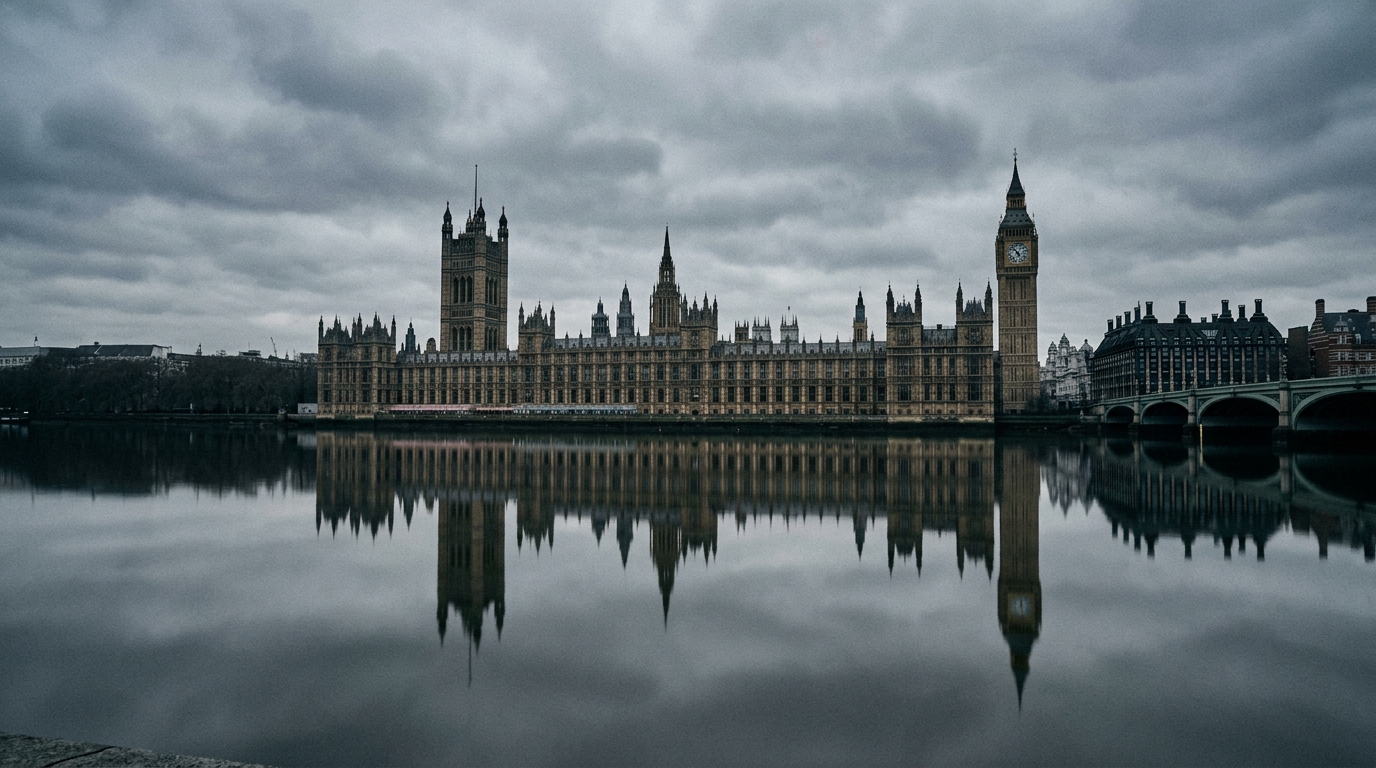
Los rendimientos de los bonos británicos a 10 años se dispararon al 5.13% —el nivel más alto desde 1998— a medida que las crecientes demandas de renuncia de Starmer se combinaron con los costos energéticos de la guerra en Irán para crear un doble choque fiscal e inflacionario. El FTSE 250 cayó un 1.5% y la libra esterlina alcanzó mínimos de varias semanas. El ángulo menos evidente: el gasto de los consumidores británicos cayó por primera vez desde finales de 2024 (datos de tarjetas de Barclays), mientras que las deudas energéticas se acercan a los $9.5 mil millones. Un Primer Ministro sucesor probablemente aumentaría el endeudamiento para abordar la crisis del costo de vida, creando un riesgo de reajuste en los bonos similar al de la era Truss que los mercados aún no han descontado por completo.
- Posición corta en GBPUSD: el vacío de liderazgo + costos energéticos + vigilantes de bonos crean una debilidad persistente en la libra esterlina
- Posición corta en bancos nacionales británicos (Barclays, Lloyds, NatWest) que enfrentan pérdidas contables en bonos y deterioro crediticio
- Monitorear el cronograma de renuncia de Starmer: un sucesor que prometa expansión fiscal desencadenaría un reajuste de bonos al estilo Truss
- El tráfico de Heathrow cae un 5% con una disminución del 50% en las rutas de Medio Oriente: los sectores de viajes y hospitalidad del Reino Unido enfrentan un golpe estructural en la demanda
- Vigilar el riesgo de intervención del BOE si los rendimientos de los bonos superan el 5.5%: el Banco podría verse obligado a realizar compras de emergencia
Posiciones Propuestas
| Posición | Dirección | Entrada | Objetivo | Stop-Loss | Puntuación de Señal | Convicción |
|---|---|---|---|---|---|---|
| BARC.L | Corto | 410–420p | 365p | 448p | 21/100 | Alta |
| NWG.L | Corto | 562–575p | 504p / 471p | 605p | 25/100 | Alta |
| LLOY.L | Corto | 94–96p | 88p / 80p | 102p | 28/100 | Alta |
| EWU | Corto | $46.40–46.80 | $43.50 | $48.20 | 32/100 | Alta |
| FXB | Corto | $130.00–130.50 | $125.50 | $132.20 | 27/100 | Alta |
| HSBC | Largo | $87–90 | $98–102 | $82.50 | 62/100 | Alta |
- Corto en BARC.L — Los altos rendimientos de los bonos generan pérdidas contables en sus carteras de inversión. El deterioro crediticio ya aumentó a £823 millones, y un posible cambio de gobierno trae consigo el riesgo de mayores impuestos bancarios.
- Corto en NWG.L — Tras la salida del gobierno en 2025, el banco quedó vulnerable. Depende casi totalmente del mercado británico y sufre pérdidas en su cartera de bonos de £33 mil millones.
- Corto en LLOY.L — Es el banco más expuesto al mercado nacional. Un aumento en los rendimientos de los bonos causaría un impacto masivo de hasta £3 mil millones en su valor sin compensación en mercados internacionales.
- Corto en EWU — Este fondo captura la caída combinada de la libra y las acciones nacionales del Reino Unido en un solo instrumento, aprovechando la debilidad del mercado interno.
- Corto en FXB — La libra sufre mientras el Banco de Inglaterra (BoE) está atrapado entre la alta inflación y la crisis política, lo que ahuyenta a los inversores extranjeros.
- Largo en HSBC — Su enfoque en Asia (60% de las ganancias) y su alta rentabilidad lo protegen de la crisis británica, funcionando como la cobertura ideal para esta estrategia.
Módulo 1: Señal de Inversión — Panel de Puntuación Compuesta
Scoring Methodology
Each pillar is scored 0-100 where 50 = neutral. Fundamental blends ROE, P/TBV percentile, FY trajectory and balance-sheet risk (gilt MTM, surcharge tax exposure). Technical blends 20/50-day SMA structure, RSI(14), realised volatility regime and volume profile. Sentiment uses the IUX24 news scorer (-1 to +1) mapped to 0-100. Smart Money blends insider transaction direction, OBV trend and ADV-relative volume on directional sessions. Macro Overlay is the single most discriminating factor here — weighted at 30% — capturing UK-specific systemic risk that has flipped these names from idiosyncratic equity stories to macro factor proxies. HSBC's macro overlay scores 78 because Asia revenue insulates it; UK domestics score 8-18 because every transmission channel pushes the same way.
Módulo 2: Impacto de Noticias — Análisis de Sentimiento Cuantificado
Sentiment Scoring Methodology
News articles are scored by an LLM mode that reads each article in full, identifies named tickers, and assigns: (a) directional polarity (bear/bull/neutral), (b) magnitude (-1 to +1), and (c) confidence weighting. Article-level scores are aggregated by ticker into a volume-weighted impact score over a 7-day window. A score below -0.50 indicates a regime where every credible-source headline is bear-biased; HSBC's neutral score is itself information — when the rest of the UK bank complex is pricing -0.65 to -0.72, the structural insulation hypothesis gains evidence weight.
Módulo 3: Detección de Eventos — Análisis CAR, Operaciones Internas y Volumen
CAR Methodology
Cumulative Abnormal Return (CAR) is computed by subtracting an event-window-matched benchmark return from each stock's realised return. UK domestic banks use the FTSE 350 Banks index as benchmark; HSBC uses the global MSCI World Banks index; FXB uses the DXY-equivalent G7 currency basket; EWU uses the MSCI EAFE. A 5-day CAR captures the immediate reaction; the 20-day CAR captures the persistence of the move. The May 11-12 window is still open, but the 5-day CARs for May 5-12 are already among the largest 20-day windows in the 6-month sample for LLOY (-4.4%), BARC (-3.9%) and NWG (-3.6%).
Módulo 4: Predicción de Precios — Pronóstico Estadístico
Momentum Method
Trend slope is the ordinary least squares coefficient of log(price) regressed against trading-day index over the last 60 sessions, annualised. R² above 0.60 indicates a strong directional regime; readings between 0.45 and 0.60 indicate the trend is genuine but volatile. The 5/20-day targets project the slope forward — a useful short-horizon estimate when no obvious mean reversion is in play. UK domestic banks are all in steep negative-slope, high-R² downtrends; HSBC is in a positive-slope uptrend with the highest R² in the basket, validating the pair construction.
Why Mean Reversion is NOT the Trade Here
All three UK domestic banks are now within -0.7 to -1.2 standard deviations of their 200-day mean — historically a mean-reversion buy zone. The thesis explicitly rejects this signal because it depends on a stable regime. During the 2008-09 and 2022 gilt shocks, UK domestic banks pushed z-scores to -2.5σ before reversion engaged. The momentum signal (high R², steep negative slope) is the dominant statistical regime; mean-reversion is the bull risk to size against, not the trade entry.
Combining Momentum and Mean Reversion
In a regime-shift environment, the momentum signal dominates the mean-reversion signal for the directional bias, while the mean-reversion signal indicates the squeeze risk on countertrend bounces. The trade construction is: enter on momentum (current levels), trail stops using the mean-reversion ceiling (R1 levels), and target the momentum extension (S3 levels). For HSBC the two signals align bullishly — both predict a move higher — which is part of why HSBC is the highest-conviction long in the book.
Módulo 5: Perspectiva del Mercado — Flujo Institucional y Exposición a Factores
Alpha Decay Method
Alpha decay is modelled as a half-life function: π(t) = π_max · (1 - e^(-t/τ)) · e^(-t/decay_τ), where π_max is the modelled peak return (10-15% net), τ is the build-up half-life (10-15 days) and decay_τ is the post-resolution decay half-life (45-60 days). The estimated half-life of this trade is 2-4 weeks because the political pressure has 72+ Labour MPs already in revolt — the political resolution function is faster than gilt market normalisation. Kill conditions are explicit (see Module 6) to prevent giving back alpha after the half-life.
Módulo 6: Estrategia de Trading — Entradas, Salidas y Riesgo
- Exposición neta en dólares: ~5% larga (HSBC compensa casi toda la exposición corta).
- Beta frente al mercado global (S&P 500): casi neutral (-0.15).
- Retorno esperado a 45 días: +8-12%.
Trading-Strategy Method
Trade construction uses (1) signal-score weighted entry — heavier sizing in highest-conviction names (BARC, NWG, LLOY, HSBC); (2) stop placement at the boundary of the prior 20-day range — a level whose violation invalidates the recent regime shift; (3) ATR-based position sizing — risk per name normalised to 25-40bp of portfolio; (4) explicit kill conditions tied to the macro mechanism, not just P&L; (5) monthly review of the alpha-decay path — half-life is 2-4 weeks, so positions are not held indefinitely. Friction estimates: 5-8bps spread on UK LSE bank lines, 1-2% borrow cost annualised on UK shorts, 30-50bps FX hedging if trading from USD base, total round-trip ~1.5-2.5% — manageable against a targeted 6-13% net move.
Resumen de Validación Estadística
Statistical Methodology
Jarque-Bera tests whether daily returns are normally distributed — p < 0.05 rejects normality and confirms fat tails, which is critical for sizing because Gaussian VaR understates true risk. Ljung-Box tests for serial correlation in returns; significant Q(20) indicates the momentum signal is real, not noise. Skewness measures asymmetry — all UK domestic banks have left-skew (large down moves more frequent than equally-large up moves), consistent with crisis dynamics. Excess kurtosis above 2 indicates fat-tailed distributions; combined with negative skewness, this creates the asymmetric risk that motivates the explicit kill conditions in Module 6. Historical-simulation VaR is preferred to parametric VaR given the fat-tailed regime.
Contexto de Valoración
Balance-Sheet Red Flags
All three UK domestic banks carry AFS (available-for-sale) gilt portfolios marked through OCI, not P&L — a 100bp parallel shift in 10y gilts subtracts an estimated £1.0bn from NWG CET1, £2.5-3bn from LLOY CET1, and £25-40bp of CET1 ratio at BARC. None of these hits appear in headline P/E or EPS. P/B at 0.40-0.95x looks cheap but the denominator (tangible book) is exposed to the gilt move. Bank P/B compressed to 0.30-0.50x in every prior UK stress episode (2008, 2011, 2016, 2022) — the floor is the BoE response function, not accounting book value. Motor-finance tail at LLOY remains live with industry-wide compensation between £11bn (FCA) and £18-20bn (sell-side high-end) — Lloyds is the most exposed single name.
Resumen de Validación de 5 Pilares
Conclusión
| Posición | Entrada | Objetivo | Stop-Loss | Convicción |
|---|---|---|---|---|
| BARC.L | 410–420p | 365p | 448p | Alta |
| NWG.L | 562–575p | 504p / 471p | 605p | Alta |
| LLOY.L | 94–96p | 88p / 80p | 102p | Alta |
| EWU | $46.40–46.80 | $43.50 | $48.20 | Alta |
| FXB | $130.00–130.50 | $125.50 | $132.20 | Alta |
| HSBC | $87–90 | $98–102 | $82.50 | Alta |
Seguir leyendo

Cumbre Trump-Xi en Pekín — Pedidos de Boeing, acuerdos agrícolas y el estancamiento de los chips de IA
Si Trump asegura un gran pedido de Boeing y compromisos de compra de productos agrícolas por parte de Xi en la cumbre del Templo del Cielo, entonces BA romperá al alza y los futuros de la soja subirán. Esto se debe a que las ventas de automóviles nacionales en China cayeron un 21,6%, lo que indica que Pekín necesita victorias comerciales visibles, mientras que Trump necesita el apoyo de los estados agrícolas antes de las elecciones de mitad de mandato.
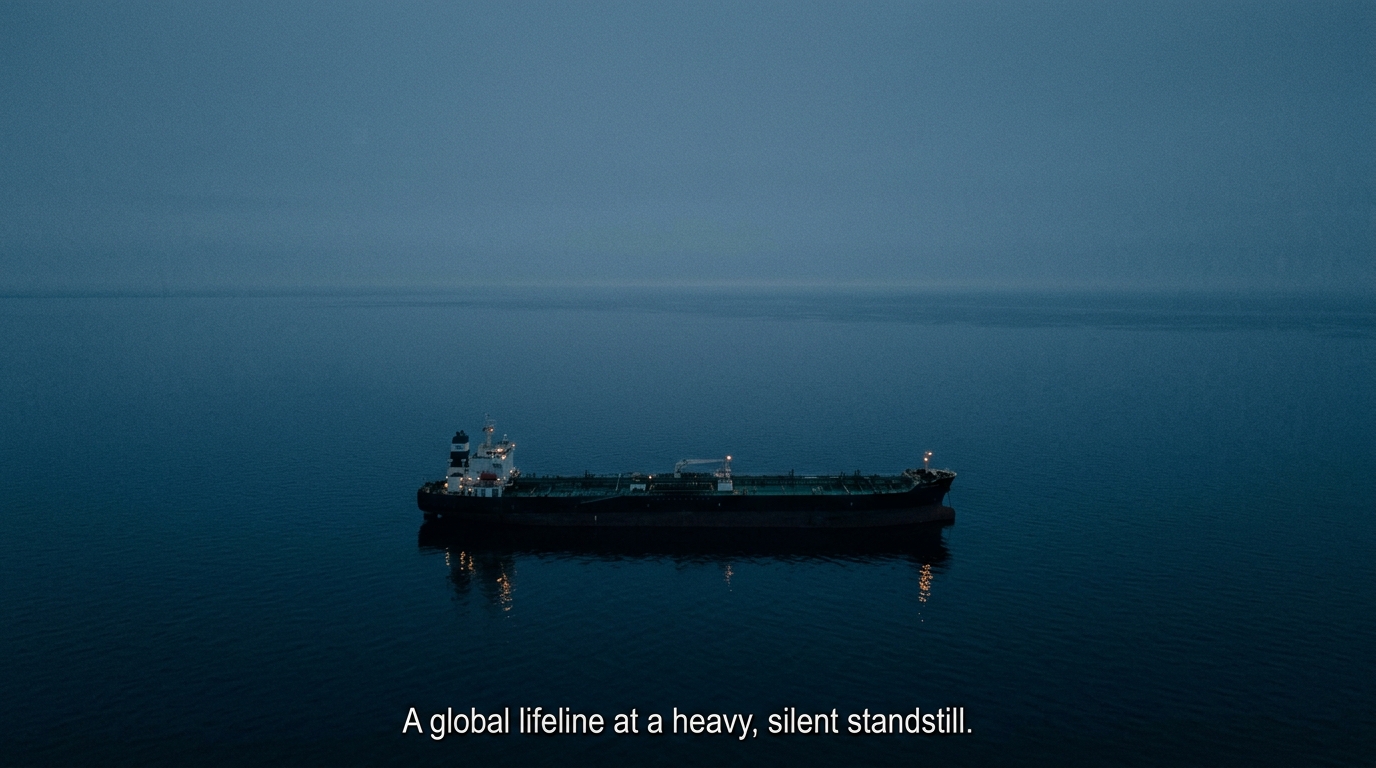
El Cierre de Ormuz Persiste tras el Colapso del Alto el Fuego con Irán — Petróleo por Encima de $107
Si el Estrecho de Ormuz permanece cerrado hasta fines de mayo como proyecta la EIA, entonces las acciones de energía y los exportadores de GNL tendrán un rendimiento superior, mientras que las aerolíneas y las industrias intensivas en combustible enfrentarán una compresión de márgenes, porque el cuello de botella del 20% de la oferta de la OPEP no tiene una resolución diplomática a la vista y las reservas estratégicas se están agotando a nivel mundial.

El IPC de EE. UU. alcanza el 3,8% mientras los costos de energía bloquean a la Fed: recortes de tasas pospuestos hasta 2027
Si el IPC de abril del 3,8% marca el inicio de un régimen de inflación sostenida impulsada por la energía en lugar de un pico transitorio, entonces las acciones de semiconductores y crecimiento tendrán un rendimiento inferior al de las acciones de valor y energía, porque Goldman y BofA ya han pospuesto las expectativas de recorte de tasas hasta finales de 2026 o más allá y la transición de Warsh a la presidencia de la Fed señala un giro de política restrictiva (hawkish).
If UK 10-year gilt yields hold above 5.0% through end-Q2 2026 while sterling stays sub-1.36, then the equal-weight short basket of BARC.L + NWG.L + LLOY.L + EWU + FXB delivers a net 8-12% return over 30-45 trading days, because (a) AFS gilt losses force CET1 prints below current guidance at all three domestic banks, (b) the Labour-replacement government materialises with a 3% → 5% bank surcharge tax, and (c) sterling extends toward 1.30 as foreign gilt buyers demand a currency discount on top of yield premium.
Key fact
The net basket 95% VaR of -2.4% is 70% lower than the largest single-name VaR (BARC at -8.4%) — confirming that the HSBC hedge and ETF diversification meaningfully reduce 1-day tail risk while preserving directional alpha. The pair-trade construction is doing its job.
If 10-year gilt yields hold above 5.0% through end-Q2 2026 and Starmer's leadership remains unresolved, then the basket short (BARC.L, NWG.L, LLOY.L, EWU, FXB) hedged 95% long HSBC delivers net 8-12% return over 30-45 trading days, because (a) AFS gilt MTM bleeds £1-3bn through OCI at each UK domestic bank — invisible in P&L but cumulative through CET1, (b) a Labour-replacement government brings a 3% → 5% bank-surcharge tax that compresses UK-bank P/TBV by 8-12% mechanically, (c) sterling extends toward 1.30 as foreign gilt buyers demand currency-and-yield premium, and (d) HSBC's 60% Asia profit share (especially HIBOR-linked NIM and HKD-pegged earnings) outperforms by 8-15% as the same shock dis-anchors UK domestics.
Bullish Case
All six positions face short-squeeze risk. A credible Starmer reaffirmation paired with a Reeves fiscal-discipline package could compress 10y gilts 30-50bp inside a week and trigger a 5-8% rally in UK domestic banks. BoE emergency gilt purchases — the explicit playbook from October 2022 — would cap the trade at the basket level. An Iran ceasefire announcement is the highest-asymmetry single tail: Brent could drop $15-20 overnight, removing the imported-inflation overlay, supporting sterling, and lifting EWU. The UK domestic banks all trade at 0.4-0.95x P/B with healthy capital ratios and active buybacks. HSBC long faces opposite risk: a UK-wide windfall tax (not UK-profit-share-weighted), an HK property re-shock, or Trump-Xi tariff escalation could erase the relative-value premium. Positions are concentrated in one geographic theme — if the broader risk-off complex turns risk-on, HSBC may fail to outperform sufficiently to offset the basket short.
Bearish Case
The base case has compounding force. UK 10y gilt yields at 5.13% require active fiscal policy action to compress — passive 'waiting out' the move bleeds capital from bank balance sheets daily through OCI. The Labour parliamentary party is structurally aligned for leadership change; the question is timing, not direction. JPM has already moved the 3% → 5% bank-surcharge call to base case for sell-side notes — once published, the tax becomes a self-fulfilling consensus that compresses UK-bank P/TBV by 8-12% mechanically. Sterling has lost its 'yields-up-currency-up' regime, the classic signature of a sovereign-risk repricing. The May 12 tape printed institutional distribution on every name (1.06x-8.21x average volume on a down-day) with no insider buying to offset. HSBC's structural insulation (60% Asia profit, $34bn Q1 net new money) means the pair-trade construction is genuinely defensive rather than just smaller short. The trade has a clear time horizon (4-8 weeks), explicit kill conditions, and asymmetric reward.
Risk Factors
BoE emergency gilt purchases — single trigger that simultaneously caps all five short legs and forces a UK-bank short-squeeze (likely 5-8% intraday); monitor BoE statements and 30-year gilt auction tails; kill all shorts if announced
Starmer formally renews mandate with cross-party fiscal pact — political resolution removes the windfall-tax tail risk and triggers a multi-day gilt rally; kill UK bank shorts on close above key resistance (BARC 448p / NWG 605p / LLOY 102p)
Iran ceasefire breakthrough — collapses Brent below $85, removes imported-inflation overlay, supports sterling; kill FXB and EWU shorts on weekly close above key levels
HSBC China property re-shock — $15-20bn aggregate HK/mainland CRE exposure; a developer default cycle could trigger $1.5bn ECL spike at H1 results in late July; kill HSBC long if H1 ECL guidance > $1.5bn pre-announcement
Trump-Xi tariff escalation — compresses Commercial Banking trade finance volumes 8-12%; kill HSBC long if explicit US-China decoupling tariff round announced
HSBC closes below $82.50 on a daily basis (technical invalidation) — invalidates the hedge leg even if structural thesis intact