The Whole AI Trade Rests on One Assumption — and China Is Attacking It From Underneath
Tony P.IUX24 Research Team

Latest version only

TopicsAI & AutomationTrade & Geopolitics


Latest version only
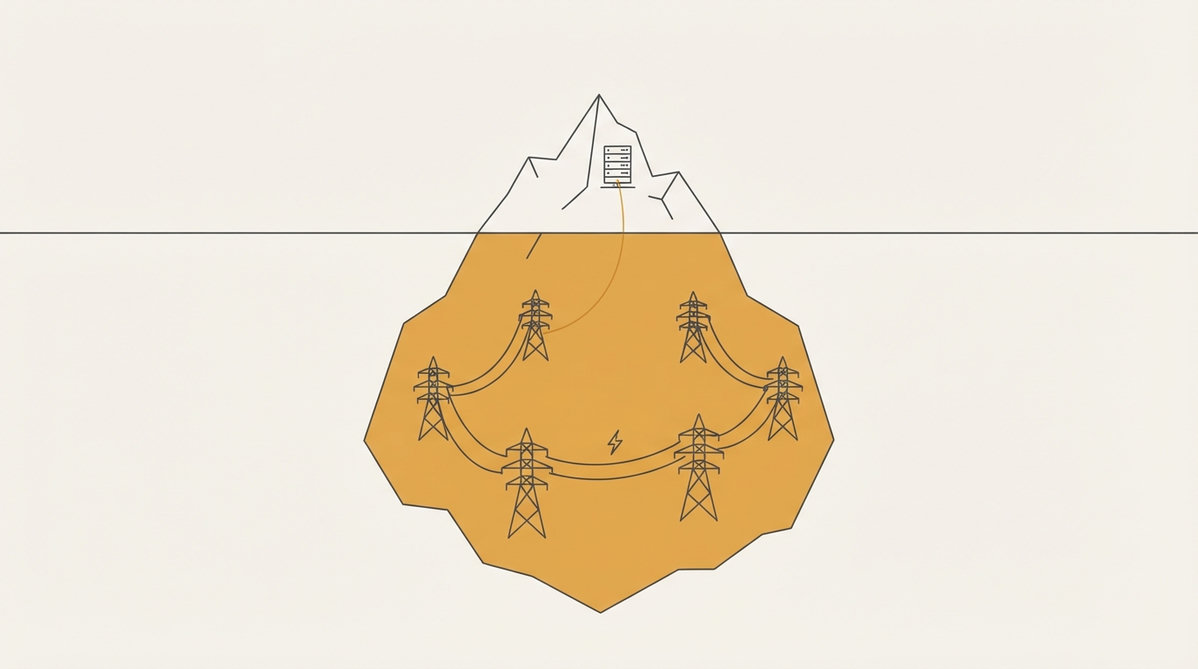
It reflects everything it floats over, and its whole shape depends on one assumption.
Ten sections, twelve minutes. Not investment advice.
Alternate headlines
In 1995 Netscape had about 9 out of 10 browsers on Earth and charged $39 a copy. Biggest IPO opening day anyone had seen. Stock doubled the same day.
Four months later Microsoft gave Internet Explorer away free, preloaded on every Windows PC. By 2002 Netscape was dead.
The internet was exactly as big as everyone said. That wasn't the mistake. The mistake was that Netscape's price assumed browsers would stay something you pay for.
Same sentence, different nouns, for the rest of this article.
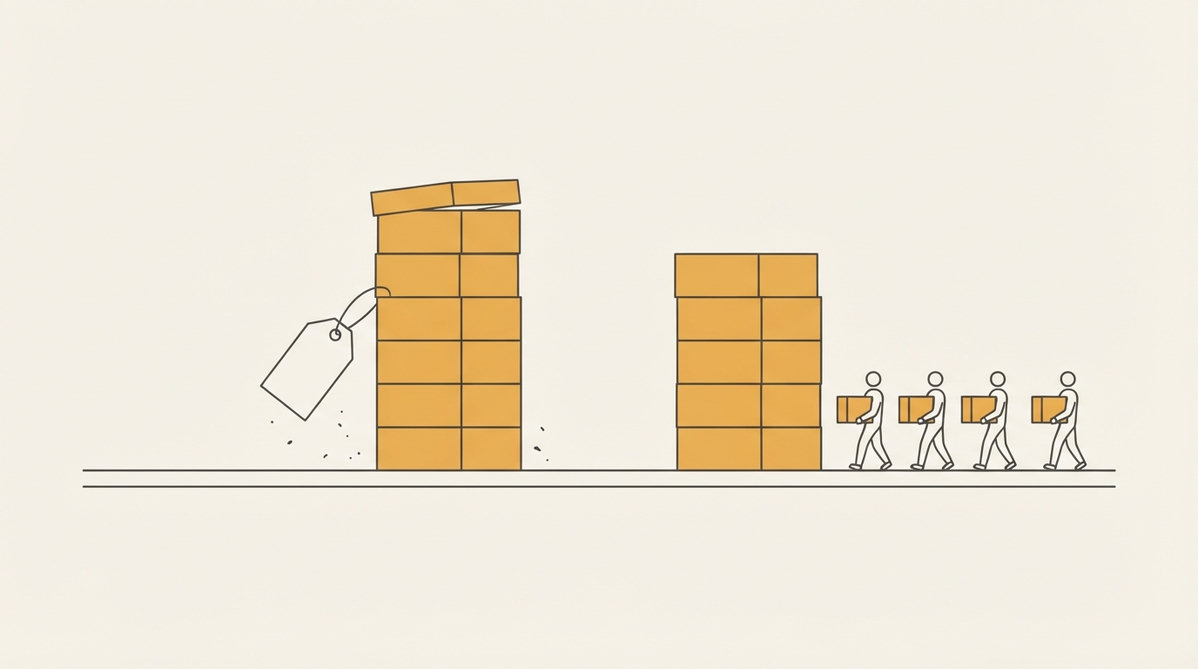
Same product, same stack. The one with a price on it gathers dust; the free one walks out the door.
Seven companies are now about a third of the entire US stock market. Nvidia went from $600B to $5T in roughly three years. AI-linked activity is credited with about 92% of current US economic growth.
None of that needs AI to be fake to unwind. It needs one thing to stay true:
Expensive to build, expensive to run, expensive enough that a few companies can charge for it and keep the margin. Take that away and the businesses still work. The multiples don't.
What people argue about | What actually prices the stock |
|---|---|
Is AI real? | Yes |
Is AI useful? | Yes |
Does intelligence stay costly? | This is the whole trade |
The second chip company past a trillion — priced on the same assumption.
A model is a recipe. Billions of numbers tuned until a question reliably becomes an answer.
Finding the recipe is training: cook it wrong millions of times, nudge the numbers, throw away almost everything. Tens of thousands of specialist chips, months of compute, billions of dollars. Once.
Using the recipe is inference: every answer, one token at a time. Forever.
Training | Inference | |
|---|---|---|
How often | Once per model | Every request, forever |
Needs the best chip on Earth | Yes | No — good enough is fine |
Who wins it today | Nvidia, easily | Open |
Share of global AI compute in 2026 | ~40% | ~60% |
America's comfort came from the left column. Training is a spending contest, and nobody outspends America. But the money that repeats forever is in the right column, and the right column doesn't need the best chip in the world.
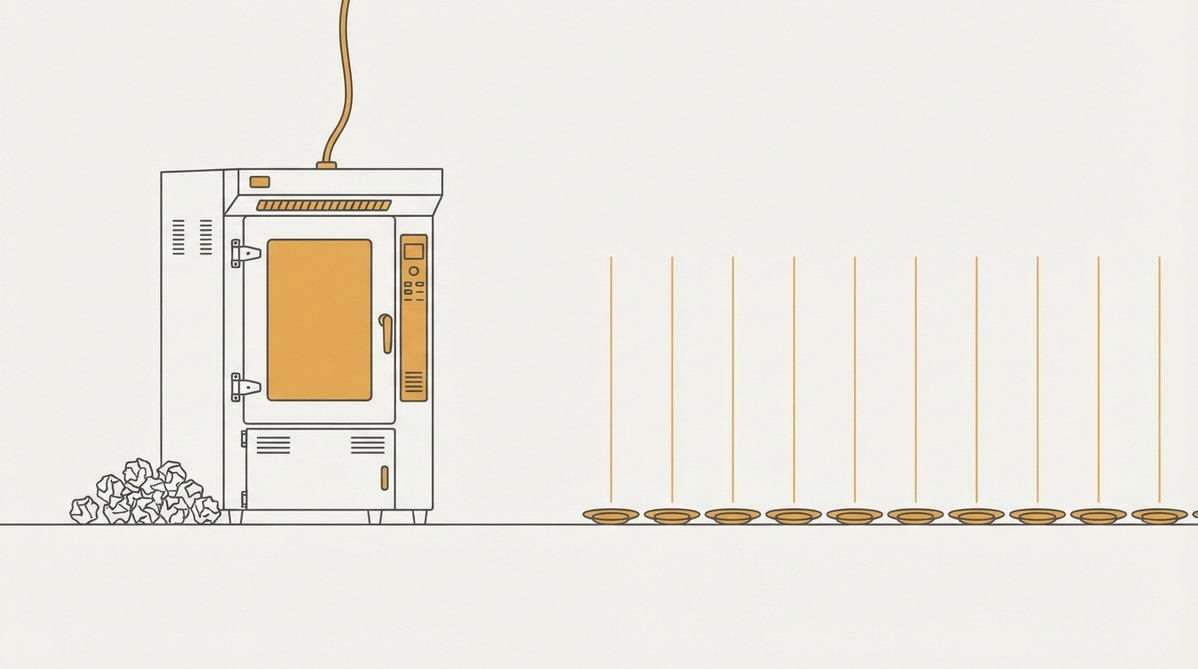
The oven runs once and shuts. The plates keep serving forever. Only one of those is a recurring bill.
If the expensive part is finding the recipe, the obvious move is not to find it. Copy it.
You can't read a rival's weights. But you can eat at their restaurant until you can reproduce the dish: send the model millions of questions, record every answer, train your own model to imitate it. This has a name — distillation.
It's not small-scale. Anthropic said it caught three Chinese labs doing it industrially: 24,000 fake accounts, 16 million+ exchanges. Five months later Kimi K3 shipped — 2.8 trillion parameters, near-frontier, open source, free.
The market repriced in a day:
Wiped off OpenAI and Anthropic notional valuations | $392B |
Philadelphia Semiconductor Index | −12.5% |
Distillation is the polite version. A Google engineer was convicted this year on seven counts of economic espionage after walking out with 2,000+ pages of blueprints for Google's training chips. He'd already applied to a Shanghai state-backed program built to reward exactly that.
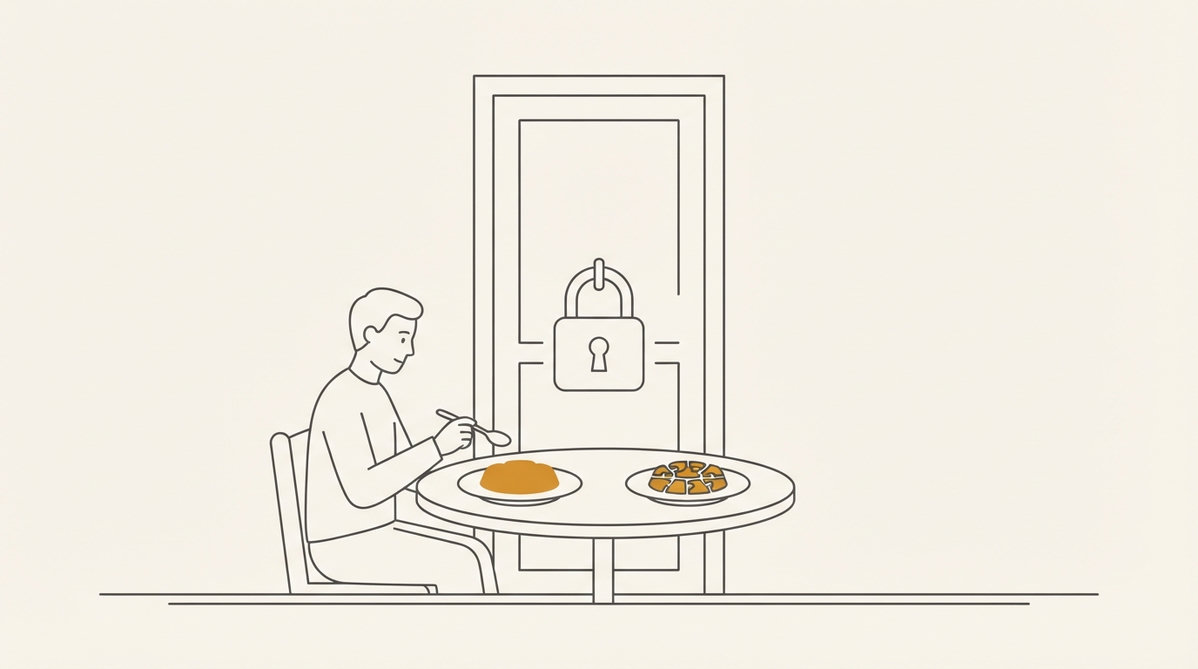
Nobody got into the kitchen. The dish on the right was rebuilt from the outside, one taste at a time.
Every handset maker skipped years of OS work and poured everything into cheap hardware. By 2017 Android was on about 80% of phones. Google never sold a copy. It sold what sat underneath — search and the Play Store on every one of those devices.
That's the move:
Now read the Chinese labs the same way. DeepSeek, Qwen, Kimi, GLM — competitive models, released free. Roughly 80% of US AI startups now build on at least one of them. Airbnb runs customer service on Alibaba's Qwen.
Free models aren't the business. They're the setup.
Model and silicon announced on the same day. That pairing is the whole strategy.
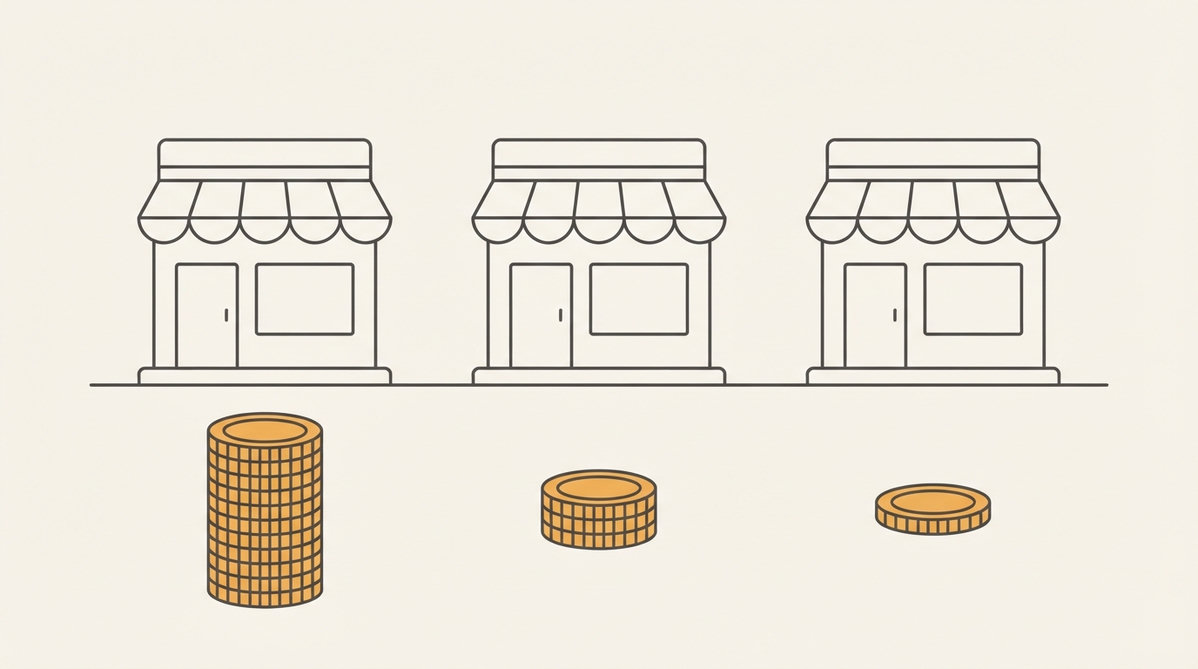
Public test: build a website for a coffee shop.
Built with | Cost |
|---|---|
A US frontier model | ~$50 |
Kimi K3 | ~$12 |
OpenAI's cost-optimised GPT-5.6 Luna (July) | ~$4 |
Row three is the one that matters. The cheap Chinese model didn't take the work — it dragged the price down, and a US lab cut its own pricing ~80% to meet it.
That's what a commoditised layer looks like from inside: product keeps improving, users keep growing, price per unit of intelligence falls anyway.
Or as one line from the reporting puts it: you don't need God to write your emails.
Same shop, three times. The only thing that changed is what it cost to build.
Adoption moves before revenue does, which is why it's the less flattering number.
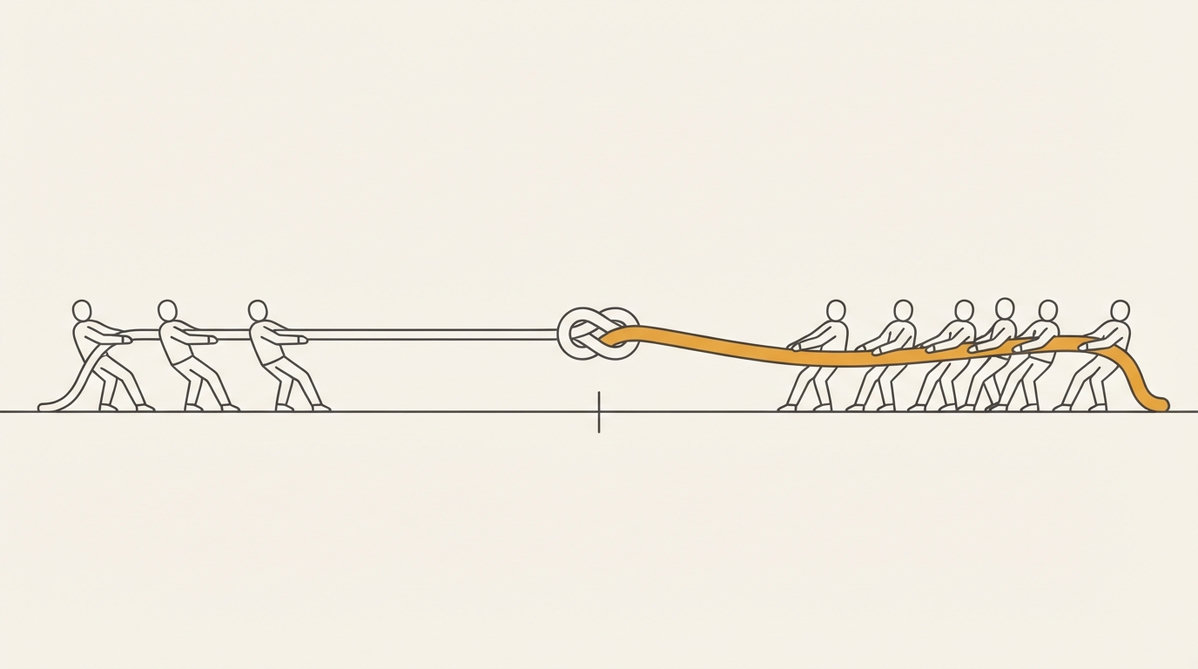
On OpenRouter, measured by token volume across the top ten AI labs:
Country | Chinese models | US models |
|---|---|---|
Singapore | 63% | 34% |
Germany | 58% | 33% |
In 2026, by the same measure, the US crossed over too.
For a while nobody talked about it — teams used Chinese open models quietly. That ended when a US ban got floated and hundreds of American startups said publicly that they needed them.
You don't have to believe the frontier gap closed. It didn't. You just have to notice that most production work never needed the frontier.
The knot is already past the middle. Nobody announced it — the rope just kept moving.
Nvidia's gross margin is about 75% — $75 profit on every $100 of chips. Apple, the most successful hardware company ever, runs about 46%.
Adam Smith described a monopoly as someone who charges "the highest which can be got", and said monopolies keep the market understocked. Today: next year's chips are already sold, and customers are told to plan a year out.
75% isn't a fact about Nvidia. It's a fact about there being no alternative. So watch the alternative:
Chinese domestic AI chips in 2025, vs Nvidia's global volume | ~7% |
Nvidia's AI chip share inside China, two years ago → now | over a third → ~8% |
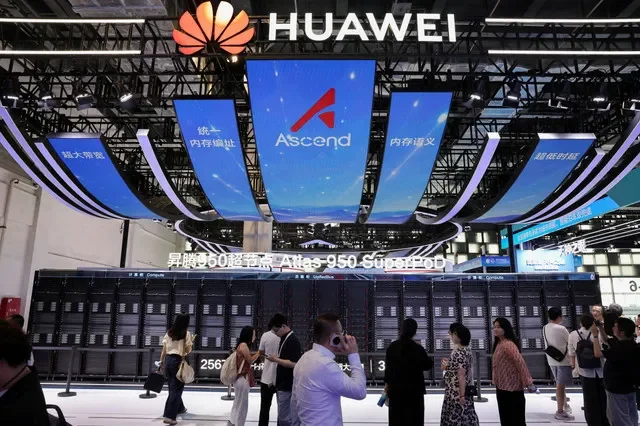
Huawei's inference chip price vs the Nvidia counterpart | ~1/4 |
Cost of ownership, Chinese AI chips vs Nvidia (Morgan Stanley) | 30–60% lower |
China's chip industry revenue last year | $245B, nearly double 2020 |
Nvidia is still far ahead on the chip that trains. The fight being picked is on the chip that infers, and that one only has to be good enough.
The constraint isn't demand for the alternative. It's how fast it can be made.
Fifteen years ago solar panels were a high-margin Western technology, led by German and American manufacturers. China entered, subsidised production far past global demand, flooded the market.
Price per watt | −65% in three years |
Western solar manufacturing | mostly wiped out |
Solar as a technology | won — cheapest electricity on Earth |
Profits, including for the Chinese winners | gone |
That last row is the part people misread. The bear case isn't that AI fails. It's that AI succeeds so completely nobody gets to charge a premium for it.
The technology won. That's exactly why the tag is on the floor.
Every layer here moves downward. Models got given away, so the fight moved to chips. Chips are getting commoditised, so the fight moves to whatever is under chips.
There's only one thing under chips. A data centre turns electricity into intelligence. If models are free and chips are cheap, power is the last real cost of intelligence.
New power capacity added last year — China | 543 GW |
New power capacity added last year — US | 63 GW |
China's electricity output | more than the US, Europe and India combined |
Capacity added since 2021 | more than the US has built in its entire history |
Bloomberg's five-year projection | China adds nearly 6× the US |
The awkward part: none of it was built for AI. It was built over twenty years to be the world's factory. Intelligence just happens to run on the same input.
Meanwhile the US constraint is showing up as permits and grid audits.
The rack on the tip is the part everyone looks at. The thing holding it up is the part under the water.
Four things, and they're real:
Point 4 cuts both ways. A price cut that defends share is also the first proof the price was going to fall.
Five things to watch. None of them need a forecast:
Watch | What it tells you |
|---|---|
Nvidia's gross margin | 75% is priced in. Direction matters more than level. |
Price per token on the cheap tiers | Every cut is a margin already gone. |
Token-volume share by provider, not revenue share | Adoption moves first. |
Inference share of total compute | The recurring cost is the business. |
Power capacity added, by country | The floor under everything else. |
Netscape shareholders were right about the internet and lost anyway. Being right about the technology has never been the same as being right about the price.
Every figure and event in this article is linked inline to its IUX24 report.
Comments