Vietnam Seeks New Partner After Japan's Exit from Nuclear Project
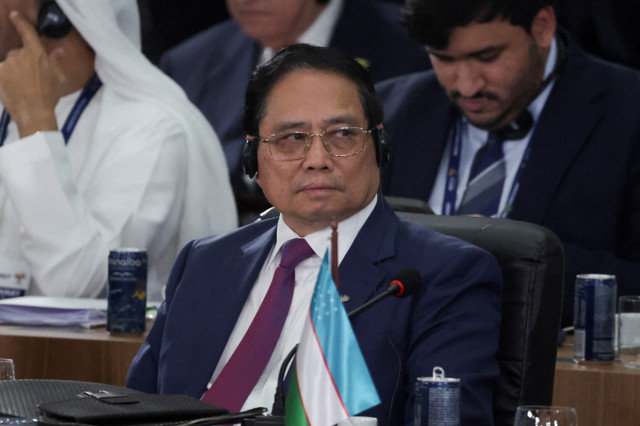
Vietnam's Prime Minister Pham Minh Chinh has directed officials to expedite nuclear negotiations with Russia after Japan withdrew from a key project. The withdrawal, citing an ambitious timeline, underscores the urgency for Vietnam to secure new partnerships to meet growing energy demands.
洞察:
In a significant development for Vietnam's energy strategy, Prime Minister Pham Minh Chinh pham minh chinhhas instructed government officials to hasten negotiations with Russia  RUfollowing Japan's
 JPwithdrawal from a planned nuclear power plant project. The decision, announced by Japan's ambassador to Vietnam, Naoki Ito naoki ito, in December 2025, cited the challenge of meeting Vietnam's 2035 online target as the primary reason for the exit. This unexpected turn of events has left Vietnam
 VNscrambling to find a new international partner to replace Japan in its nuclear ambitions. Vietnam resumed its nuclear power program in 2025, aiming to construct two plants with a combined capacity of 4 to 6.4 gigawatts. The original timeline targeted agreements with Russia by September 2025 and Japan by the end of the same year. However, progress has been slower than anticipated, with cooperation agreements facing numerous obstacles. The revised goal is now to bring both plants online after 2031, extending Vietnam's reliance on other energy sources amid mounting power supply pressures. The urgency of the situation is underscored by Vietnam's burgeoning manufacturing sector, which hosts major operations for global giants such as Samsung and Apple. The country's electricity grid has been strained by extreme weather events, including droughts and typhoons, leading to significant power blackouts. To address these challenges, Vietnam is keen on diversifying its energy sources, with a focus on renewables and gas. As the search for a new partner intensifies, Russia's role becomes increasingly central to Vietnam's energy security. The involvement of Rosatom , a key player in the nuclear industry, is crucial as Vietnam seeks to finalize negotiations by January 2026. The country's reliance on nuclear power is seen as a strategic move to meet the rising electricity demands of its industrial and residential sectors. Meanwhile, Japan's withdrawal highlights the complexities and challenges associated with Vietnam's nuclear ambitions. The ambitious 2035 timeline, deemed unachievable by Japan, has forced Vietnam to reassess its strategy and accelerate diplomatic efforts in securing alternative partnerships. The situation remains fluid, with Vietnam's energy future hinging on the successful completion of these critical negotiations. As Vietnam navigates these challenges, the global energy market watches closely, particularly those invested in uranium , as the outcome of these negotiations could have far-reaching implications for the region's energy landscape.
RUfollowing Japan's JPwithdrawal from a planned nuclear power plant project. The decision, announced by Japan's ambassador to Vietnam, Naoki Ito naoki ito, in December 2025, cited the challenge of meeting Vietnam's 2035 online target as the primary reason for the exit. This unexpected turn of events has left Vietnam VNscrambling to find a new international partner to replace Japan in its nuclear ambitions. Vietnam resumed its nuclear power program in 2025, aiming to construct two plants with a combined capacity of 4 to 6.4 gigawatts. The original timeline targeted agreements with Russia by September 2025 and Japan by the end of the same year. However, progress has been slower than anticipated, with cooperation agreements facing numerous obstacles. The revised goal is now to bring both plants online after 2031, extending Vietnam's reliance on other energy sources amid mounting power supply pressures. The urgency of the situation is underscored by Vietnam's burgeoning manufacturing sector, which hosts major operations for global giants such as Samsung and Apple. The country's electricity grid has been strained by extreme weather events, including droughts and typhoons, leading to significant power blackouts. To address these challenges, Vietnam is keen on diversifying its energy sources, with a focus on renewables and gas. As the search for a new partner intensifies, Russia's role becomes increasingly central to Vietnam's energy security. The involvement of Rosatom , a key player in the nuclear industry, is crucial as Vietnam seeks to finalize negotiations by January 2026. The country's reliance on nuclear power is seen as a strategic move to meet the rising electricity demands of its industrial and residential sectors. Meanwhile, Japan's withdrawal highlights the complexities and challenges associated with Vietnam's nuclear ambitions. The ambitious 2035 timeline, deemed unachievable by Japan, has forced Vietnam to reassess its strategy and accelerate diplomatic efforts in securing alternative partnerships. The situation remains fluid, with Vietnam's energy future hinging on the successful completion of these critical negotiations. As Vietnam navigates these challenges, the global energy market watches closely, particularly those invested in uranium , as the outcome of these negotiations could have far-reaching implications for the region's energy landscape.