US Business Equipment Orders Rose 0.6 Percent in February
Orders for key US manufactured capital goods rose 0.6 percent in February. This suggests business spending was on firm ground before the war with Iran began.

New data reveals that business spending on equipment in the United States was on a firm trajectory in February, prior to the escalation of geopolitical tensions. Orders for non-defense capital goods excluding aircraft, a key indicator of business investment plans, rose by 0.6% during the month. This performance exceeded the 0.4% increase anticipated by economists and followed a revised 0.4% decline in January.
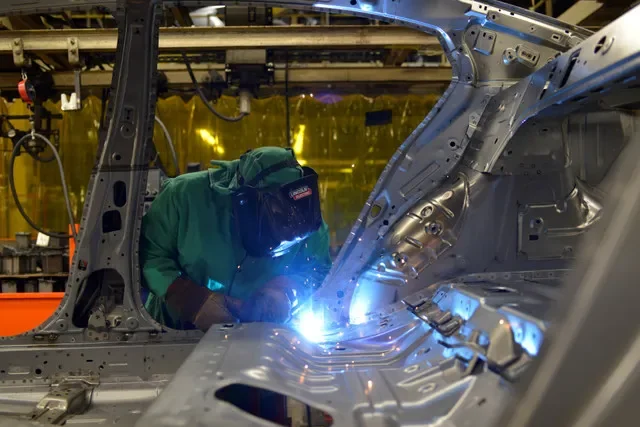
The industrial strength observed in February suggests that the domestic economy maintained momentum before the conflict between Israel and Iran began to impact global markets. The ongoing war has since contributed to higher oil prices and renewed disruptions in supply chains, leading some analysts to predict a period of caution for manufacturers in the coming months.
I suspect that firms turned cautious again in March, and likely April, waiting to see how high energy prices would move and for how long.
Stephen Stanley, chief U.S. economist at Santander U.S. Capital Markets, suggested that while energy price spikes might cause a temporary pause in investment, the underlying trend remains resilient. Within the manufacturing sector, machinery orders saw a significant 1.5% increase, and there were gains in primary metals and fabricated metal products. However, orders for electrical equipment and components saw a slight dip of 0.1%.
The broader category of durable goods orders fell by 1.4% in February, largely due to a sharp contraction in the volatile transportation sector. This decline was heavily influenced by BOEING CO/THE, which saw civilian aircraft orders drop to 21 in February from 107 in the previous month. Despite this, motor vehicle and parts orders surged by 3.1%, providing some balance to the transportation data.
Economists are closely monitoring how the Middle East conflict will affect future delivery times and production costs. An Institute for Supply Management survey recently indicated that supplier delivery times reached a four-year high in March, signaling potential bottlenecks. Consequently, some financial institutions, including Goldman Sachs, have slightly adjusted their growth forecasts for the first quarter.
Despite these challenges, the long-term outlook for business investment remains supported by structural shifts in the economy. The rapid adoption of artificial intelligence and the necessary construction of data centers are providing a consistent tailwind for several manufacturing segments.
AI investment is unlikely to be deterred by the current global macro backdrop and should offer a consistent tailwind to durable goods and topline GDP.
Oren Klachkin, financial market economist at Nationwide, noted that while uncertainty and supply chain issues are prevalent, the demand for technology-driven infrastructure continues to blunt the impact of external economic shocks.