SpaceX Private Share Buyers Face Ownership Uncertainty
SpaceX investors face ownership risks due to opaque secondary markets. Complex structures and high fees complicate the upcoming $1.75 trillion IPO debut.

Investors in the United States and across the globe are increasingly turning to the opaque secondary market to secure a stake in Elon Musk’s SpaceX. While the company approaches a valuation of $1.75 trillion ahead of a potential stock market debut, many private buyers are finding it difficult to verify exactly what they own. The lack of transparency in these transactions has created a landscape where even sophisticated investors are left with uncertainty.
Tejpaul Bhatia, a former executive at Alphabet Inc. and former chief executive of space company Axiom Space, is among those who sought access to the aerospace giant through a network of brokers in 2021. At the time, SpaceX was valued at approximately $75 billion, with most shares held by institutions and early backers close to Musk. Because direct purchases were unavailable, Bhatia turned to the secondary market.
"I hope I didn’t get duped."
Bhatia expressed the sentiment shared by many who are willing to pay a premium for access to what he describes as the most significant investment opportunity in recent history.
"It’s the hottest IPO opportunity in history."
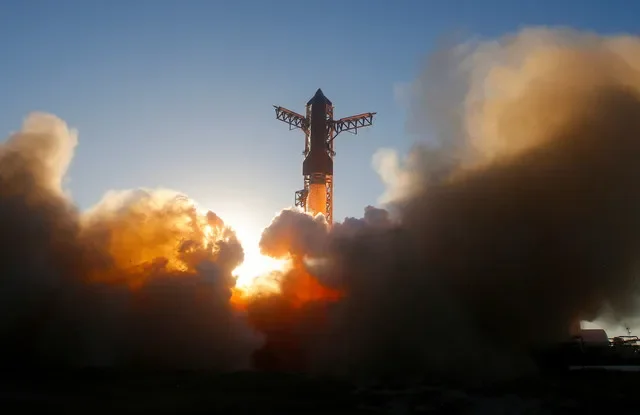
The rise of private tech giants staying private for longer has fundamentally changed the initial public offering landscape. Unlike previous eras where high-growth firms went public relatively quickly, companies like SpaceX and OpenAI build massive brand recognition while remaining closed to the general public. This shift has fueled the use of special-purpose vehicles (SPVs), which pool investor money to buy rights to shares rather than the shares themselves.
Mitchell Littman, a New York-based attorney specializing in secondary markets, warned that the hype surrounding these deals often attracts fraudulent activity.
"Every time there is hype around these type of things, inevitably the fraudsters come out of the woodwork because they smell an opportunity."
Industry experts note that demand has led to the creation of layered investment vehicles. In some instances, shares pass through five different intermediaries, each adding their own fees. This layering makes it nearly impossible for the end investor to confirm if the underlying shares actually exist at the top of the chain. Namek Zu’bi, a fund manager overseeing $500 million in assets, stated that he has avoided SpaceX deals due to these risks.
"A lot of people are going to make a lot of money, but you’re also going to get a lot of people who are surprised or shocked."
Concerns over fraud are not unfounded. Recent legal actions in the industry include the arrest of financier Giovanni Pennetta for selling nonexistent shares in defense firm Anduril and a prior case involving a multi-million dollar fraud specifically targeting SpaceX investors. These risks have not dampened international interest, including from the United Arab Emirates. Brokers representing high-net-worth individuals in the region have reportedly attempted to purchase stakes as large as $1.2 billion, though many such deals fail during the due diligence process.
Peter Wright, a middleman who facilitates these connections, explained that his firm avoids deals involving more than one intermediary because of the impossibility of verifying ownership.
"At that point, diligence is impossible."
Ultimately, the rush to own a piece of the space industry is often driven by social factors and the fear of missing out. Zu’bi noted that for many, the investment is as much about prestige as it is about financial fundamentals, as buyers want to be able to tell their peers they are part of the SpaceX story.