Oil rebounds as Gulf ceasefire and Hormuz risks persist
Oil prices rose on Thursday as a fragile Middle East ceasefire failed to ease concerns over supply through the Strait of Hormuz. Shippers remain cautious.

Global energy markets saw a significant rebound on Thursday as skepticism surrounding a Middle Eastern ceasefire fueled concerns over supply stability. Brent Crude Oil futures climbed $1.96, or 2.07%, to reach $96.71 a barrel, while West Texas Intermediate (WTI) crude in the United States rose $2.60, or 2.75%, to $97.01 a barrel. This recovery follows a sharp decline in the previous session where both benchmarks fell below the $100 threshold.

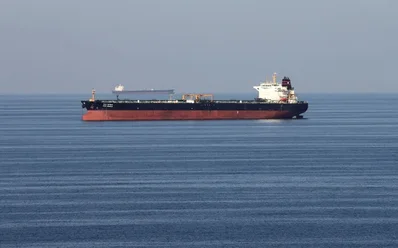
The primary driver of the price surge is the continued restriction of the Strait of Hormuz, a critical maritime corridor that facilitates roughly 20% of the world's oil and gas supply. The waterway connects major Gulf producers, including Iraq, Saudi Arabia, Kuwait, and Qatar, to international buyers. Despite a tentative two-week ceasefire agreement, shipping companies remain cautious, demanding greater clarity on safety protocols before resuming full operations.
Market participants are hesitant to fully unwind pricing for geopolitical risk, and there is no clarity on what negotiations between the U.S. and Iran would mean for oil flows. Vandana Hari, founder of oil market analysis provider Vanda Insights, predicted continued volatility in oil prices.
The chances of a meaningful reopening any time soon look dim.
Tensions escalated as Israel continued military operations in Lebanon, prompting Iran to signal that further peace negotiations might be untenable. In response to the instability, Iranian authorities have released maritime maps to guide vessels around underwater mines, coordinating safe passage routes with the country's Revolutionary Guards.
Security threats have expanded beyond the immediate conflict zone. Reports indicate missile and drone attacks in Bahrain and the United Arab Emirates, alongside strikes on a Saudi Arabian pipeline designed to bypass the Strait of Hormuz. Analysts at STANDARD CHARTERED PLC emphasized the operational hurdles facing the industry.
Logistic disconnects, security fears, elevated insurance premiums and operational constraints mean that very little additional energy is likely to be supplied via the Strait of Hormuz in the next two weeks.
Looking ahead, GOLDMAN SACHS GROUP INC has maintained its price forecasts for the latter half of the year, projecting Brent at $82 for the third quarter and $80 for the fourth. However, the investment bank did lower its second-quarter estimates to $90 for Brent and $87 for WTI, citing a slight reduction in the risk premium as some initial flows through the Strait of Hormuz begin to resume.