Non-Iranian Tankers Navigate Strait of Hormuz During War
International tankers continue to transit the Strait of Hormuz despite a U.S. blockade. Vessels bound for Asia are moving crude and gas through the waterway.

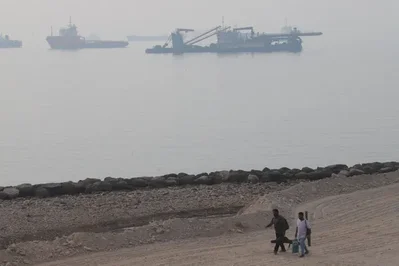
The United States blockade on vessels entering or leaving Iranian ports has introduced significant volatility to shipping through the Strait of Hormuz. This vital maritime corridor, which typically facilitates approximately 20% of global oil and gas exports, has been largely disrupted since the onset of the conflict involving Iran and Israel on February 28. Despite the near-closure of the passage, several non-Iranian tankers have successfully navigated the strait to deliver energy supplies to various global destinations.
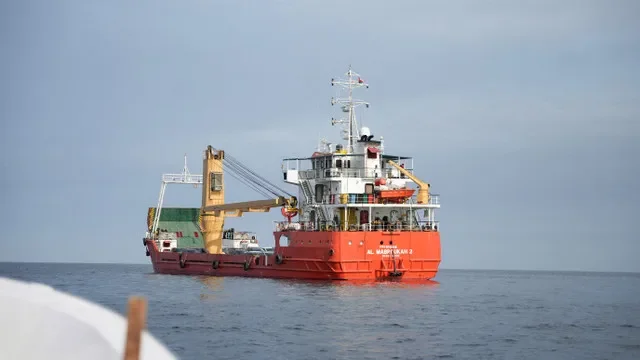
Shipping activity toward Southeast Asia remains active despite the regional tensions. The Malta-flagged Very Large Crude Carrier (VLCC) Agios Fanourios I entered the Gulf via the strait on April 15, marking its second attempt to transit. The vessel is currently en route to Iraq to load Basra crude destined for Vietnam. In Malaysia, several vessels have been cleared for passage, including the Liberia-flagged VLCC Serifos, which is carrying crude loaded from Saudi Arabia and the United Arab Emirates. Additionally, the tanker Ocean Thunder, chartered by a unit of PETRONAS GAS BHD, transited the waterway on April 5 carrying 1 million barrels of Basrah Heavy crude for discharge in Pengerang. Both tankers are among seven Malaysia-linked vessels cleared by Iranian authorities to transit the strait, according to sources familiar with the matter.
Logistics for East Asian markets have also seen progress. On April 11, the China-flagged VLCCs Cospearl Lake and He Rong Hai exited the Strait of Hormuz. Both vessels are chartered by Unipec, the trading arm of SINOPEC KANTONS HOLDINGS. While Cospearl Lake is transporting Iraqi oil to the Zhoushan port, He Rong Hai is heading to Myanmar to discharge Saudi crude. Another VLCC, the Dhalkut, is also destined for Myanmar, where its cargo is expected to be processed at a refinery operated by PETROCHINA CO LTD-H. Regarding these movements, a Chinese foreign ministry spokesperson stated:
"Three Chinese ships recently sailed through the Strait of Hormuz after coordination with relevant parties."
India has maintained a steady flow of tankers exiting the Gulf to supply its domestic refineries. The VLCC Habrut crossed the strait on April 2, carrying Abu Dhabi crude for INDIAN OIL CORP LTD for delivery at Paradip. The VLCC Marathi recently discharged Saudi crude at the Sikka port for RELIANCE INDUSTRIES LIMITED. Other significant movements include the Smyrni, which delivered 1 million barrels of Saudi crude to Mumbai for HINDUSTAN PETROLEUM CORP, and the Gabon-flagged tanker Msg, which is transporting residual fuel to the Pipavav port. Furthermore, the Indian government confirmed that two liquefied petroleum gas tankers, BW Tyr and BW Elm, safely navigated the strait to deliver cooking gas to various domestic ports.
Regional transit for Pakistan and other neighbors continues under careful monitoring. Two tankers flagged by Pakistan, the Shalamar and the Khairpur, entered the Gulf on April 12. The Shalamar is scheduled to load Das crude in the UAE, while the Khairpur is bound for Kuwait to load refined petroleum products. Earlier, the tanker P. Aliki successfully discharged Saudi crude at Karachi on March 31. Meanwhile, a tanker owned by BANGCHAK CORP PCL successfully navigated the Strait of Hormuz following diplomatic coordination between Thailand and Iran. The Suezmax tanker Pola subsequently discharged 1 million barrels of Khafji crude at facilities in Thailand and Singapore.