Middle East war and Pakistan ban hit Indian airlines
Indian carriers cancelled over 60% of international flights due to regional airspace restrictions. Longer routes are raising costs and hitting airline profits.

Airspace restrictions stemming from the conflict in Iran have dealt a significant blow to airlines in India, which already face a long-standing ban from Pakistan airspace. The Middle East serves as a critical corridor for flights connecting the subcontinent to Europe and the United States, leaving carriers with few alternatives as regional tensions escalate.
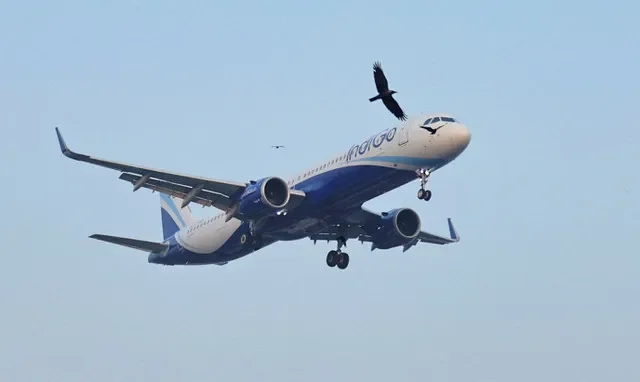
Data from Cirium indicates that Air India and InterGlobe Aviation Limited did not operate 64% of their 1,230 scheduled flights to the Middle East, Europe, and North America over the last 10 days. Aviation experts describe the situation as a compounded crisis for the industry.
"It is a double whammy for Indian airlines which fly international routes," said Amit Mittal, an independent aviation expert.
HSBC Holdings plc said that current geopolitical tensions in the Middle East will lead to a significant burden on the cost and profitability of Indian airlines. The bank estimated that seven days of cancellations in the affected regions could shave 1.2% off its estimate for the airlines' annual profit-before-tax.
Operational challenges are particularly acute for IndiGo, which relies heavily on six The Boeing Company long-range aircraft leased from NORSE ATLANTIC ASA. Because these planes are Norwegian-registered, they must abide by a European Union Aviation Safety Agency advisory to avoid the airspaces of several nations, including:
- Iraq
- Israel
- Kuwait
- Lebanon
- Qatar
- United Arab Emirates
- Saudi Arabia
This has forced the carrier to take longer routes via Africa, increasing flight times by up to two hours. In one instance, a flight from Delhi to Manchester was forced to return to its origin after air traffic control in Eritrea declined airspace use due to confusion over the Norse-registered plane's operation. This incident occurred shortly before IndiGo CEO Pieter Elbers stepped down following an operational crisis.
Air India, a joint venture involving the Tata Group and SINGAPORE AIRLINES LTD, is also seeing its flight times to some destinations lengthen as it adds stopovers. For example, a flight to New York recently required a stop in Rome, extending the journey to nearly 22 hours. This shift gives a competitive edge to rivals like American Airlines Group Inc. on routes to and from India, as they continue to fly via Pakistan. Longer flight times are further increasing costs through higher fuel usage, adding to the pressure caused by the recent spike in Brent Crude Oil prices.