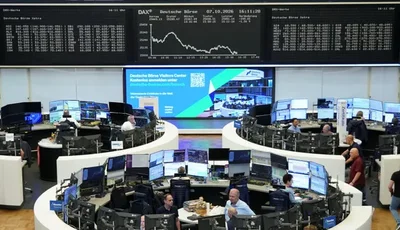

Global Stock Markets Hit Record Highs Amid AI Optimism and Rate Cuts
Global stock markets have reached record highs in early 2026, driven by AI optimism and monetary easing. However, analysts warn that rising inflation could end rate cuts and lead to hikes, impacting valuations and profitability in AI sectors.
洞察:
Global stock markets have achieved unprecedented heights in early 2026, fueled by optimism surrounding artificial intelligence (AI) investments and a favorable monetary policy environment. The surge in equity valuations has been particularly pronounced in the United States, where stock indexes recorded double-digit gains in 2025, reaching new peaks. Seven major tech groups, including Microsoft Corporation , Meta Platforms Inc. , and Alphabet Inc. , have been pivotal, contributing significantly to market earnings. European and Asian equities have also mirrored this upward trend, achieving record levels last year. However, financial analysts are sounding alarms over potential inflationary pressures that could disrupt the current economic landscape. Massive capital expenditures in AI data centers, driven by hyperscalers like Microsoft, Meta, and Alphabet, are expected to reach up to $4 trillion by 2030, according to Deutsche Bank. These projects are consuming vast amounts of energy and advanced chips, contributing to supply-side inflation. Adding to this is the anticipated wave of government stimulus in the US  US, Europe, and Japan
  JP, which could further stoke demand-side inflation. Inflation remains above the Federal Reserve's 2% target, and analysts from Morgan Stanley, including Andrew Sheets andrew sheets, forecast it will persist above this level until at least the end of 2027. J.P. Morgan's Fabio Bassi fabio bassiconcurs, citing improving labor markets and stimulus spending as factors sustaining inflationary pressures. The potential for inflation re-acceleration has prompted concerns that central banks, including the Federal Reserve, the European Central Bank, and the Bank of Japan, may be forced to halt rate cuts and consider hikes by the end of 2026. Trevor Greetham trevor greethamfrom Royal London Asset Management highlights this structural contradiction, noting that the same AI investment boom driving valuations could necessitate a reversal in monetary policy. Early warning signs are emerging from the tech sector, with companies like Oracle Corporation , Broadcom Inc. , and HP Inc. already experiencing financial strain. Oracle's shares have plunged following revelations of soaring expenditures, while Broadcom has warned of squeezed profit margins. HP anticipates pressure on prices and profits due to rising memory chip costs later this year. Julius Bendikas julius bendikasof Mercer and Kevin Thozet kevin thozetof Carmignac emphasize the importance of monitoring these developments closely. The U.S. Treasury Bonds market, which had its best performance in five years in 2025, may also face challenges if inflation persists, impacting investor returns. George Chen george chen of Asia Group, formerly Meta, underscores the need for investors and policymakers to navigate this complex landscape carefully. As markets continue to hover at record highs, the risk of an inflation-driven valuation inflection point looms large, with significant implications for global portfolios and monetary policy decisions.
US, Europe, and Japan JP, which could further stoke demand-side inflation. Inflation remains above the Federal Reserve's 2% target, and analysts from Morgan Stanley, including Andrew Sheets andrew sheets, forecast it will persist above this level until at least the end of 2027. J.P. Morgan's Fabio Bassi fabio bassiconcurs, citing improving labor markets and stimulus spending as factors sustaining inflationary pressures. The potential for inflation re-acceleration has prompted concerns that central banks, including the Federal Reserve, the European Central Bank, and the Bank of Japan, may be forced to halt rate cuts and consider hikes by the end of 2026. Trevor Greetham trevor greethamfrom Royal London Asset Management highlights this structural contradiction, noting that the same AI investment boom driving valuations could necessitate a reversal in monetary policy. Early warning signs are emerging from the tech sector, with companies like Oracle Corporation , Broadcom Inc. , and HP Inc. already experiencing financial strain. Oracle's shares have plunged following revelations of soaring expenditures, while Broadcom has warned of squeezed profit margins. HP anticipates pressure on prices and profits due to rising memory chip costs later this year. Julius Bendikas julius bendikasof Mercer and Kevin Thozet kevin thozetof Carmignac emphasize the importance of monitoring these developments closely. The U.S. Treasury Bonds market, which had its best performance in five years in 2025, may also face challenges if inflation persists, impacting investor returns. George Chen george chen of Asia Group, formerly Meta, underscores the need for investors and policymakers to navigate this complex landscape carefully. As markets continue to hover at record highs, the risk of an inflation-driven valuation inflection point looms large, with significant implications for global portfolios and monetary policy decisions.